
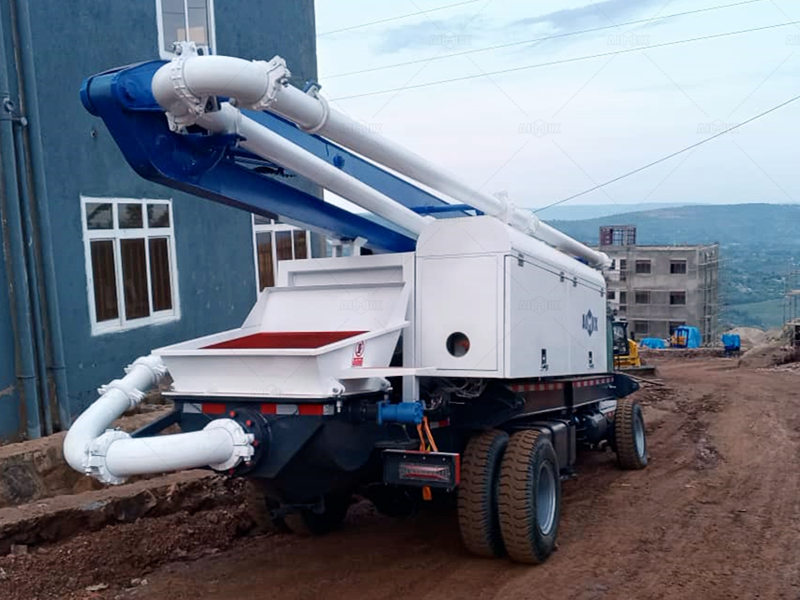
If you’re a construction professional planning project logistics or selecting equipment for high-rise builds or large-scale sites, knowing a concrete pump’s reach range is key to avoiding delays and cost overruns. Standard concrete pumps deliver horizontal pumping distances from 150 to 1,200 meters (492 to 3,937 feet), while vertical reach varies from 15 meters (49 feet) for small mixer pumps to over 280 meters (919 feet) for heavy-duty trailer pumps. Truck-mounted boom pumps typically achieve vertical boom heights of 26 to 58 meters (85 to 190 feet).
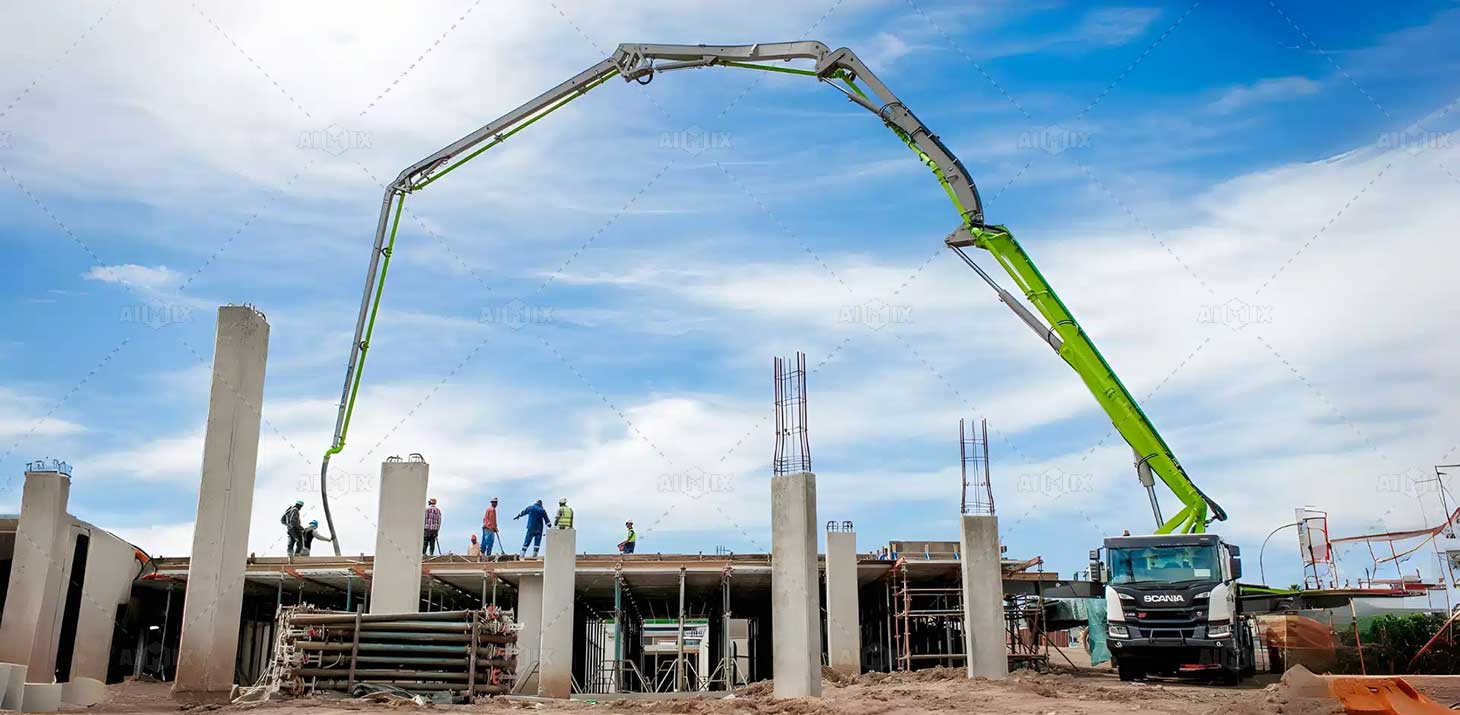
The pumping concrete distance is not a fixed number—it depends on equipment configuration, material properties, site conditions and pipeline layout. Below we break down every factor in detail, with real specifications from Aimix concrete pump models to help you match equipment to your project accurately.
Core Definitions: Understanding Different Types of Pumping Reach
Before discussing specific distances, it is necessary to clarify four commonly confused concepts, as they correspond to completely different measurement methods and application scenarios.
Theoretical maximum horizontal distance:
The maximum conveying length tested by the manufacturer under ideal mix conditions, straight pipeline layout and standard ambient temperature. This value represents the upper limit of equipment capacity and is usually used for model comparison.
Effective horizontal reach:
The actual stable conveying distance achieved under typical construction conditions, taking into account pipeline elbows, concrete slump fluctuations and intermittent feeding. This is the reference value that should be used in project planning.
Vertical pumping height:
The maximum height that concrete can be lifted against gravity. Due to gravity load and vertical pipeline resistance, vertical reach is always much shorter than horizontal reach for the same pump.
Boom placing radius:
For truck-mounted boom pumps, the maximum horizontal or vertical distance that the articulated boom can reach directly without additional pipeline. This is determined by the boom structure, not the pumping pressure alone.
How Far Can Different Concrete Pump Trucks Reach?
Each pump type is engineered with different functional priorities, and its core components set the upper limit of achievable distance.
Boom Concrete Pumps Reach Distance
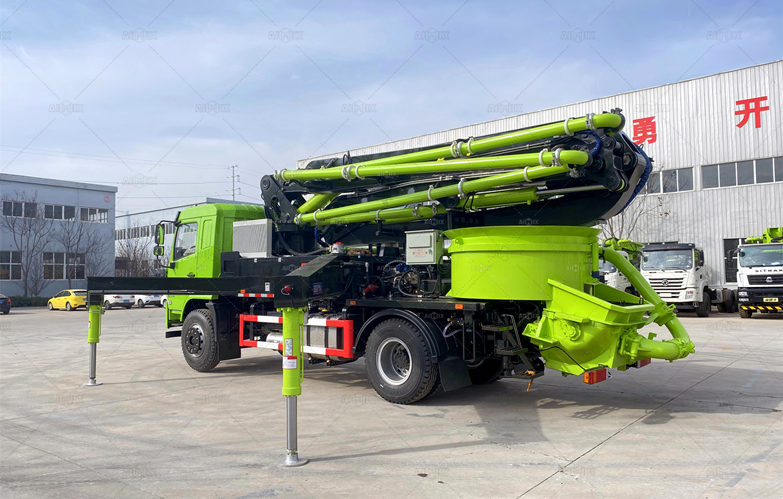
Boom Concrete Pumps
Boom pump reach is inherently tied to its foldable articulated boom design. Unlike pipeline-dependent models, boom pumps deliver concrete directly via hydraulic arms, eliminating long pipe runs and the resistance they create.
- Boom length is the primary limit: common sizes range from 26m to 58m vertical reach.
- Hydraulic power and boom section count (3–5 sections) affect flexibility and maximum extension.
- Ideal for projects where pipeline setup is impractical, such as high-rise slabs, bridge decks and congested urban sites.
Truck-Mounted Boom Pumps:
- Boom Lengths: Range from 26 m (85 ft) to 58 m (190 ft).
- Max Output: Up to 120 m³/h.
- Primary Application: Rapid-setup high-rise pours and large foundation slabs.
Wheel-Mounted Boom Mixer Pumps:
- Boom Lengths: Range from 20 m (65 ft) to 33 m (108 ft).
- Max Output: 89 m³/h.
- Primary Application: Multi-building residential developments and rural housing.
Crawler-Mounted Boom Pumps:
- Compact Booms: 8 m (26 ft) to 25 m (82 ft).
- Mobility: Tracked chassis featuring 35° gradeability and 360° continuous turning.
- Primary Application: Tunnels, mining shafts, and soft-soil terrain.
Trailer Concrete Pumps Reach Distance
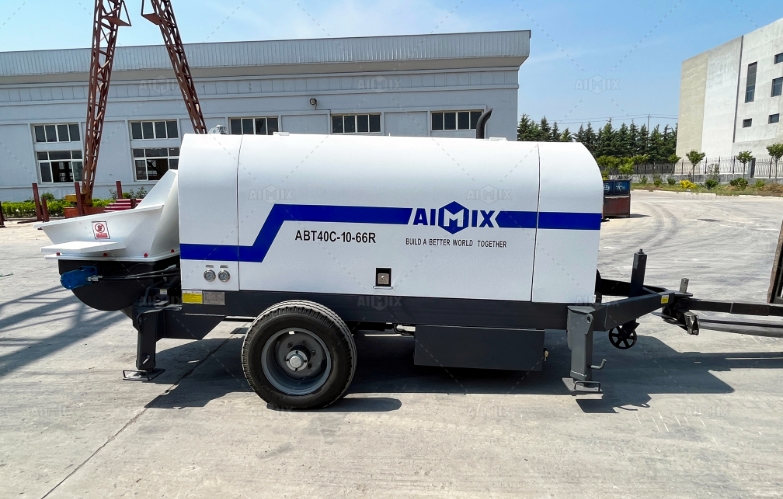
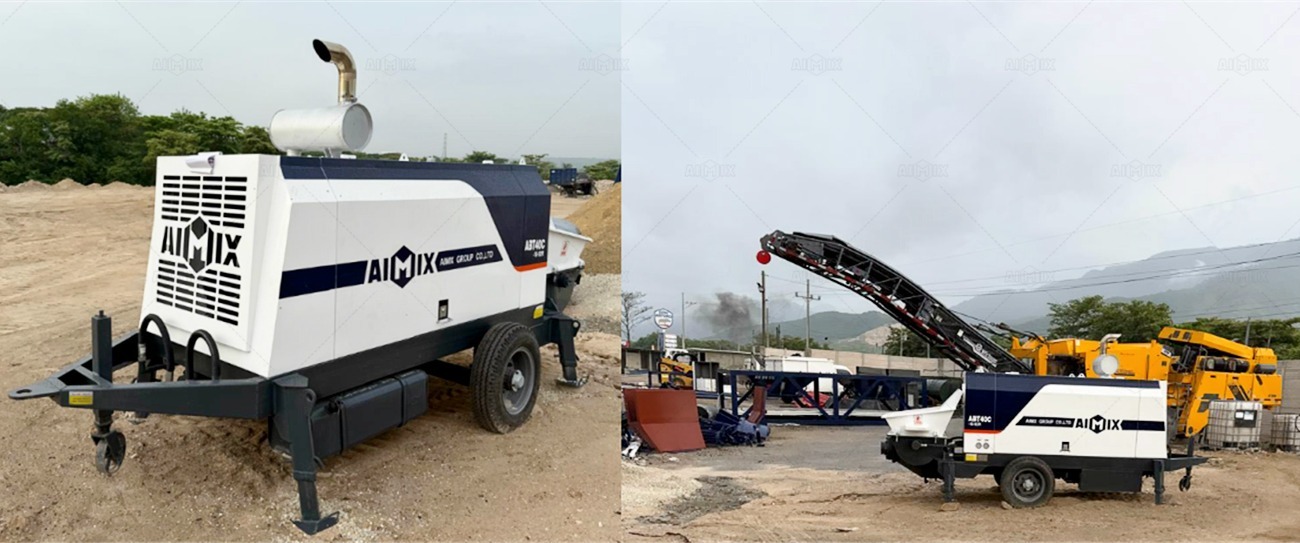
Trailer-Mounted Concrete Pumps
Trailer pumps rely on laid pipelines, so their reach is constrained by pumping pressure and power output rather than physical arm length.
- Hydraulic system pressure directly determines how far concrete can be pushed: higher pressure overcomes more pipe friction.
- Delivery cylinder design and S-valve technology improve material transfer efficiency and reduce pressure loss.
- With sufficient pipeline, heavy-duty trailer concrete pumps can reach over 1,200 meters horizontally or 260 meters vertically.
| Model | Power Type | Max. Output (m³/h) | Max. Horiz. Reach | Max. Vert. Reach |
|---|---|---|---|---|
| ABT40C / ABT40D | Diesel / Electric | 40 m³/h | 500 m (1,640 ft) | 120 m (393 ft) |
| ABT60C / ABT60D | Diesel / Electric | 60 m³/h | 800 m (2,624 ft) | 180 m (590 ft) |
| ABT80C / ABT80D | Diesel / Electric | 80 m³/h | 1,000 m (3,280 ft) | 220 m (721 ft) |
| ABT90C / ABT90D | Diesel / Electric | 90 m³/h | 1,400 m (4,593 ft) | 250 m (820 ft) |
Concrete Mixer Pumps Reach Distance
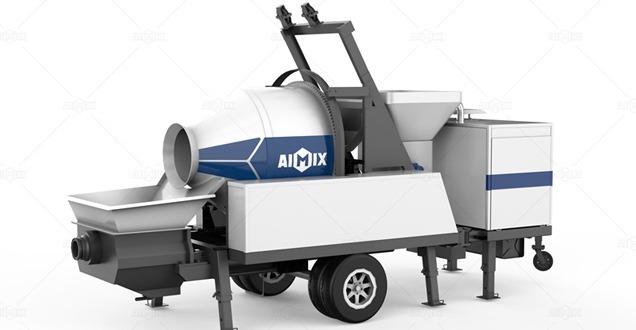
Concrete Mixer Pumps (Mix & Pump Integrated Units)
These combine on-site mixing and pumping in one machine. Their reach is shaped by how power is split between the mixing system and pumping system.
- Entry-level drum mixer concrete pumps have more limited reach, optimized for small to medium projects.
- High-performance vertical-shaft planetary mixer pumps deliver pumping performance comparable to dedicated trailer pumps, with reach up to 1,200 meters horizontal.
- Perfect for remote sites where separate mixer and pump equipment is logistically difficult.
| Model | Mixer Type | Output Capacity | Horiz. Reach | Vert. Reach |
|---|---|---|---|---|
| ABJZ30C/D | Drum Mixer | 30 m³/h | 300 – 500 m (984 – 1,640 ft) | 120 m (393 ft) |
| ABJZ40C/D | Drum Mixer | 40 m³/h | 500 – 600 m (1,640 – 1,968 ft) | 150 m (492 ft) |
| ABJW40C | Vertical Shaft | 40 m³/h | 400 – 500 m (1,312 – 1,640 ft) | 120 m (393 ft) |
All Aimix concrete pumps use S-valve distribution systems and high-pressure open-circuit hydraulics, which reduce pressure loss by 10–15% compared to gate-valve designs, effectively extending usable reach under the same power rating.
Core Factors Impacting How Far Can You Pump Concrete
Pumping distance is the balance between pump output pressure and total system resistance. All influencing factors work by changing pump capacity or adding pipeline resistance, and can be divided into four categories.
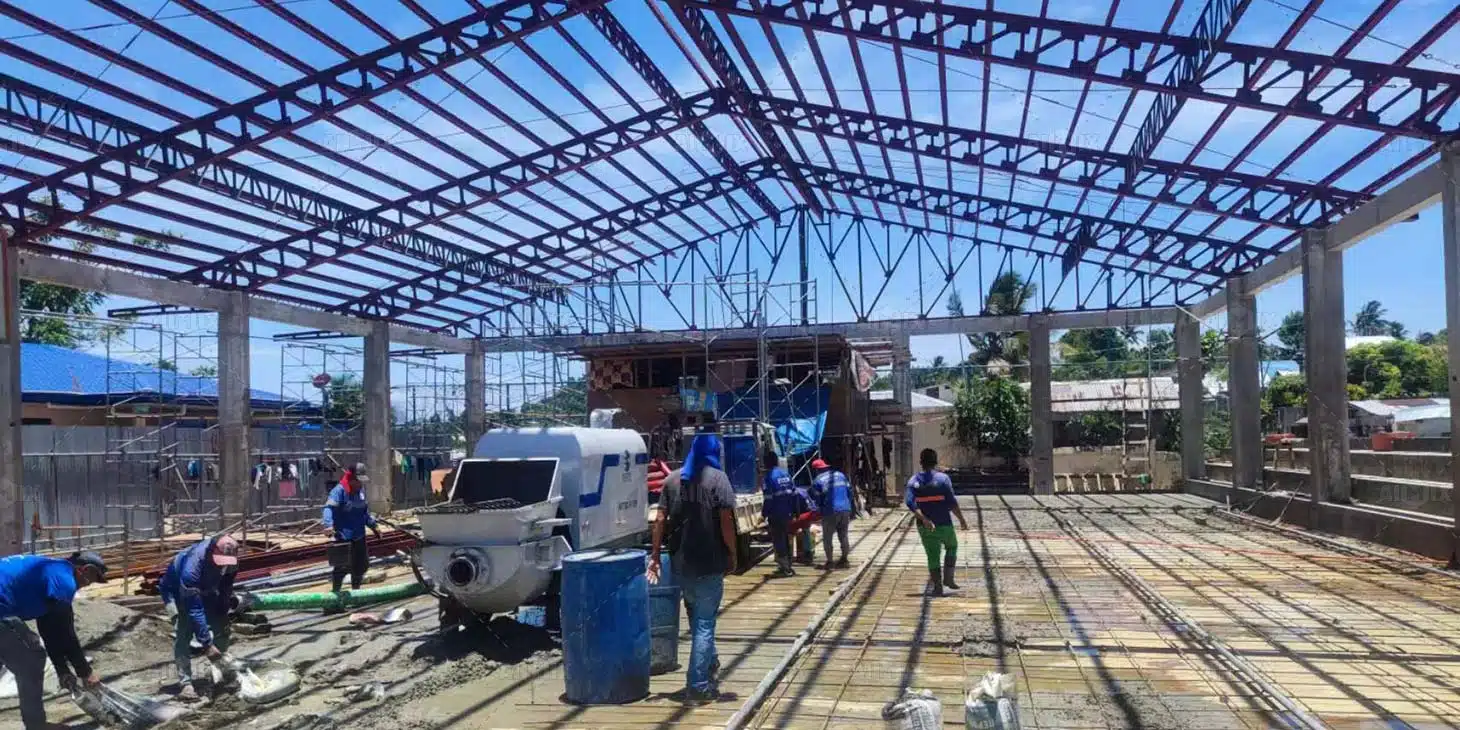
Equipment Design & Configuration
Equipment parameters set the absolute upper limit of pumping distance, mainly including three core components:
- System pumping pressure: The most decisive indicator. Low-pressure pumps (≤10 MPa) suit short-distance works; medium-pressure (10–16 MPa) cover most conventional scenarios; high-pressure (16–25 MPa) serve high-rise and long-distance projects; ultra-high-pressure (≥30 MPa) are for super high-rises over 200 m.
- Distribution valve type: S-tube valves have smooth flow channels and low resistance, making them the mainstream for long-distance pumps. Gate valves have larger pressure loss and are mostly used in small low-pressure models.
- Power source type: Electric pumps have stable output and are barely affected by altitude. Diesel pumps have stronger mobility, but suffer 8%–12% power loss per 1000 m elevation, indirectly reducing reach.
Concrete Mix Properties
Concrete pumpability directly determines internal friction and pipeline resistance, mainly affected by three indicators:
- Slump value: The optimal range for pumping is 120–200 mm. Slump below 100 mm greatly increases resistance and can shorten distance by over 30%. Slump over 220 mm causes segregation and pipe blockage, also limiting stable delivery.
- Aggregate characteristics: Maximum coarse aggregate size shall not exceed 1/3 of the pipeline inner diameter. Well-graded continuous aggregate reduces resistance, while flaky/needle-shaped particles significantly increase friction and shorten reach.
- Admixture formula: Polycarboxylate superplasticizers, fly ash and mineral powder can improve concrete rheology, reduce plastic viscosity and yield stress, and effectively extend pumping distance.
On-Site Environmental Conditions
External site conditions convert into additional resistance or performance loss, mainly reflected in three aspects:
- Gravity & terrain: Each meter of vertical lift equals 3–4 m of horizontal resistance. Uphill pumping increases total resistance by about 15% per 10° slope, reducing distance by 20%–30%. Downhill pumping reduces resistance but raises segregation risk.
- Ambient temperature: Temperatures above 35°C accelerate hydration and slump loss, increasing blockage risk. Temperatures below 5°C increase viscosity and freezing risk, also reducing effective delivery distance.
- Altitude level: High altitude reduces diesel engine output and pumping pressure. Electric pumps are basically unaffected and are more suitable for high-altitude long-distance projects.
Pipeline Layout & Status
Pipelines are the core of the conveying system, and their layout directly determines total resistance, with three key details:
- Pipeline diameter: Under the same pump, upgrading from 125 mm to 150 mm pipes reduces resistance by about 25% and extends distance by 20%–30%. Larger pipes however increase material waste and segregation risk for low-slump mixes.
- Pipe fittings & bends: Each 90° standard elbow equals 8–12 m of straight pipe resistance; a 45° elbow equals 4–6 m. Sharp bends, inverted U-shaped layouts and frequent diameter changes will greatly increase local resistance.
- Pipe wear & sealing: Worn pipe walls, loose joints and slurry leakage all increase resistance. Residual concrete inside pipes after construction will also reduce effective conveying capacity in subsequent uses.
Engineering Calculation: Estimate Actual Pumping Distance
The fixed parameter ranges of various concrete pumps are only general reference standards. In actual engineering design, it is necessary to combine on-site pipeline layout and working conditions for accurate calculation. The equivalent resistance conversion method is the industry’s universal standard for judging effective pumping distance.
Basic Calculation Steps
Follow four steps to convert actual working conditions into equivalent straight pipe length:
- Count the total length of all straight pipelines in the layout.
- Convert all elbows, reducers, hoses and vertical sections into equivalent straight pipe length.
- Sum up all values to get the total equivalent length.
- Reserve a 15%–20% safety margin as the final required capacity.
Common Equivalent Coefficients
All pipeline accessories and vertical lifting sections will produce extra resistance. These are equivalent coefficients to convert complex pipeline structures into standard straight pipe length:
- 1 m vertical lifting: 3–4 m horizontal
- 90° standard elbow: 8–12 m
- 45° standard elbow: 4–6 m
- 3 m end rubber hose: 8 m
- Pipe reducer (150→125 mm): 15 m
Practical Calculation Example
Take a project requiring 80 m vertical lift and 120 m horizontal pipeline as an example:
- Vertical equivalent: 80 m × 3.5 = 280 m
- Horizontal straight pipe: 120 m
- 6 pieces of 90° elbows: 6 × 10 m = 60 m
- 1 end hose: 8 m
- Total equivalent length: 468 m
- With 20% safety margin: 562 m
- Conclusion: A pump with at least 600 m theoretical horizontal capacity is required.
Key Technologies for Long-Distance & Ultra-High-Rise Pumping
For projects with distance over 1000 m or height over 200 m, conventional equipment and processes cannot meet requirements. Four core technologies are widely used in engineering practice.
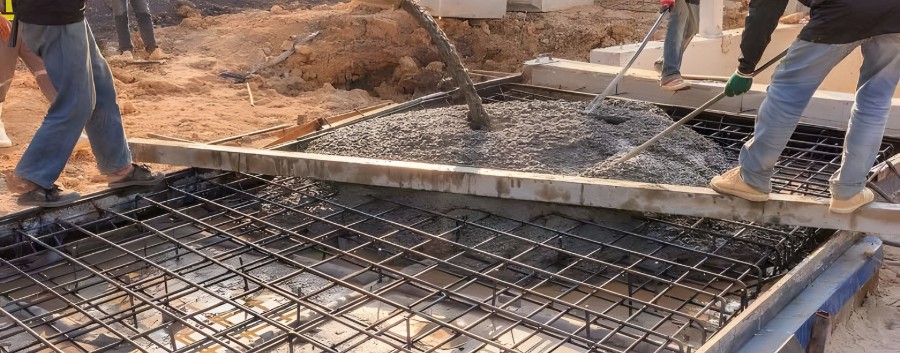
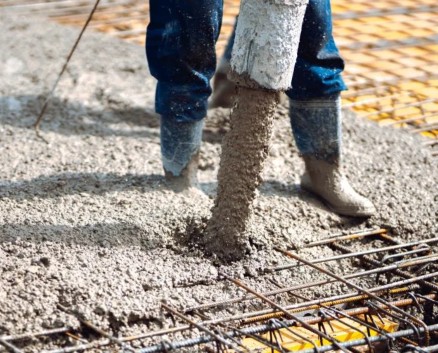
High-Pressure Closed-Loop Hydraulic System
Ultra-high-pressure pumps usually adopt a double-cylinder series pressurization structure, with system pressure up to 35 MPa or higher. They are equipped with high-pressure sealing systems and thick-walled conveying pipes to withstand extreme pipeline pressure.
Rheology-Optimized Mix Design
For ultra-high-rise pumping, plastic viscosity and yield stress of concrete must be controlled within a narrow range. Viscosity-modifying admixtures, high-quality fly ash and mineral powder are used to improve pumpability and prevent segregation.
Relay Pumping Technology
For extra-long tunnels or super high-rises exceeding single-pump capacity, one or more booster pumps are arranged in the middle of the pipeline. Segmented pressurization can break through the limit of single-pump delivery distance.
Wear-Resistant Pipeline & Monitoring
Long-distance high-pressure pumping causes serious pipe wall wear. High-hardness wear-resistant pipes and real-time pressure monitoring systems are required to detect blockage risks in advance and reduce failure rates.
Common Problems & Optimization Strategies
In actual long-distance and high-rise pumping construction, affected by human operation, environmental changes and equipment aging, various problems such as insufficient actual distance and frequent pipe blockages often occur. Targeted optimization strategies can effectively improve construction quality and efficiency.
How to Extend On-Site Pumping Distance
Four targeted measures can effectively improve actual delivery distance:
- Optimize mix design: Add superplasticizers to control slump within 160–180 mm, and ensure continuous aggregate gradation.
- Optimize pipeline layout: Minimize elbows, use long-radius bends, avoid inverted U-shaped layouts, and appropriately increase pipe diameter.
- Maintain pipeline status: Regularly check pipe wall wear, replace severely worn pipes, and ensure tight joints without slurry leakage.
- Adjust construction time: Avoid high-temperature noon periods in summer, and take heat insulation measures for exposed pipelines.
Why Actual Reach Is Shorter Than Advertised
Most manufacturer parameters are measured under ideal laboratory conditions. In actual construction, low slump, unreasonable pipeline layout, excessive elbows, high temperature and equipment wear will all increase resistance. Normal actual reach is 60%–80% of the theoretical value.
Pipe Blockage Prevention for Long Distance
Long-distance pumping has higher blockage risk. Follow three operation specifications:
- Control aggregate particle size and gradation, and prohibit over-sized stones from entering the hopper.
- Maintain continuous pumping; if interruption exceeds 30 minutes, start the pump at intervals to prevent solidification.
- Lubricate pipelines with mortar before formal pumping, and operate at medium stable speed during construction.
FAQs of High Rise Concrete Pumping Distance
Combined with on-site construction pain points and industry common doubts, the following sorted FAQs can solve most professional confusion in concrete pumping distance design and construction operation.
What factors limit the maximum vertical pumping height?
Key limits include pump pressure capacity, pipeline strength, and concrete properties. High-altitude environments can also reduce effective height due to lower air pressure.
Can special concrete types affect pumping distance?
Yes. Self-compacting concrete boosts distance slightly with better fluidity, while high-strength concrete (C80+) or mixes with large aggregates may shorten it due to higher viscosity.
Do weather conditions impact long-distance pumping?
Extreme temperatures (below 5℃ or above 35℃) and strong winds (over Level 6) can affect concrete fluidity and pump stability, requiring mix adjustments or temporary work pauses.
How to prevent pipe blockage during long-distance pumping?
Optimize concrete slump (120-180mm), check pipeline integrity beforehand, and use viscosity modifiers to enhance cohesion, avoiding segregation.
Is it necessary to use high-pressure pumps for all high-rise projects?
No. For buildings below 60m, conventional boom pumps suffice; high-pressure pumps are only required for ultra-high projects (over 200m) or lightweight aggregate concrete pumping.
How often should pumps be maintained for long-distance use?
Daily checks (seals, pipelines), weekly hydraulic system maintenance, and monthly comprehensive overhauls to ensure stable long-distance performance.
The conveying distance of a concrete pump is a comprehensive result affected by equipment performance, concrete properties, site environment and pipeline layout. In actual project planning, relying solely on theoretical parameters often leads to inaccurate equipment selection, construction delays or extra costs. Accurate distance calculation, reasonable pipeline layout and matched pumping solutions are the key to stable, efficient, and cost-effective concrete construction.
Every construction project has unique terrain, height, concrete mix and site conditions. If you need accurate pumping distance verification, professional equipment matching, customized long-distance or high-rise pumping schemes, or on-site construction optimization guidance, our technical team is ready to provide one-stop professional solutions. Feel free to contact us for free technical consultation and project-specific suggestions to avoid construction risks and optimize your project budget and schedule.