


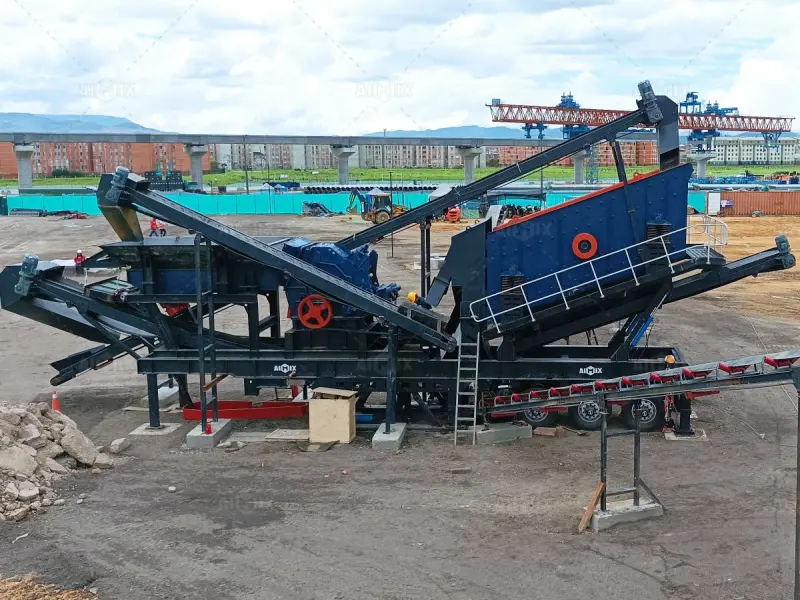
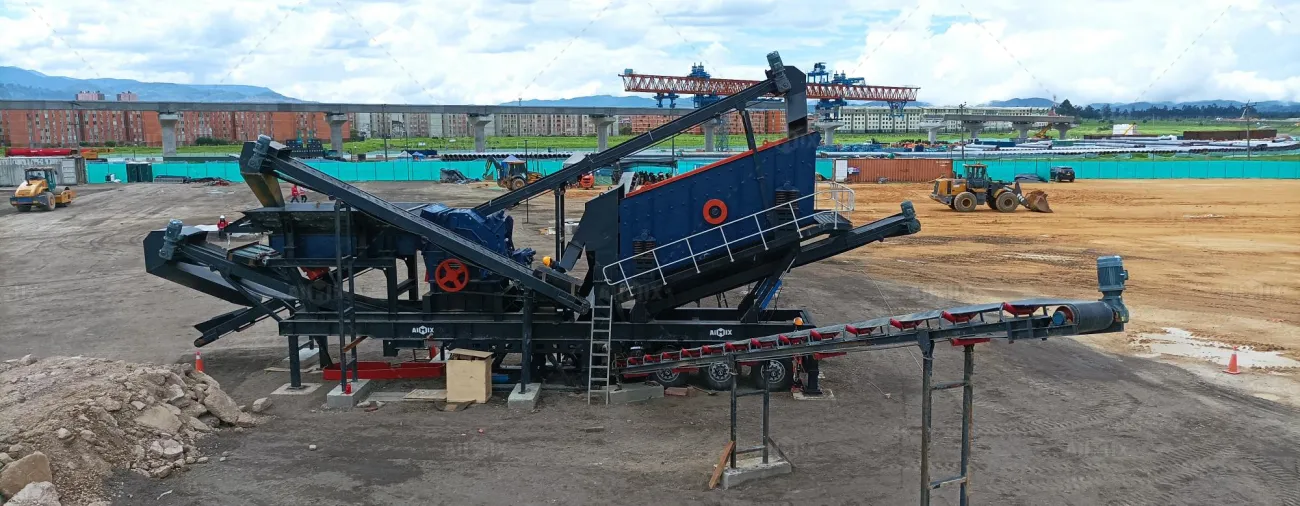
A mobile impact crusher turns concrete waste, limestone, asphalt, and other suitable materials into well-shaped aggregate directly on-site. It is ideal for projects that require efficient crushing, flexible relocation, and lower material-handling costs. Available in tracked and wheeled configurations, AIMIX mobile impact crushing plants can be tailored to your material, output target, and site conditions.
Mobile Impact Crusher Applications and Suitable Materials
Mobile impact crushers are commonly used for concrete and C&D recycling, asphalt and RAP recycling, and aggregate production from suitable limestone and other soft-to-medium-hard rock. They are most effective when the material is suitable for impact crushing and the finished product benefits from both size reduction and particle shape.
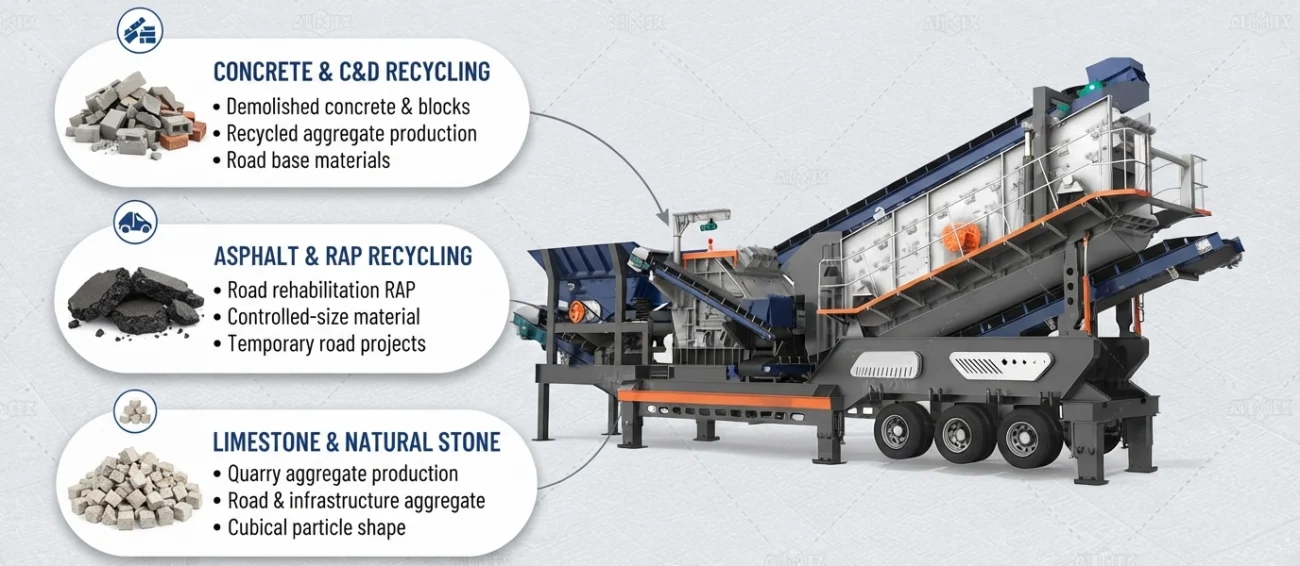
Concrete and C&D Waste Recycling
Best suited for: Demolished concrete, concrete blocks, bricks, and selected masonry waste.
Common applications include:
- Concrete recycling: Process suitable demolition concrete into reusable aggregate.
- Recycled aggregate production: Produce material for road base, subbase, backfill, and site preparation.
- Demolition and redevelopment: Recover usable material during site clearance.
Condition: Excessive soil, wood, plastic, gypsum, and other contaminants should be controlled. Reinforced concrete also requires attention to the amount and condition of rebar.
Asphalt and RAP Recycling
Best suited for: Asphalt chunks, removed pavement, and suitable reclaimed asphalt pavement (RAP).
Common applications include:
- Road rehabilitation: Process asphalt generated during pavement removal.
- RAP preparation: Produce controlled-size material for subsequent recycling.
- Temporary road projects: Process suitable asphalt material near the project.
Condition: RAP requirements vary according to its intended reuse. For material going into new asphalt mixtures, the required gradation and quality should be confirmed with the downstream process.
Limestone and Suitable Natural Stone
Best suited for: Limestone and other relatively soft-to-medium-hard rock where both reduction and particle shape are important.
Common applications include:
- Quarry aggregate production
- Road and infrastructure aggregate
- Temporary or project-based stone production
Impact crushing can provide both size reduction and a more cubical particle shape, which is useful for certain aggregate applications.
Condition: Highly abrasive rock can accelerate blow-bar and impact-plate wear. Granite, basalt, quartz-rich stone, and abrasive gravel therefore require closer evaluation before impact crushing is adopted.
Materials That Need More Careful Evaluation
Some feed conditions can make a mobile impact crusher unsuitable without additional material preparation or a different crushing arrangement:
- Wet or clay-rich material: Sticky fines can reduce material flow and interfere with screening. Pre-screening or material preparation may be required.
- Oversized feed: Material exceeding the crusher’s allowable feed size may require a primary crusher or other pre-crushing stage before impact crushing.
150 TPH Mobile Impact Crusher for Bogotá Metro Demolition Waste Recycling
A 3-in-1 mobile impact crusher plant was supplied for the Bogotá Metro Line 1 project in Colombia to recycle demolition waste into aggregate for metro construction.
| Item | Project Details |
|---|---|
| Location | Bogotá, Colombia |
| Material | Demolition concrete and mineral construction waste |
| Capacity | 120–150 TPH |
| Configuration | 3-in-1 mobile impact crushing and screening plant |
| Application | Metro sub-base material |
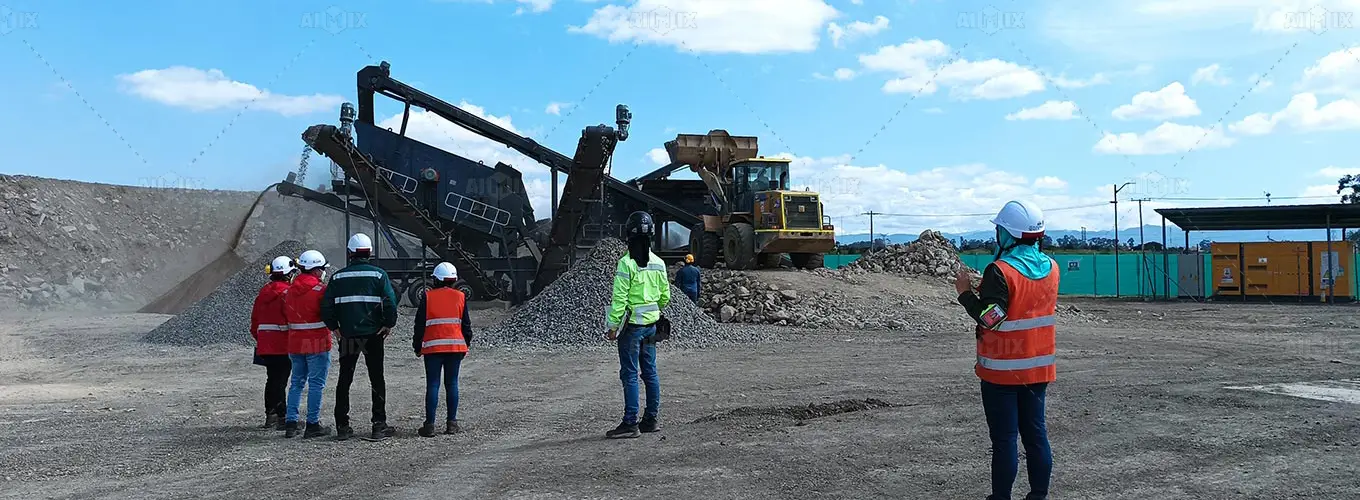
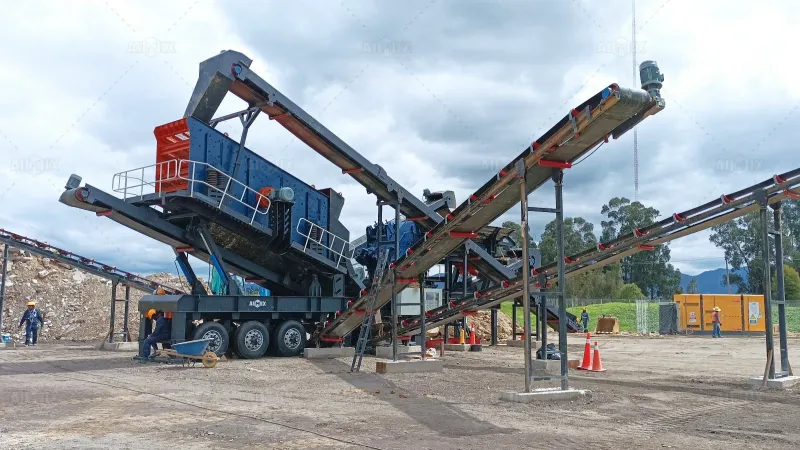
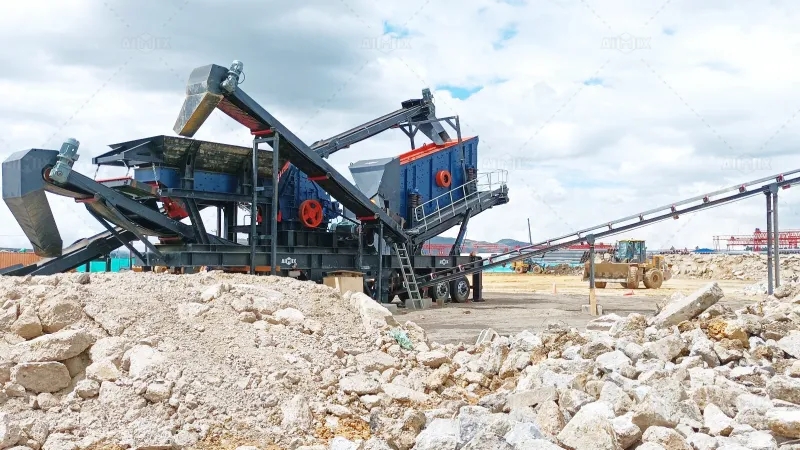
Recycling Demolition Waste for Metro Construction
During the early stage of the metro project, large quantities of demolition waste were generated from nearby road construction. Instead of hauling the waste away and sourcing new aggregate, the contractor wanted to recycle suitable demolition materials into usable construction aggregate.
However, the project team needed a crushing solution suitable for construction waste recycling while meeting the metro project’s requirements for aggregate quality. The crushing operation also needed to work within a restricted urban area and relocate as construction progressed.
Choosing a Mobile Impact Crushing Solution
A 3-in-1 mobile impact crushing plant was selected to combine feeding, impact crushing, and screening in one mobile setup.
- Impact crushing: Processed suitable demolition waste while producing aggregate with the required particle shape.
- Screening: Separated the crushed material into controlled sizes for the metro application.
- Mobile operation: Allowed the crushing process to move with the changing construction area.
- On-site recycling: Converted demolition waste into usable aggregate, reducing the need for waste hauling and newly sourced material.
Before delivery, AIMIX engineers evaluated the required aggregate specifications and tested the crushing process. After installation, engineers also provided on-site commissioning and training.
Process: Demolition waste → Impact crushing → Screening → Graded aggregate
Producing Aggregate That Meets Project Requirements
- 120–150 TPH operating capacity
- Demolition waste recycled into graded construction aggregate
- Finished aggregate met the project’s required gradation and particle-shape standards
- Successfully passed the project’s laboratory testing
- Mobile configuration adapted to changing urban construction areas
- Reduced the need to haul demolition waste away and bring new aggregate to the site
This project is available for on-site reference visits by appointment. Contact us to discuss the project and arrange a visit if you would like to see the mobile impact crushing solution in operation.
Mobile Impact Crusher Solutions and Configurations
The required mobile impact crusher setup depends on the feed condition, number of processing stages, and final product requirements. The main options are impact crushing alone, impact crushing with screening, or a multi-stage process with primary crushing.
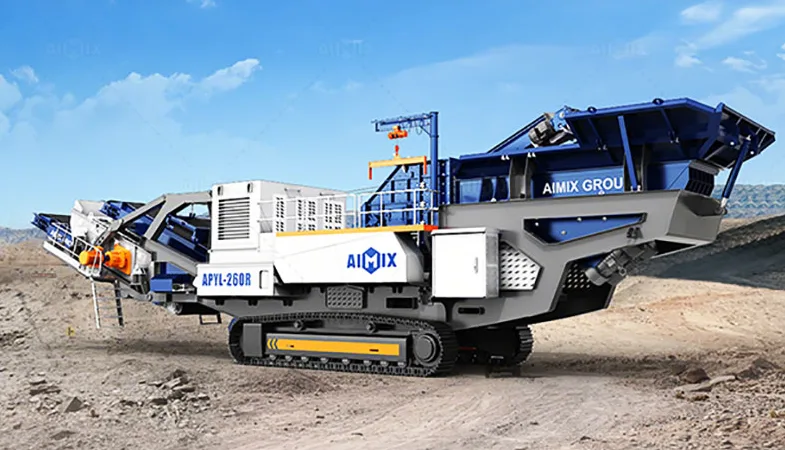
Impact Crushing for Direct Size Reduction
Process: Feeding → Impact crushing → Discharge
Suitable for: Projects that mainly need to reduce suitable feed material to a smaller, manageable size without separating it into several final products.
This is the simplest setup and avoids adding screening or other processing stages when the application does not require classified finished materials.
Get A Quote
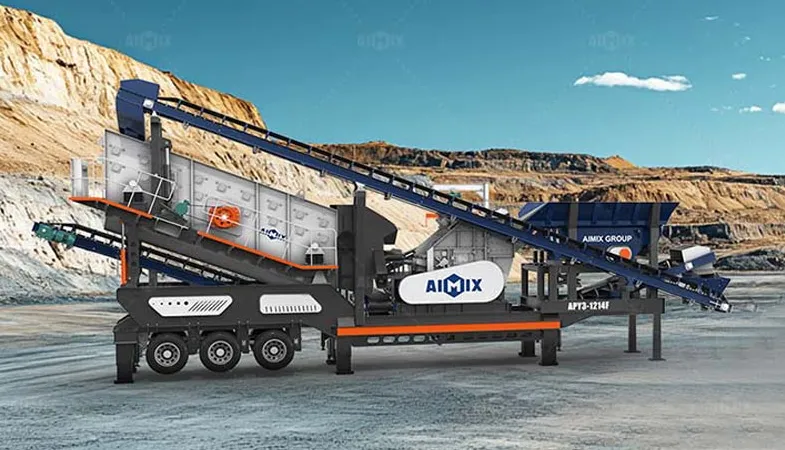
Impact Crushing with Screening
Process: Feeding → Impact crushing → Screening → Finished products
Suitable for: Projects that require defined aggregate sizes rather than one combined crushed product.
Screening separates the crushed material into different size fractions. Depending on the process, oversize material can be returned for further crushing while acceptable material is discharged separately.
Get A Quote
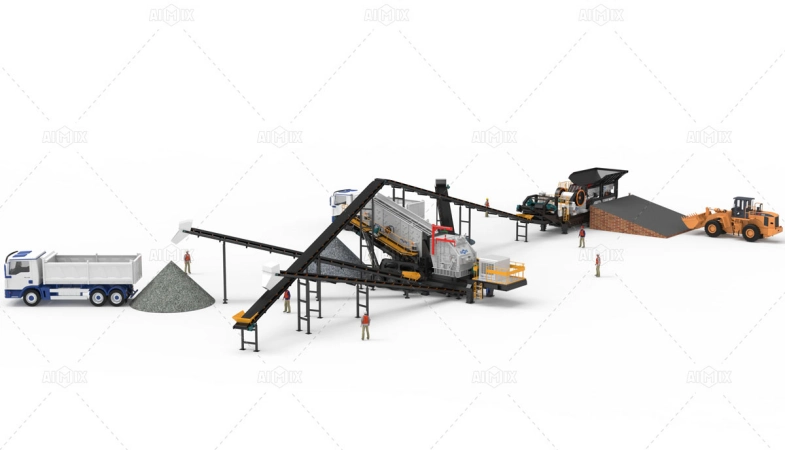
Multi-Stage Crushing and Screening
Process: Primary crushing → Impact crushing → Screening
Suitable for: Applications where the feed is too large for direct impact crushing or where the final products require progressive size reduction and classification.
Adding a primary crushing stage reduces oversized feed before it enters the impact crusher, creating a more complete process when a single impact crushing stage cannot handle the feed size or achieve the required product specification.
Get A Quote
AIMIX Popular 3-in-1 Wheeled Mobile Impact Crusher Plant
This 3-in-1 wheeled mobile impact crusher plant combines feeding, impact crushing, and screening in one unit, simplifying the crushing process and material handling.
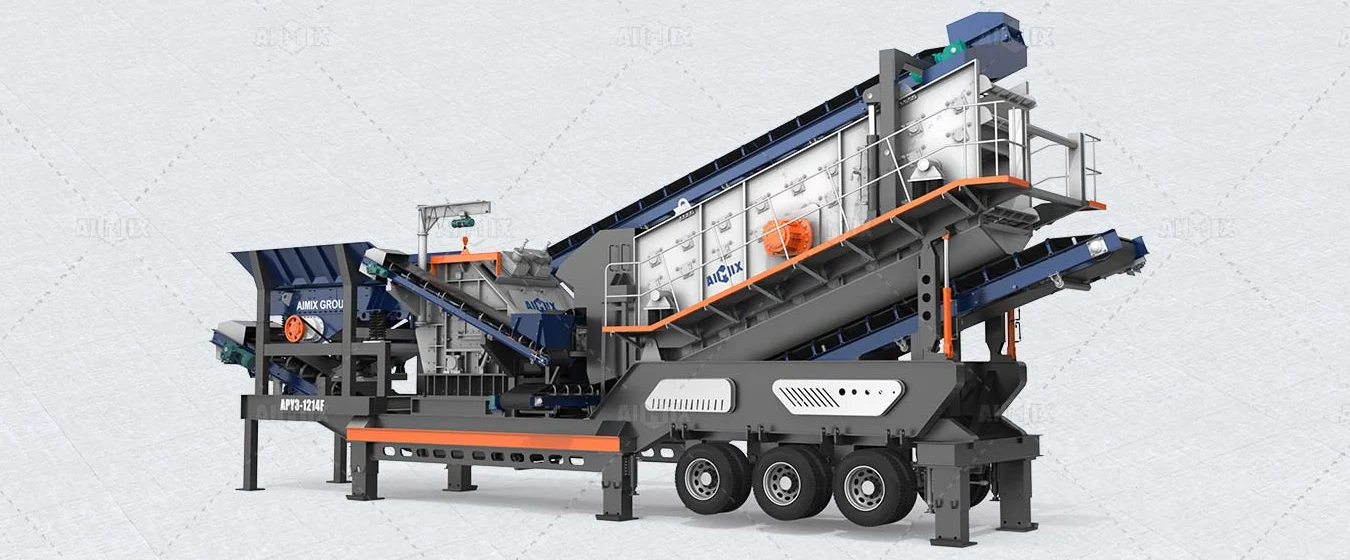
Simpler crushing process The 3-in-1 design combines feeding, impact crushing, and screening in one plant, reducing equipment transfer and simplifying material handling.
Easier relocation A three-axle wheeled chassis allows the plant to move more conveniently between suitable working areas and project sites.
Lower energy costs The energy-saving motor system can reduce energy consumption by up to 30%, helping lower operating costs during continuous production.
Easier operation One-key startup, PLC touchscreen or button control, and a remotely adjustable feeder make daily operation and material feeding easier to manage.
Faster problem detection The IoT remote monitoring system tracks equipment status in real time and provides maintenance reminders, helping operators identify potential issues earlier.
Better aggregate quality The heavy-duty rotor delivers strong impact crushing and helps produce well-shaped finished aggregate, while the available dust-control system helps keep the working environment cleaner.
Specifications
| Model | APY3-1010F | APY3-1210F | APY3-1214F | APY3-1315F |
|---|---|---|---|---|
| Feeder model | APG-3090W | APG-3896W | APG-3896W | APG-4211W |
| Crusher model | APF-1010H | APF-1210H | APF-1214H | APF-1315H |
| Vibrating screen model | APS-1548Y | APS-1848Y | APS-1860Y | APS-2160Y |
| Tire configuration | Parallel three shafts | Parallel three shafts | Parallel three shafts | Parallel three shafts |
| Return belt conveyor model | B650 | B650 | B800 | B1000 |
| Feeder belt conveyor model | B650 | B800 | B800 | B1000 |
| Under-sieve belt conveyor model | B800 | B800 | B1000 | B1000 |
| Production capacity (t/h) | 70-150 | 100-285 | 150-350 | 180-500 |
| Transport length (mm) | 13000 | 15800 | 15800 | 16500 |
| Transport width (mm) | 2500 | 2550 | 2550 | 3000 |
| Transport height (mm) | 4200 | 4500 | 4500 | 4500 |
| Weight (t) | 41 | 45 | 53 | 60 |
Tracked vs. Wheeled Mobile Impact Crusher Plant
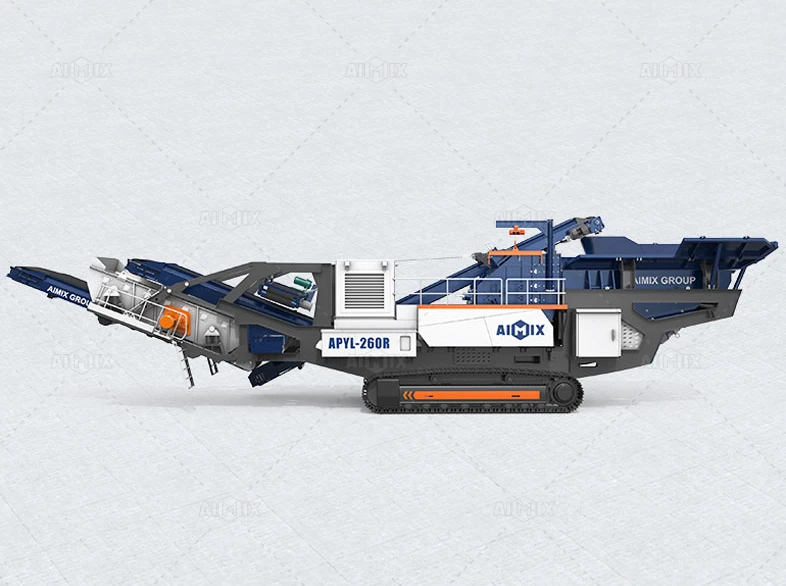
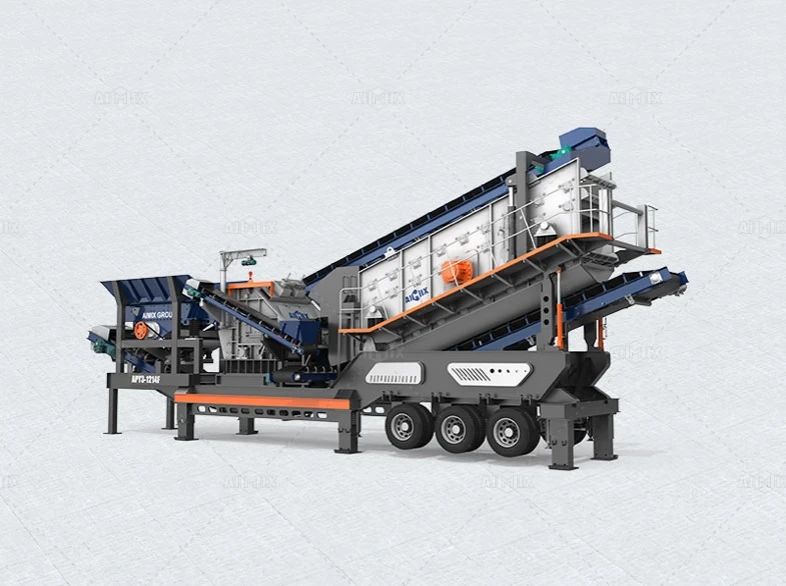
Both tracked and wheeled mobile impact crusher plants can handle similar crushing applications, but they differ in how they move, where they can operate, and how easily they can be relocated. The right option depends mainly on ground conditions, site access, relocation frequency, and whether the mobile crusher moves within one project or between different sites.
| Project Factor | Tracked Mobile Impact Crusher | Wheeled Mobile Impact Crusher |
|---|---|---|
| Ground conditions | Better suited to uneven, soft, sloped, or less-prepared working areas | Better suited to firm, relatively level ground with suitable access |
| Movement within a site | Can move between working points under its own track drive | Usually requires towing or another transport method for repositioning |
| Site access | More suitable for restricted or difficult internal access where the crushing position changes frequently | Better suited to sites with clear access routes for towing and positioning |
| Relocation between projects | Usually requires a suitable carrier for transport between sites | Generally more convenient for planned road-based relocation, subject to local transport regulations |
| Project pattern | Better suited to quarries, demolition sites, and projects where the working area changes frequently | Better suited to projects with established working areas and planned movement between accessible locations |
| Best fit | Choose when on-site mobility and changing ground conditions are important | Choose when road-based relocation and relatively stable working conditions are more important |
Mobile Impact Crusher Specifications: What Actually Matters?
Once the material and process are defined, focus on the specifications that determine whether a mobile impact crusher can handle the feed, achieve the required output, and produce the desired final material.
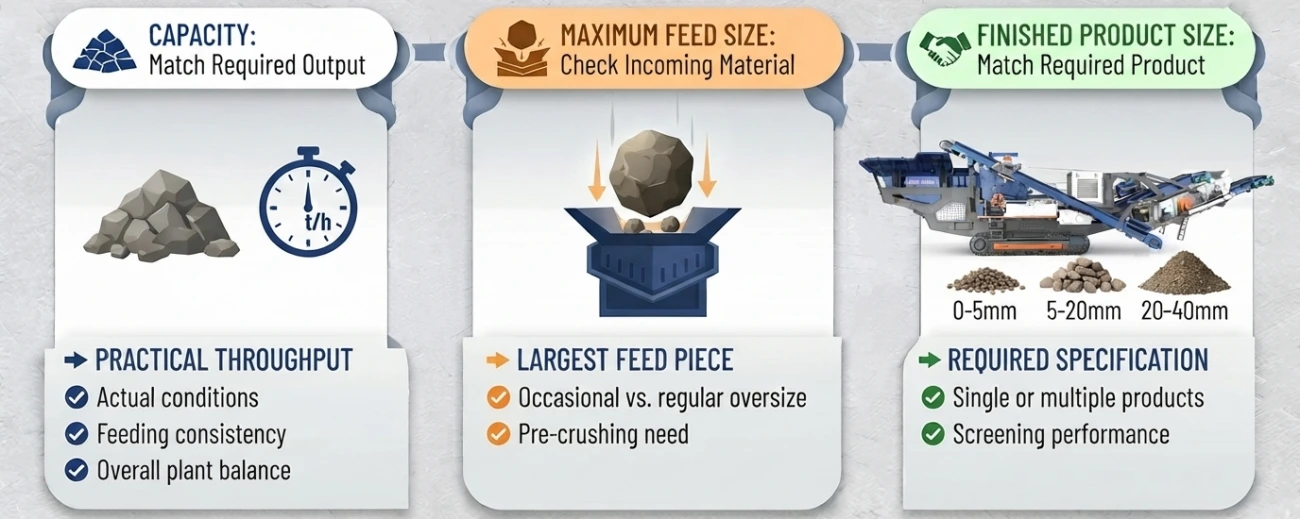
Capacity: Match the Required Output
The crusher should provide enough practical capacity to meet the project’s required tons per hour. When evaluating capacity, check:
- Required output: Define the target production rate in t/h.
- Actual operating conditions: Feed gradation, material characteristics, feeding consistency, and crusher settings can affect throughput.
- Production margin: Avoid sizing the machine only around its maximum rated capacity.
- Complete process: If screening is included, make sure the entire crushing and screening line can maintain the required saleable output.
A crusher rated at 200 t/h will not necessarily produce 200 t/h in every application. The relevant figure is the expected production under the project’s actual feed and operating conditions.
Maximum Feed Size: Check the Largest Incoming Material
The feed opening must accommodate the largest material that will actually enter the crusher. Before selecting a model, confirm:
- Maximum feed size: What is the largest piece that may reach the crusher?
- Feed condition: Is oversized material occasional or a regular part of the feed?
- Pre-crushing: Will material exceeding the allowable feed size be reduced before entering the impact crusher?
If oversized feed is a regular part of the process, a higher-capacity impact crusher does not solve the limitation. The process may require primary size reduction or a different crushing arrangement.
Finished Product Size: Match the Required Product
Start with the required final material specification, then check whether the crusher and screening setup can produce it.
- Single product: The crusher’s discharge range may be sufficient without further classification.
- Multiple sizes: Screening is needed to separate the crushed material into different fractions.
- Controlled gradation: Crusher settings and screening performance need to be considered together.
For example, producing material below a specified maximum size is different from producing separate 0–5 mm, 5–20 mm, and 20–40 mm fractions. The latter requires the crushing process to be evaluated together with the screening stage.
Mobile Impact Crusher Price and Total Cost
As a general equipment price reference, mobile impact crusher prices are often around $100,000–$200,000+, depending on capacity, configuration, mobility system, and optional equipment. This is an equipment price reference rather than a fixed quotation; shipping, installation, and supporting equipment may be additional.
What Affects Mobile Impact Crusher Price?
The main price differences come from the production capacity and processing functions required.
- Capacity: Higher production requirements generally require larger crushing and feeding systems.
- Configuration: Impact crushing only costs less than a setup that also includes feeding, screening, or additional crushing stages.
- Mobility: Tracked and wheeled configurations have different equipment and transportation requirements.
- Screening and options: Integrated screening, conveyors, automation, dust control, and other project-specific equipment can increase the investment.
What Is Included in the Total Project Cost?
The purchase price is only part of the project investment. Depending on the project, the total cost may also include: Shipping and transportation, Installation and commissioning, Fuel or power, Labor, Wear parts and maintenance, Additional screening or conveying equipment, Relocation between working areas or projects and Downtime and production losses.
The relative importance of these costs depends on the project. Short-term or multi-site projects may place more emphasis on transportation and relocation, while high-production operations may be more sensitive to fuel, wear parts, maintenance, and downtime.
How to Calculate Mobile Impact Crusher Cost Per Ton?
Cost per ton helps compare the economic performance of different equipment or configurations.
Cost per ton = Total relevant costs ÷ Saleable tons produced
For example, if the relevant costs allocated to a project total $600,000 and the plant produces 120,000 saleable tons, the cost is: $600,000 ÷ 120,000 = $5.00/ton
This is an illustrative calculation, not an industry benchmark. Actual cost per ton depends on material, fuel consumption, wear-part life, labor, maintenance, utilization, transport, and downtime.
Use saleable production rather than rated capacity in the calculation. A plant rated at 150 TPH may produce less saleable material because of feed conditions, screening requirements, downtime, or off-spec material. A lower equipment purchase price therefore does not automatically mean a lower cost per ton.
Mobile Impact Crusher Wear Parts, Maintenance and Service Support
Maintenance of a mobile impact crusher mainly focuses on the impact crushing chamber, wear parts, drive system, and mobile chassis. The main maintenance concerns are wear, component condition, material flow, and unplanned downtime.
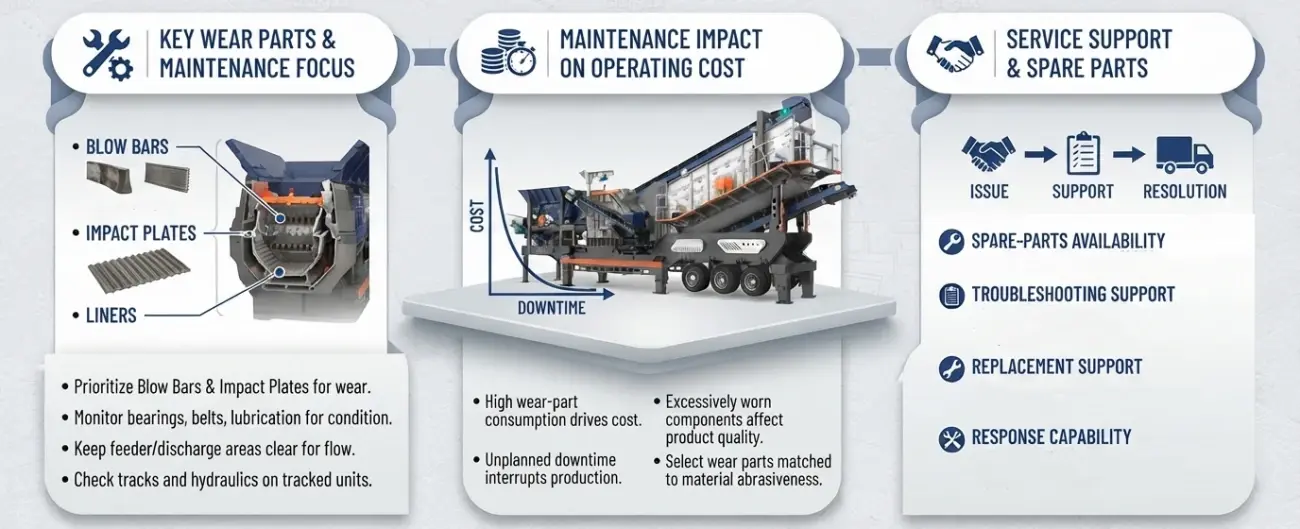
Key Wear Parts to Monitor
Blow bars and impact plates are the main wear parts that directly affect impact crushing performance.
- Blow bars: Receive repeated impact from the feed and gradually wear during operation. Excessive or uneven wear can affect crushing performance and product shape.
- Impact plates: Work with the blow bars inside the impact chamber and are exposed to continuous impact and abrasion.
- Other wear components: Liners and wear plates around the feeding and discharge areas may also require inspection depending on the material and configuration.
Highly abrasive materials such as granite, basalt, or quartz-rich rock can accelerate wear compared with concrete or limestone. Wear-part selection should therefore match the material being processed.
Maintenance Priorities
For a mobile impact crusher plant, maintenance should focus first on components whose deterioration can directly interrupt production.
- Check blow bars and impact plates for excessive or uneven wear.
- Inspect the impact chamber for buildup, damage, or abnormal clearance.
- Monitor bearings, lubrication, belts, and drive components for abnormal temperature, noise, or vibration.
- Keep the feeder and discharge areas clear to maintain consistent material flow.
- For tracked units, inspect the track system and hydraulic components during relocation and operation.
Maintenance frequency depends on material abrasiveness, operating hours, feed conditions, and working environment rather than a fixed schedule alone.
How Maintenance Affects Operating Cost
Wear-part consumption and unplanned downtime can have a greater impact on operating cost than routine maintenance itself.
For example, processing highly abrasive rock may require more frequent blow-bar replacement than processing concrete. Excessively worn impact components can also affect crushing performance and product quality.
For high-hour operations, wear-part availability and replacement time should therefore be considered alongside the initial equipment price.
Service Support That Matters in Operation
When selecting a mobile impact crusher, service support is most valuable when it helps restore production quickly and keep commonly replaced parts available.
- Spare-parts availability: Confirm that blow bars, impact plates, and other critical wear parts can be supplied within a practical timeframe.
- Troubleshooting support: Check whether technical assistance is available when abnormal vibration, temperature, material flow, or crushing performance occurs.
- Wear-part replacement support: Make sure operators can obtain the correct replacement parts and technical guidance when major wear components need to be changed.
- Response capability: For remote or high-production projects, clarify how technical problems are handled when equipment downtime would significantly affect production.
FAQs about Mobile Impact Crusher
Can a mobile impact crusher be used for both recycling and natural stone crushing?
Can a mobile impact crushing plant crush wet or sticky material?
What happens if the feed size exceeds the crusher’s maximum feed size?
What is the difference between rated capacity and actual production?
Does a mobile impact crusher need a separate screening plant?
How often do mobile impact crusher blow bars need to be replaced?
Find the Right Mobile Impact Crushing Solution
Choosing a mobile impact crusher is about finding a solution that fits your project—not simply selecting a machine with the right capacity.
Contact us to discuss your project. Our team can help you evaluate your crushing requirements, select a suitable and reliable mobile impact crushing solution, and support you in building a setup that works for your project. Let’s find the right solution and help make your project successful.