

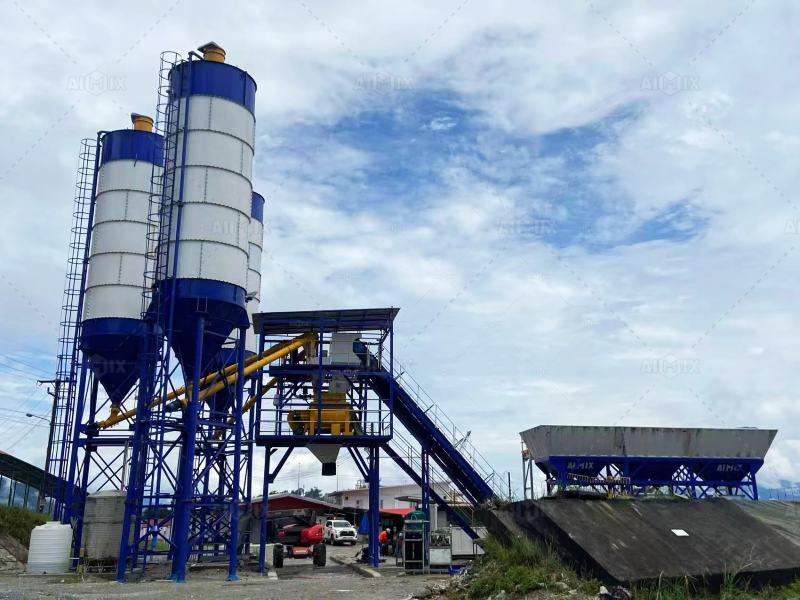
With Sri Lanka’s construction market growing at over 6% annually, concrete batching plants in Sri Lanka are essential for timely and efficient project delivery. Advanced plants reduce dependency on external suppliers and can lower transportation costs by up to 12%. Companies are increasingly adopting these plants to secure a consistent concrete supply, enhance operational efficiency, and strengthen their competitiveness.
Current Construction and Concrete Demand in Sri Lanka
Major Infrastructure Projects Driving Demand
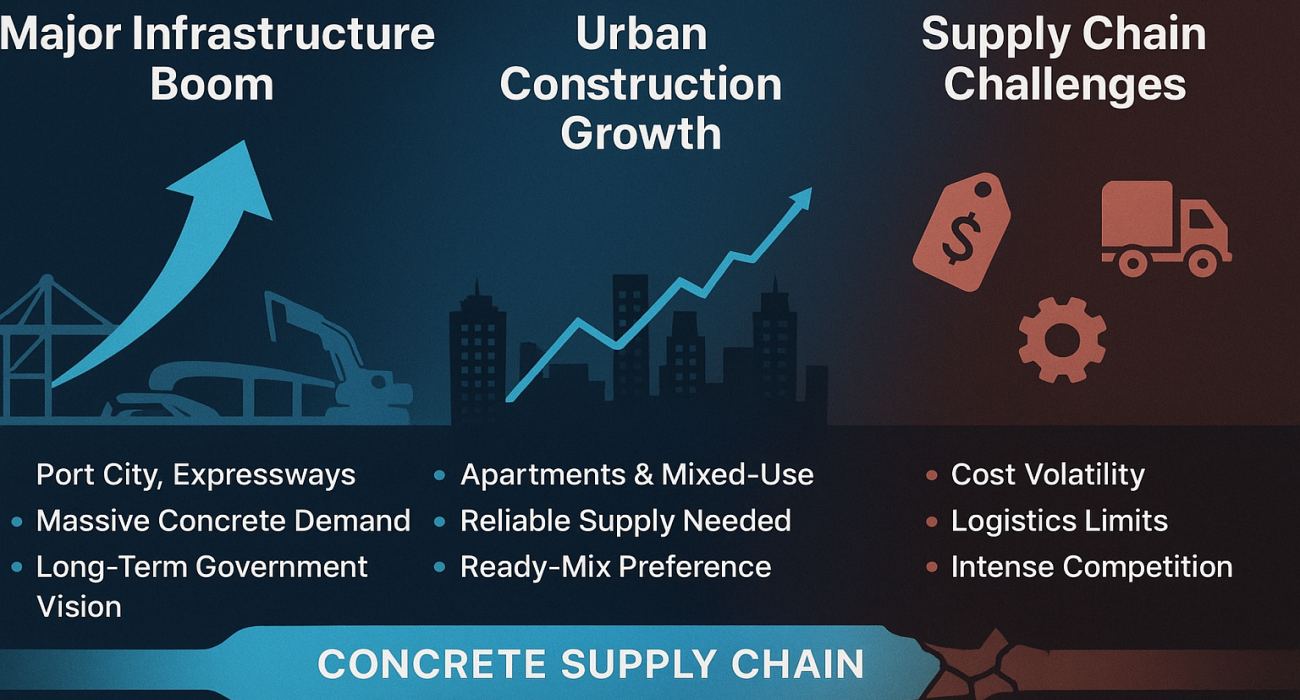
- Sri Lanka continues to invest in massive infrastructure upgrades intended to boost connectivity, logistics capacity, and regional development. Projects such as the Colombo Port City, Central Expressway, Southern Expressway extensions, and airport modernization programs are reshaping the nation’s demand for high-grade concrete.
- These expansive projects often require tens of thousands of cubic meters of concrete monthly, pushing contractors or companies to deploy large-scale stationary batching plants to ensure reliable supply. Furthermore, new port facilities, water treatment plants, and bridges require durable structural concrete mixes that can only be produced consistently through fully controlled batching systems.
- The government’s long-term vision includes industrial expansion, regional connectivity improvements, and resilient infrastructure—all of which will maintain concrete demand for years to come.
Residential and Commercial Construction Growth
- Sri Lanka’s urban centers, particularly Colombo, Gampaha, and Kandy, have experienced rising demand for apartments, mixed-use projects, hotels, office towers, and retail developments. Project teams increasingly favor ready-mix concrete due to higher durability and strict structural standards.
- Large housing projects and vertical construction require reliable supply schedules that eliminate delays. This trend has encouraged contractors and concrete companies to invest in batching plants that offer continuous supply without depending on third-party providers.
Supply Challenges in the Sri Lankan Concrete Market
- Although demand is high, the concrete industry faces several constraints:
- Raw materials fluctuate in cost due to import dependencies and mining regulations.
- Transporting concrete beyond 20–30 km becomes uneconomical, especially with rising fuel costs.
- Competition among RMC companies is increasing, pushing suppliers to differentiate through quality, automation, and faster delivery.
- These challenges highlight why many companies prefer owning batching plants rather than outsourcing concrete supply, especially for long-term or large-scale projects.
Why Concrete Batching Plants Are Critical in Sri Lanka
Enhancing Project Efficiency and Reducing Costs
- Producing concrete on-site lowers per-cubic-meter costs compared to purchasing ready-mix concrete.
- Ensures consistent production for fast-paced projects.
- Reduces reliance on manual labor and minimizes delays caused by concrete delivery shortages.
- Particularly beneficial for long-term infrastructure projects such as highways and bridges.
Ensuring Concrete Quality and Compliance
- Provides precise proportioning of cement, aggregates, water, and additives.
- Delivers uniform batches that meet engineering codes and construction safety standards.
- Offers consistent concrete quality that is difficult to achieve with semi-automated or manual methods.
Flexibility for Multi-Site and Remote Projects
- Modular and mobile concrete plants allow concrete supply across widely distributed or remote sites.
- Reduces transportation distances and time.
- Can be installed quickly with minimal civil work.
- Supports continuous concrete production, minimizing waste and project delays.
Adaptation to Local Climate Conditions
- Incorporates chilled water or ice systems to control concrete temperature in hot months.
- Covered aggregate storage manages moisture during rainy seasons.
- Moisture sensors adjust water content automatically.
- Backup power solutions ensure stable operations in areas with electricity instability.
Types of Concrete Batching Plants & Best-Fit Applications
Stationary Batching Plants for Sri Lanka
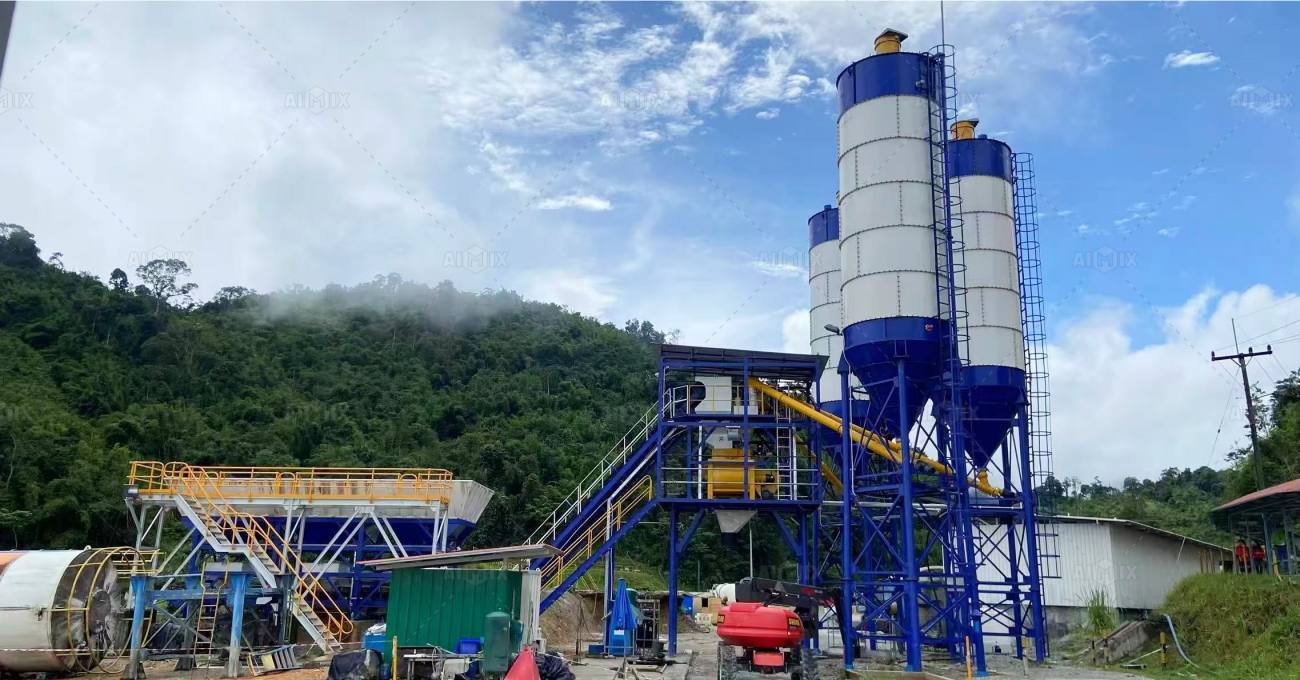
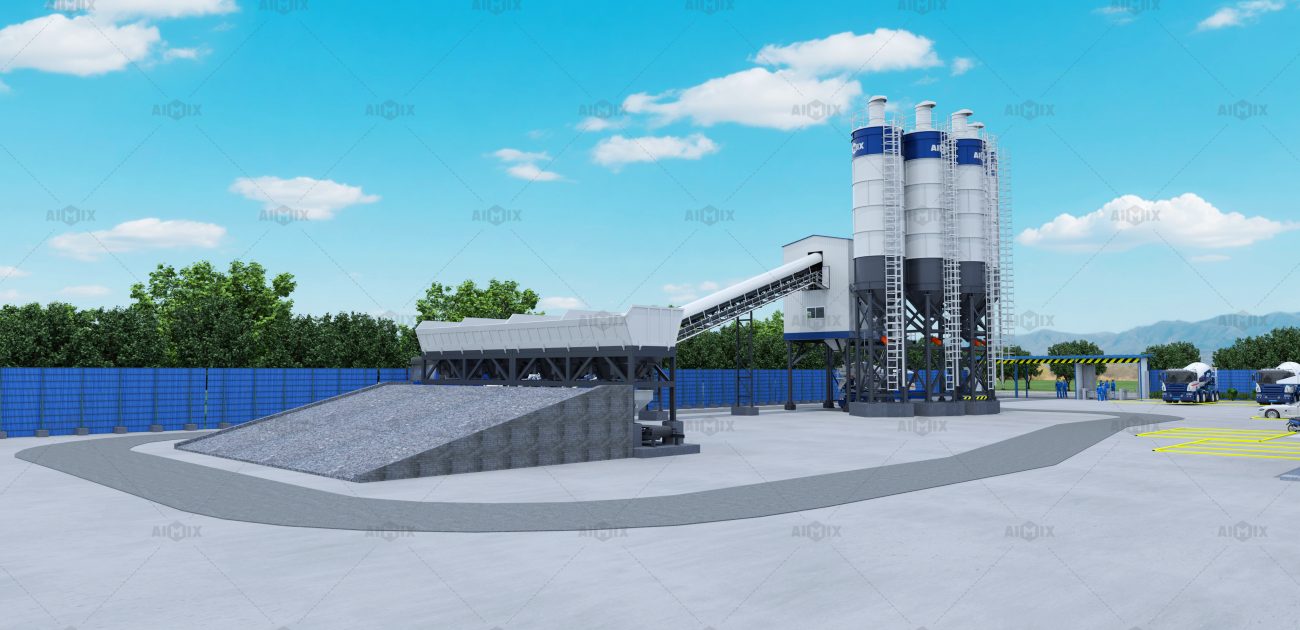
We offer the AJ series of stationary concrete batching plants, designed to meet the needs of medium to large-scale construction projects in Sri Lanka. To help you quickly understand the differences within the series, we provide a concise comparison of three representative models below. This overview will give you a clearer picture of their configurations and applications, enabling you to choose the most suitable plant based on your project’s specific production requirements and site conditions.
| Parameter | Stationary 90 Plant (AJ90) | Stationary 120 Plant (AJ120) | Stationary 180 Plant (AJ180) |
|---|---|---|---|
| Application & Project Scale | Medium to large-scale projects, long-term fixed operation (e.g., road & bridge engineering, industrial parks, high-rise building clusters). Duration: 1-3+ years. Moderate average concrete demand. | Large-scale projects, long-term fixed operation (e.g., road & bridge engineering, industrial parks, high-rise building clusters). Duration: 1-3+ years. Moderate to high average concrete demand. | Mega projects, large-scale production (e.g., cross-sea bridges, new urban district development), commercial ready-mix concrete supply. Duration: 1-5+ years. High-volume demand. |
| Site Requirement & Installation | Large (approx. 600-800 m²). Requires dedicated, hardened site with simple aggregate yard; may include lab. Installation: 20-30 days. Integrated foundation pouring, fixed (optional no-foundation installation). | Large (approx. 700-900 m²). Requires dedicated, hardened site with simple aggregate yard; includes lab. Installation: 25-40 days. Integrated foundation pouring, fixed (optional no-foundation installation). | Very Large (approx. 800-1000 m²). Requires dedicated, hardened site with aggregate yard and lab. Installation: 30-45 days. Complex foundation work, permanent fixed installation (optional no-foundation installation). |
| Key Configuration | Twin-shaft mixer (1.5 m³), 2-4 Cement silos (100-150T), 4 Aggregate batchers, Individual weighing. | Twin-shaft mixer (2.0 m³), 2-4 Cement silos (150-200T), 4 Aggregate batchers, Individual weighing. | Twin-shaft mixer (3.0 m³), 2-4 Cement silos (150-300T), 4 Aggregate batchers, Individual weighing. |
| Total Power & Energy Efficiency | 170-200 KW, Energy efficient. | 200-250 KW, Energy efficient. | 250-320 KW, with significant energy efficiency advantages in large-scale operations. |
| Operational Flexibility | Medium-Low (focus on batch production) | Medium-High (focus on batch production; multiple silos facilitate frequent grade changes) | High (designed for large-volume single grade; multiple silos facilitate frequent grade changes) |
| Environmental Protection | Standard (Pulse-jet dust filter + Soundproof cover) | Enhanced (Pulse-jet dust filter + Insulated enclosure) | High-end (Fully enclosed aggregate yard + Desulfurization & Dedusting) |
Mobile Concrete Batching Plants for Sri Lanka
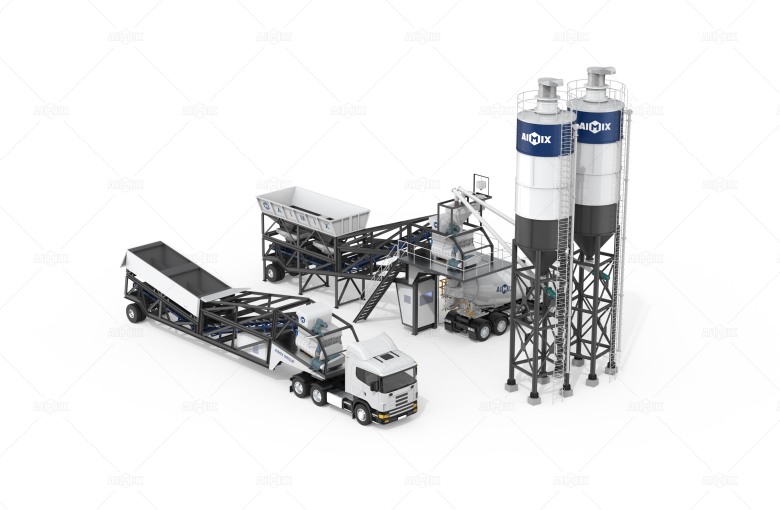
AJY Mobile Concrete Batch Plant
- Popular Models: AJY-60, AJY-90
- Productivity: can be up to 100 m³/h or more
- Mixer Type: Twin-shaft mixer
- Key Features: Compact footprint, strong output stability
- Site Area Requirement: Small (300-500 m²), no hardened ground or concrete foundation needed; only simple leveling (slope ≤3°) is required for installation.
- Applications: Ideal for temporary projects, outdoor works, or challenging geological areas—including rural roadworks, small bridge projects, house building, and emergency maintenance.
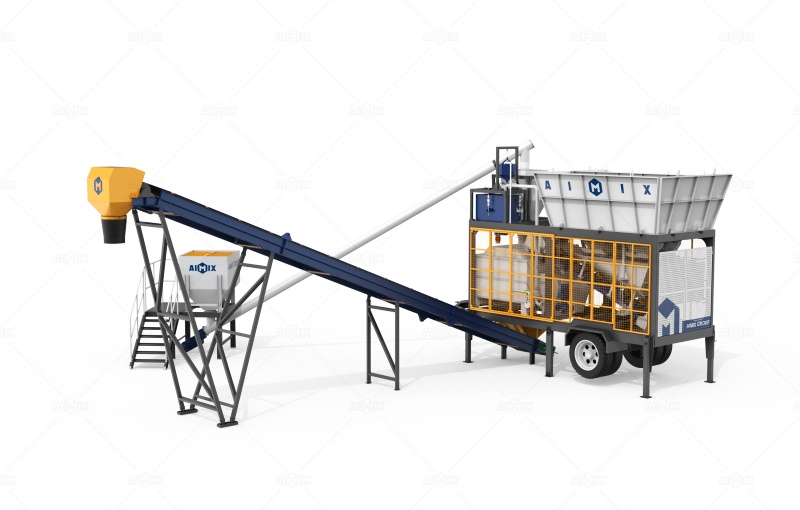
AJSY Series Compact Mobile Plant
- Popular Models: AJSY-20, AJSY-40
- Productivity: 20-40 m³/h
- Mixer: Twin shaft mixer
- Mixing Principle: Uses blades for forced mixing
- Suitable Materials: Dry-hard concrete, high-strength concrete, and special materials requiring high uniformity.
- Site Area Requirement: Small (150-200 m²), can use unhardened or simply hardened ground.
- Applications: Small projects, temporary sites (e.g., rural roads, small buildings), short-term construction (1-6 months).
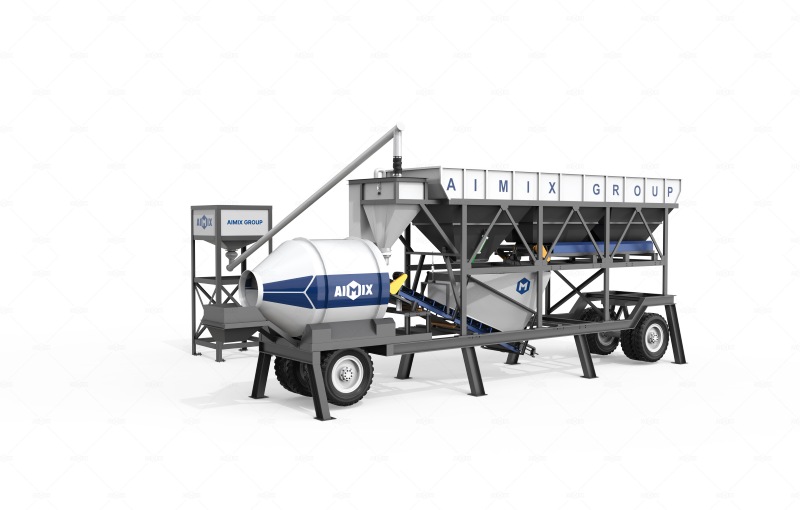
AJZY Drum Type Portable Concrete Plant
- Popular Models: AJZY-40, AJZY-60
- Productivity: 40-60 m³/h
- Mixer: JZM750-JZM1500
- Mixing Principle: Uses drum rotation and gravity
- Suitable Materials: Plastic concrete, semi-dry concrete, lightweight concrete, mortar, and plaster.
- Site Area Requirement: Small (100-300 m²), deployable in rural yards, fields, and tight-site borders.
- Applications: Ideal for rural home building, village road construction, and minor waterworks requiring low-volume production.
Foundation-free Concrete Plant Solutions for Sri Lanka
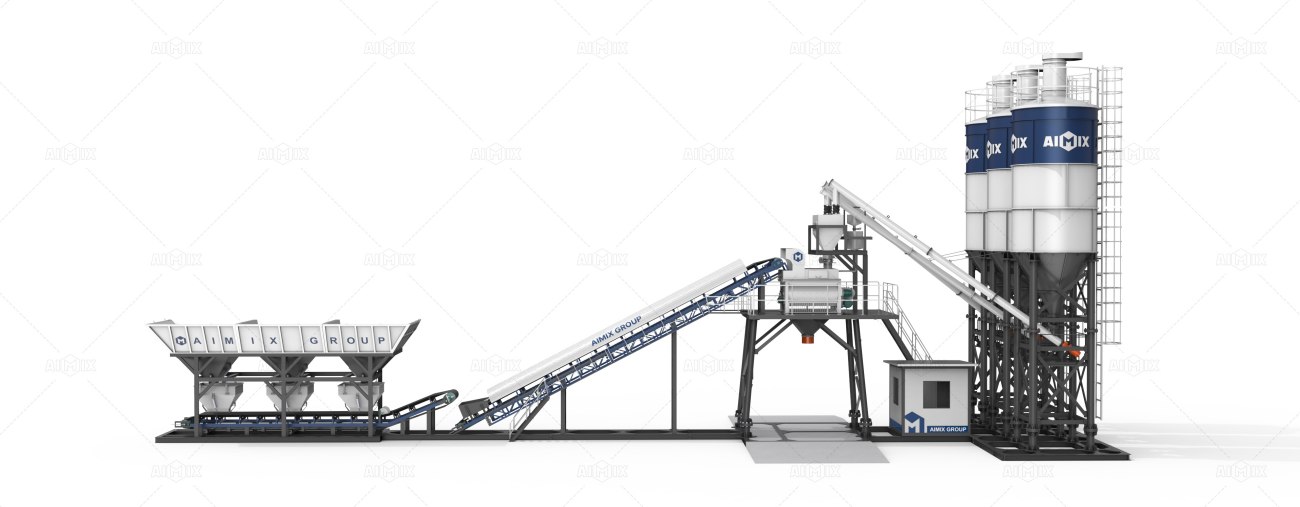
Our AJM series foundation-free concrete batching plant is designed with a robust steel-frame base that integrates the entire structure into a single, stable unit. This eliminates the need for traditional deep civil foundations—users only need to prepare a leveled and hardened ground surface. As a result, the AJM plant significantly reduces upfront civil construction work and lowers overall project investment.
In Sri Lanka, where many construction sites face tight timelines, frequent project relocation, or limited land preparation capacity, the AJM foundation-free plant provides an ideal solution. It is especially suitable for road upgrades, municipal works, rural infrastructure development, and short- to medium-term commercial concrete supply.
Concrete Batching Plant Cost Overview in Sri Lanka
When evaluating a concrete batching plant in Sri Lanka, investors often focus on both the purchase price and the complete cost structure behind the equipment. A clear understanding of typical pricing and what the total investment includes helps buyers choose the most suitable plant for their construction or concrete business.
Typical Pricing in the Sri Lankan Market
Concrete batching plant prices can vary based on capacity, configuration, and country of origin. Below is our estimated price range for your reference.
- Fixed Plants (AJ25–AJ180 m³/h): $33,000 to $210,000 or more
- Mobile Plants (AJY25–AJY90 m³/h): $38,000–$120,000 or more
- Compact Plants (AJSYseries): $30,000–$50,000
High-automation or precast-oriented plants sit at the premium end due to their advanced controls and precision mixing technology.
Local fabrication offers the lowest entry cost, whereas Chinese manufacturers provide a strong balance of affordability, automation level, and durability, making them popular among Sri Lankan users. European plants carry the highest price due to brand and engineering standards.
What the Total Cost Includes
The true investment goes beyond the batching plant price. Investors should expect the total cost to include:
- Batching plant equipment
- Civil works and foundation preparation
- Electrical and water system installation
- On-site installation and commissioning
- Optional components such as cement silos, screw conveyors, and dust-collection systems
- Import-related expenses such as shipping, customs clearance, and inland transportation
Understanding these components helps investors plan accurately, avoid hidden expenses, and match their plant configuration to project requirements.
Balancing Cost, Performance, and Long-Term Value
For buyers in Sri Lanka, selecting the right batching plant involves balancing initial price with long-term operational efficiency. A well-chosen plant provides:
- Consistent concrete quality
- Lower production cost per cubic meter
- Reduced project delays
- Long-term savings through lower maintenance and energy consumption
By aligning budget, capacity needs, and automation level, buyers can achieve a high return on investment while supporting steady construction output.
Key Operational Practices for Efficient Concrete Batch Plant Management

Raw Material Handling and Mix Control
Efficient operations start with proper material management. High-quality aggregates and cement, stored correctly, prevent contamination and ensure consistent concrete strength. Automated weighing and batching systems reduce material waste and maintain precise mix ratios for all batches.

Energy and Water Management
Optimizing energy and water usage lowers operational costs. Modern batching plants use energy-efficient motors, variable-frequency drives, and precise dosing systems to reduce consumption. Recycling water and monitoring usage also supports sustainable operations.

Concrete Transport and Delivery Planning
Timely delivery is crucial for maintaining concrete workability. Efficient scheduling of transit mixers and pumps reduces waiting times, ensures proper placement, and minimizes waste. Monitoring site distances and traffic conditions helps optimize delivery routes.

Workforce Skills and Training
Well-trained operators are essential for safe and efficient plant operations. Staff should understand mix control, routine maintenance, and safety protocols. Ongoing training ensures consistent output, reduces downtime, and supports adaptation to new equipment and technologies.

Environmental Compliance
Compliance with local regulations is vital. Dust collectors, noise reduction systems, and water treatment measures help plants meet legal standards and reduce environmental impact. Sustainable practices improve community acceptance and long-term operational reliability.
Sustainability and Innovation in Sri Lanka’s Concrete Industry
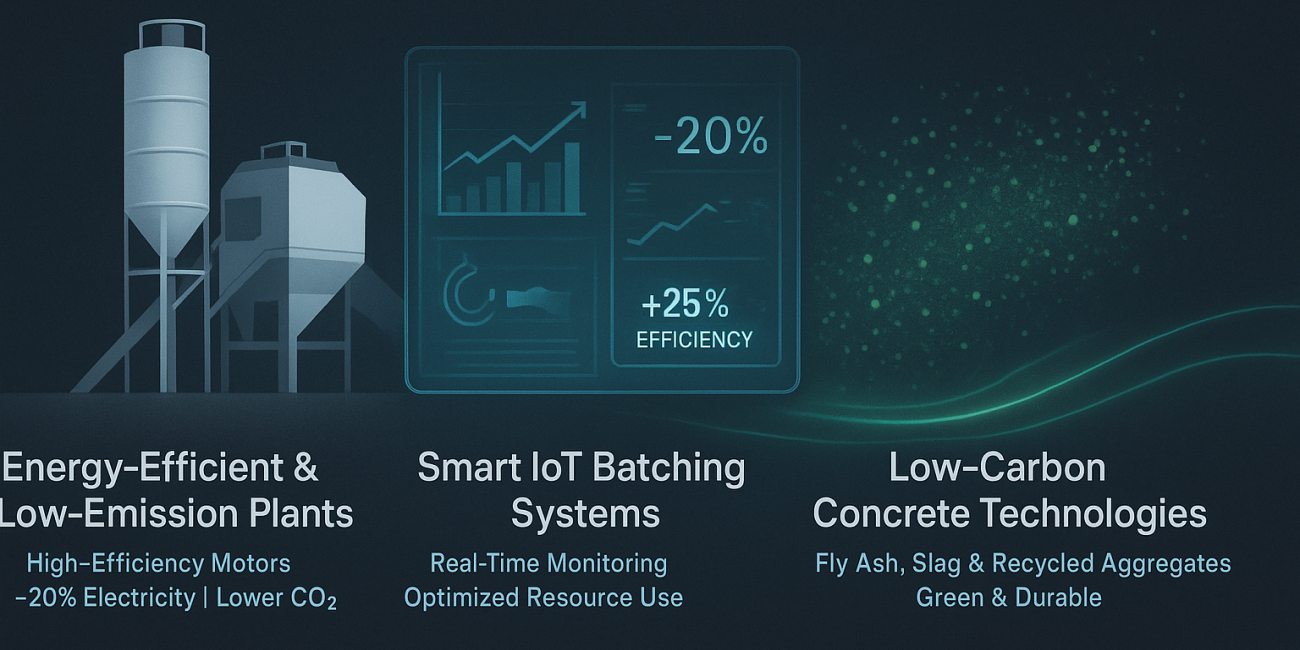
Energy-Efficient and Low-Emission PlantsModern ready mix plant in Sri Lanka increasingly adopt energy-efficient technologies, such as high-efficiency motors, low-friction conveyors, and intelligent energy distribution systems, reducing electricity consumption by up to 20%. These upgrades also help lower CO₂ emissions, supporting national climate targets.
Smart Batching SystemsIoT-enabled platforms allow real-time monitoring of equipment performance, production volume, and concrete mix quality. This ensures consistent output, minimizes waste, and optimizes resource use, improving overall plant efficiency by approximately 15–25%.
Low-Carbon Concrete TechnologiesThe use of supplementary cementitious materials such as fly ash, slag, and recycled aggregates is rising, enabling Sri Lanka’s construction sector to transition toward greener, low-carbon concrete solutions without compromising durability.
How to Choose the Right Concrete Batching Plant Supplier in Sri Lanka
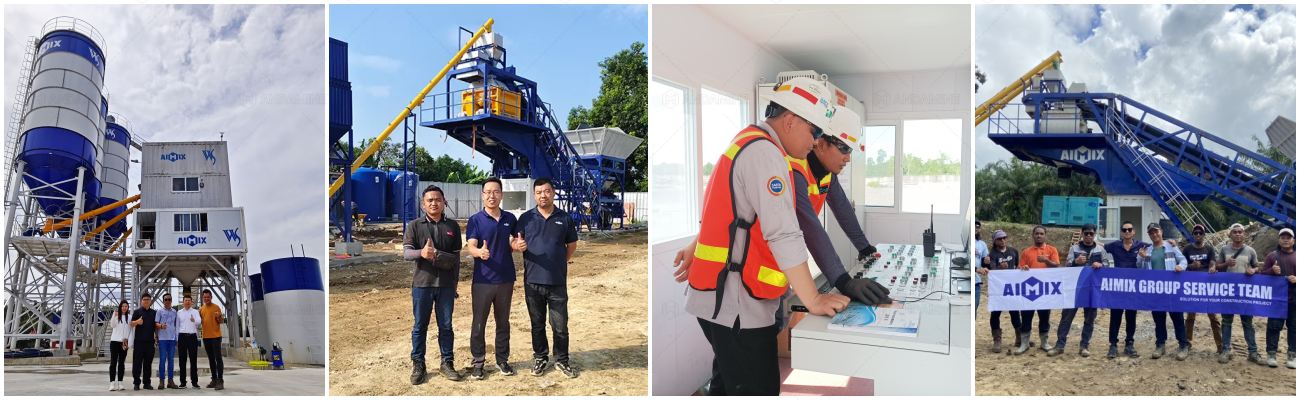
Selecting a reliable supplier goes beyond price—it impacts your plant’s performance, efficiency, and long-term success. Here’s what to focus on while making a choice:
Technical Expertise and Customization
- Look for suppliers who can design concrete production solutions tailored to your project size and type.
- Check their experience with mobile, stationary, and compact batching plants.
- A supplier offering technical customization can help optimize plant layout and workflow.
Installation and Training Support
- Ensure the concrete plant supplier provides professional installation and commissioning services.
- Operator training is essential to maintain efficiency and reduce errors.
- Long-term guidance improves plant uptime and productivity.
After-Sales Service and Spare Parts
- Confirm availability of spare parts and timely maintenance support from the suppliers.
- A responsive service team can prevent costly downtime and production delays.
- Check if they provide remote support or on-site troubleshooting.
Track Record and References
- Evaluate suppliers with proven projects in Sri Lanka or similar markets.
- Positive customer feedback and case studies indicate reliability and professionalism.
- Suppliers with regional experience can navigate local regulations and logistics more smoothly.
Long-Term Partnership Potential
- Choose suppliers committed to ongoing support and innovation.
- A strong partnership ensures upgrades, spare parts, and advice as your production grows.
By prioritizing these factors, Sri Lankan contractors or companies can partner with a supplier who delivers reliable performance, reduces operational risks, and supports business growth over time.
Reliable Concrete Solutions for Sri Lanka
Investing in the right concrete batching plant ensures higher efficiency, lower costs, and sustainable production for projects of any scale. Energy-saving and smart technologies make concrete operations more reliable and consistent.
AIMIX offers professional batching plant equipment and full after-sales support to meet diverse construction needs. Contact us today to explore how our solutions can help you achieve cost-effective, high-quality, and environmentally responsible concrete production.
