

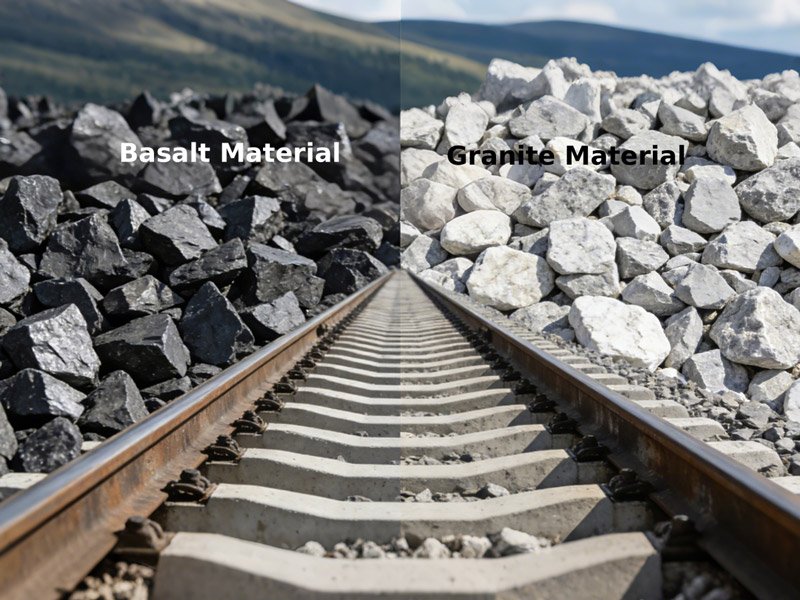
Railway ballast is the essential foundation of the entire railway track system. It not only supports the track but also provides effective drainage. The quality of ballast materials directly determines the stability of railway lines, their maintenance cycles, and overall operational safety. Basalt and granite are two commonly used ballast materials, each with distinct physical and chemical properties.
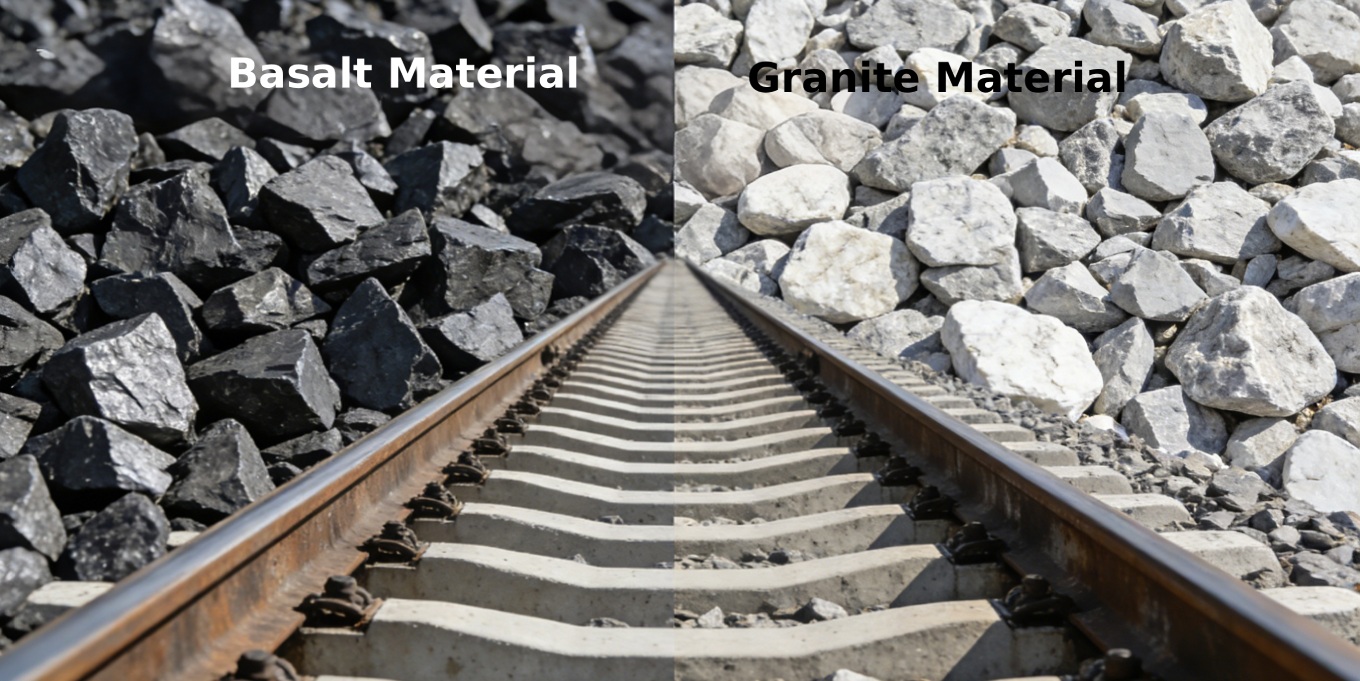
This article offers a comprehensive, in-depth comparison of these materials from multiple perspectives, including their characteristics, compressive strength, and durability. Ultimately, it explores which material delivers superior performance.
Basic Characteristics and Geological Origins of the Two Rock Types
Basalt: A Classic Example of Mafic Volcanic Rock
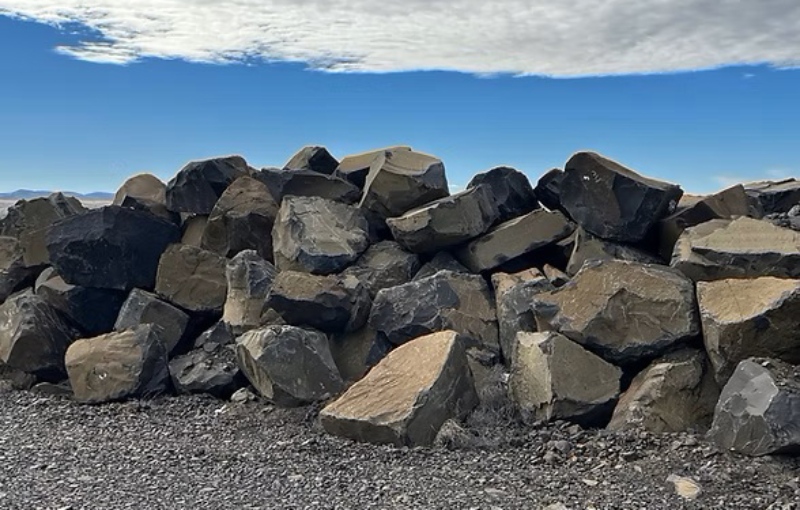
Basalt is a type of mafic extrusive rock. It forms when magma from the Earth’s mantle cools and solidifies quickly on or near the surface. Its color typically ranges from dark gray and greenish-black to black.
Main Characteristics:
- Mineral Composition: It consists mainly of pyroxene and feldspar, and it is rich in iron and magnesium minerals. Its silica content is relatively low.
- Texture: Because the magma cools quickly, the minerals don’t have enough time to fully crystallize. As a result, basalt usually has a fine-grained, dense, aphanitic texture, or even a glassy texture. It’s difficult to distinguish its mineral grains with the naked eye.
Granite: An Outstanding Example of Felsic Plutonic Rock
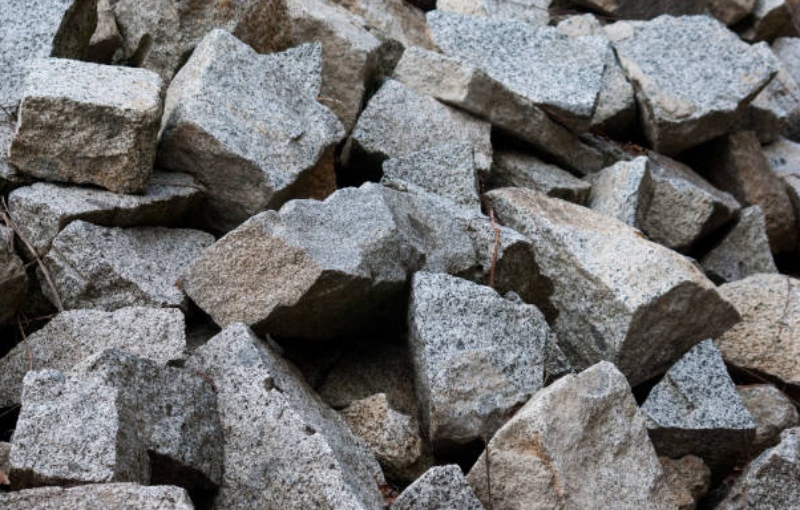
Granite is a felsic plutonic rock. It forms from magma that cools and crystallizes slowly deep beneath the Earth’s surface. Its appearance is typically light-colored, such as grayish-white or flesh-red.
Main Characteristics:
- Mineral Composition: Its primary minerals are quartz, feldspar, and mica, and it has a high silica content.
- Texture: It has a classic granitic texture. This means the mineral crystals are well-developed, with coarse grains that are similar in size. You can clearly see the individual crystals of quartz, feldspar, and mica with the naked eye.
Compressive Strength and Load-Bearing Capacity
Ballast must withstand tremendous pressure from the sleepers and distribute that load down to the subgrade. Uniaxial compressive strength is a direct indicator of a rock’s load-bearing ability.
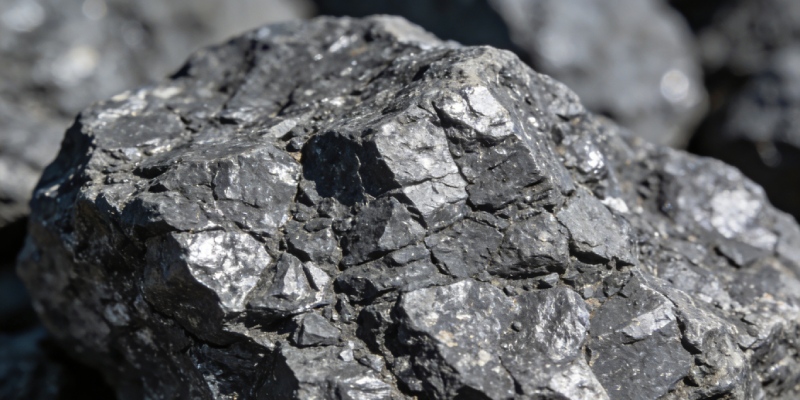
Compressive Strength of Basalt:
Fresh, dense basalt offers extremely high compressive strength, typically falling in the range of 200–350 MPa or even higher.
This strength comes from its interlocking, fine-grained texture. This structure allows stress to distribute evenly throughout the material, so it’s less likely to create points of concentrated stress.
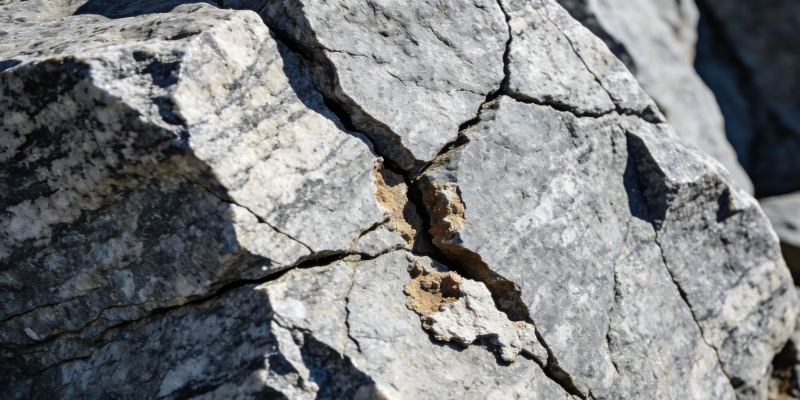
Compressive Strength of Granite:
Granite shows a wider range of compressive strength, usually landing between 100 and 250 MPa.
Weathering and joint fractures have a significant impact on its strength. Coarse-grained granite generally has lower strength than fine-grained granite because it has more boundaries between its crystals.
So, looking at ultimate load-bearing capacity, basalt does have a higher upper limit. However, for standard railways or even most heavy-haul lines, as long as the rock is unweathered, both types exceed practical requirements (which typically call for >100 MPa or higher). Therefore, unless we’re talking about an extreme heavy-haul route, both materials usually meet the load-bearing demands.
Crushing Process Adaptability: Processing Challenges and Equipment Selection for Different Rock Types
The final quality of railway ballast depends on two main factors: the properties of the original rock and the crushing process. The physical differences between basalt and granite mean they need tailored crushing solutions. Choosing the wrong stone crusher plant equipment not only lowers production efficiency and drives up costs, but it also directly affects the ballast’s gradation quality and particle shape.
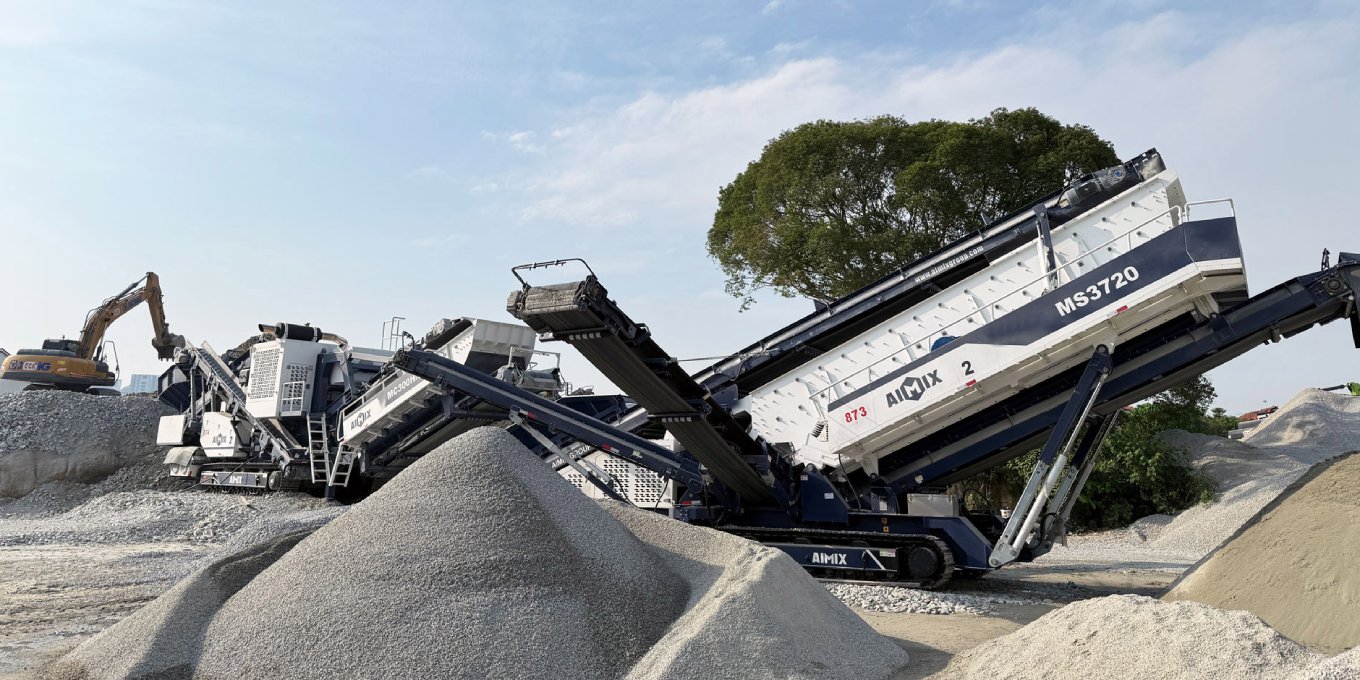
The Mechanical Roots of Crushing Difficulty
Basalt: Toughness-Driven Crushing Characteristics
Basalt features high compressive strength combined with high toughness. When hit with force, it doesn’t easily crack along grain boundaries. Instead, it absorbs energy, undergoes some plastic deformation, and then breaks. This behavior means material moves through the crushing chamber more slowly, which can lead to blockages. It also causes high abrasive wear on crushing parts—similar to sandpaper rubbing against metal.
Granite: Brittleness-Driven Crushing Characteristics
Granite features high hardness combined with relative brittleness. The boundaries between its minerals create natural weak points, so when struck, it splits more easily along these lines. Because granite contains extremely hard quartz crystals, it causes abrasive wear on crushing parts that’s more like cutting metal with a tool.
Differences in Equipment Selection for Crushing Processes
| Crushing stage | Key points for basalt crushing machine selection | Key points for granite crushing equipment selection |
| Coarse crushing (jaw crusher) | The feed inlet needs to be enlarged and the spindle speed increased to overcome toughness using high-frequency impact; the tooth profile of the liner should be deep to grip the material. | Standard configuration is sufficient; however, it is important to monitor the weathered layer in the feed to prevent mud from clogging the cavity. |
| Medium crushing (cone crusher) | Key differences: Basalt should be crushed using a low-speed, high-torque crushing chamber design to extend the residence time of the material in the crushing zone and ensure thorough crushing; a large eccentricity is also recommended. | High-speed cone crushers can be used to reduce wear and tear by utilizing the high-speed impact and self-crushing of materials; the principle of “laminated crushing” is even more suitable. |
| Sand making/shaping | A shaping machine, such as a vertical shaft impact crusher(sand making machine), must be configured to improve the excessive needle-like and flaky particles caused by toughness. | The main method to control the needle-like shape is to optimize the shape of the pre-crushing chamber, with the shaping machine serving as an auxiliary tool. |
Economic Comparison of Wear Part Life
This is the most important operational indicator for quarry owners.
Basalt Production Line:
- Wear Characteristics: Uniform wear but rapid rate. The lifespan of the cone crusher‘s grinding bowl and crushing wall is typically 20%-30% shorter than when crushing granite.
- Countermeasures: High-manganese steel or higher-grade alloy wear-resistant liners must be used. Although liner replacement costs are high, the market premium of the finished basalt product usually covers this increased cost.
Granite Production Line:
- Wear Characteristics: Wear is concentrated in the area in contact with quartz, potentially resulting in localized grooved wear. However, the overall liner lifespan is longer.
- Risk Points: If the quartz crystals in the granite are large (>5mm), the wear on the hammer and liners accelerates dramatically, even exceeding that of basalt.
Process Control of Flaky and Equisetite Content
Flaky and equisetite particles are a major obstacle to ballast production, and the difficulty of controlling them differs significantly between the two types of rock.
Basalt:
-
Basalt Control Challenges: Due to its high toughness, the elongated particles produced during crushing are not easily broken in subsequent crushing stages. A “more crushing, less grinding” principle must be adopted, increasing the number of crushing stages (e.g., three or even four stages), and mandating the use of shaping equipment in the final stage.
Empirical Data: To achieve the national standard requirement of a flaky and equisetite index <12% for basalt ballast, an additional shaping process is usually required compared to granite.
Granite:
- Granite Control Advantages: Its brittle nature makes it easier to fracture into cubes along joint surfaces using a cone crusher employing lamination crushing. If the original rock joints are well-developed, even two stages of crushing may be sufficient to produce qualified ballast.
- Warning: Coarse-grained granite (crystal grains >10mm) is prone to spalling along mineral boundaries during crushing, potentially producing more flattened particles; therefore, enhanced screening monitoring is necessary.
Differences in Dust Suppression Processes
Basalt: Dust particles generated during processing are mostly angular in shape, have a high specific gravity, and are relatively easy to collect through gravity settling and wet dust collection.
Granite: Contains a large amount of quartz, and the fine quartz dust (respirable dust) generated during crushing poses a greater risk to human health (silicosis risk). Therefore, granite crushing lines must be equipped with more sophisticated closed-loop dust collection systems and ventilation measures, resulting in higher environmental protection costs.
Particle Shape and Interlocking Ability
The friction between ballast particles, what engineers call the internal friction angle, is what resists track movement both longitudinally and laterally. Particle shape directly determines this interlocking ability.
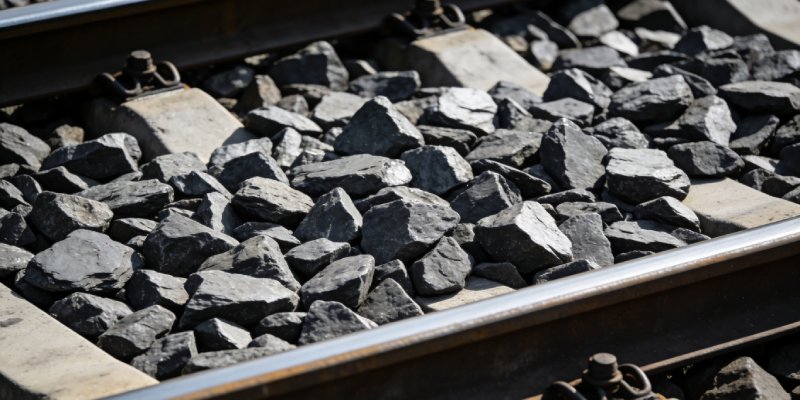
Basalt:
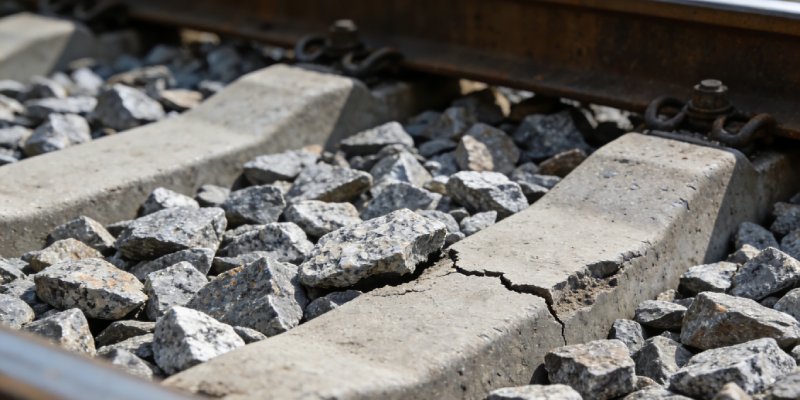
After crushing, basalt tends to produce cubic or sharply angular particles. The broken surfaces stay fresh and rough, giving them a high friction coefficient. This shape creates excellent particle interlock, which means the track bed remains stable and resists shifting under train vibrations.
Granite:
During crushing, if the process isn’t quite right, granite can easily split along its natural joint planes or mineral boundaries. This creates a higher risk of producing needle-like or flaky particles. Now, blocky granite particles with rough surfaces still interlock well. But if too many flat, elongated particles make it through, those thin pieces tend to break under load. This not only weakens the material itself, but it also leads to rapid deformation of the track bed.
So, when it comes to controlling particle shape, basalt generally makes it easier to produce those ideal cubic particles. For granite, you need to carefully manage the crushing process—for example, using cone crushers instead of jaw crushers at certain stages—to keep flat and elongated particles in check. Only then can you achieve interlocking performance similar to basalt.
Weathering Resistance and Chemical Stability
Ballast sits exposed to the elements for years, so it needs to hold up against temperature changes, water, air, and even chemical reactions from its own fines. The differences in durability show up in a few key areas.
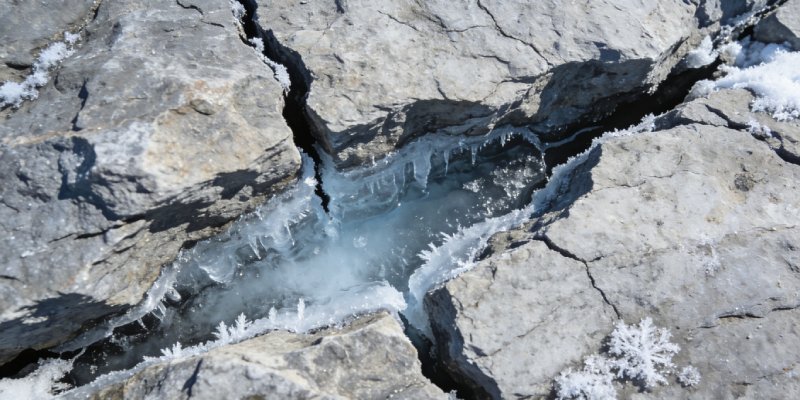
Physical Weathering (Freeze-Thaw Cycles):
In cold regions, water seeps into rock pores, freezes, and expands—creating enormous internal stress. Basalt’s low absorption and low porosity give it excellent resistance to this freeze-thaw action. Granite, on the other hand, may have micro-cracks or certain minerals that absorb water and swell. This can make it somewhat more vulnerable to freeze-thaw damage.
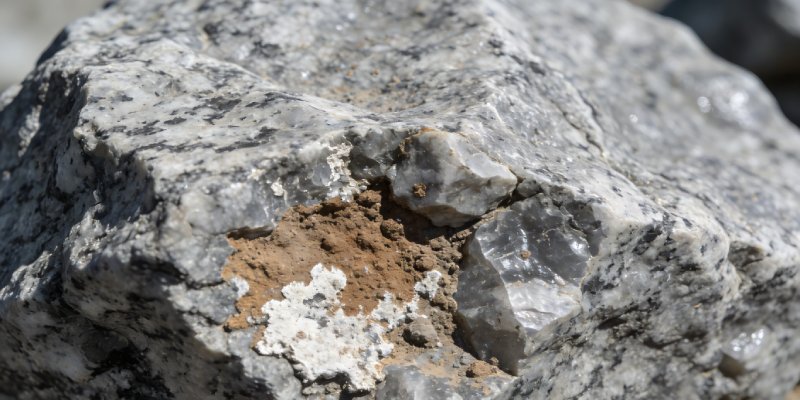
Chemical Weathering:
The iron and magnesium minerals in basalt can oxidize slowly in damp conditions, but overall, its chemical behavior stays relatively stable.
Feldspar minerals in granite, however, tend to break down through hydrolysis when they meet surface water and carbon dioxide. This process forms clay minerals over time. While it happens slowly, it gradually weakens the particles. Also, if granite contains impurities like pyrite, that can oxidize and produce acid—speeding up corrosion of both the rock itself and surrounding materials.
In environments with high humidity, wide temperature swings, or heavy industrial pollution, basalt usually shows more consistent long-term durability. It tends to hold onto its original mechanical properties better than granite does.
Cost-Benefit Analysis: Procurement, Transport, and Maintenance
Performance matters, but in the end, it has to connect back to cost. With global sourcing and regional construction happening side by side these days, choosing ballast for a railway project can’t just focus on the initial material price. You have to look at the whole life cycle—factoring in extraction and processing, international or regional logistics, and decades of future track maintenance.
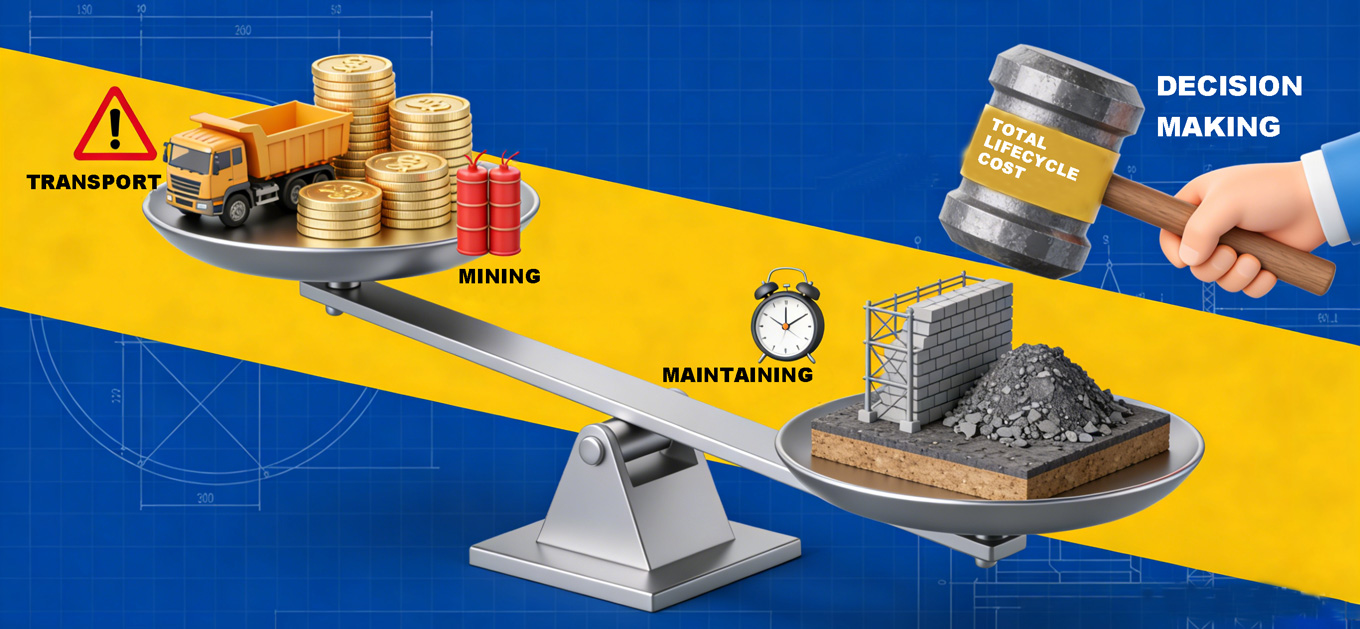
- Blasting Difficulty: Basalt’s high toughness and fewer natural fractures make it harder to blast. It usually needs more drilling and more explosives than granite, so extraction costs run a bit higher.
- Granite: Its natural jointing actually helps with extraction, and it generally requires less energy to crush. But watch out—if the quartz grains are too coarse, that can still accelerate wear on equipment.
- Granite: As the bedrock of continental crust, granite is widespread. From Northern Europe to Africa, from the Americas to Southeast Asia, most inland projects can find granite resources nearby. That gives it a clear advantage in transport costs.
- Basalt: Its distribution is more regional. You’ll find it mainly in volcanic areas like the Pacific Ring of Fire or the East African Rift. In places without volcanic rock—think the North European Plain or Middle Eastern deserts—basalt becomes a scarce resource. Hauling it over long distances can cost two to three times the material’s own price.
- Initial Investment:
Basalt carries a higher ex-factory price, so it’s a premium-priced material. Granite, with its wide availability and competitive markets, usually comes with a lower purchase price.
- Long-Term Maintenance:
Basalt: Good wear resistance means less fines production. That translates to longer ballast life and more stable track. You can go longer between tamping cycles, saving on labor and machinery costs over time.
Granite: If the quality isn’t right, you might see faster breakdown and more fines. That means more frequent topping up with fresh ballast and more screening work. Long-term maintenance costs can climb quickly.
Final Recommendations:
- Got good-quality basalt within 200 kilometers of your project? That’s your technical and economic sweet spot, go with basalt.
- Only have local granite available? No problem—just be strict about selecting high-quality, unweathered granite with low abrasion loss. It’s still a reliable option.
- Facing a long haul because local resources are scarce? Run the numbers carefully. Factor those high transport costs into your financial model alongside the maintenance costs for each option. In some extreme logistics situations, decent-quality local granite might actually be the more cost-effective choice in the long run.
Environmental and Sustainability Impacts
Modern engineering puts more and more weight on a material’s environmental profile. When it comes to choosing railway ballast, environmental impact and sustainability have become key factors in the decision. Here’s a closer look at how basalt and granite compare on these fronts.
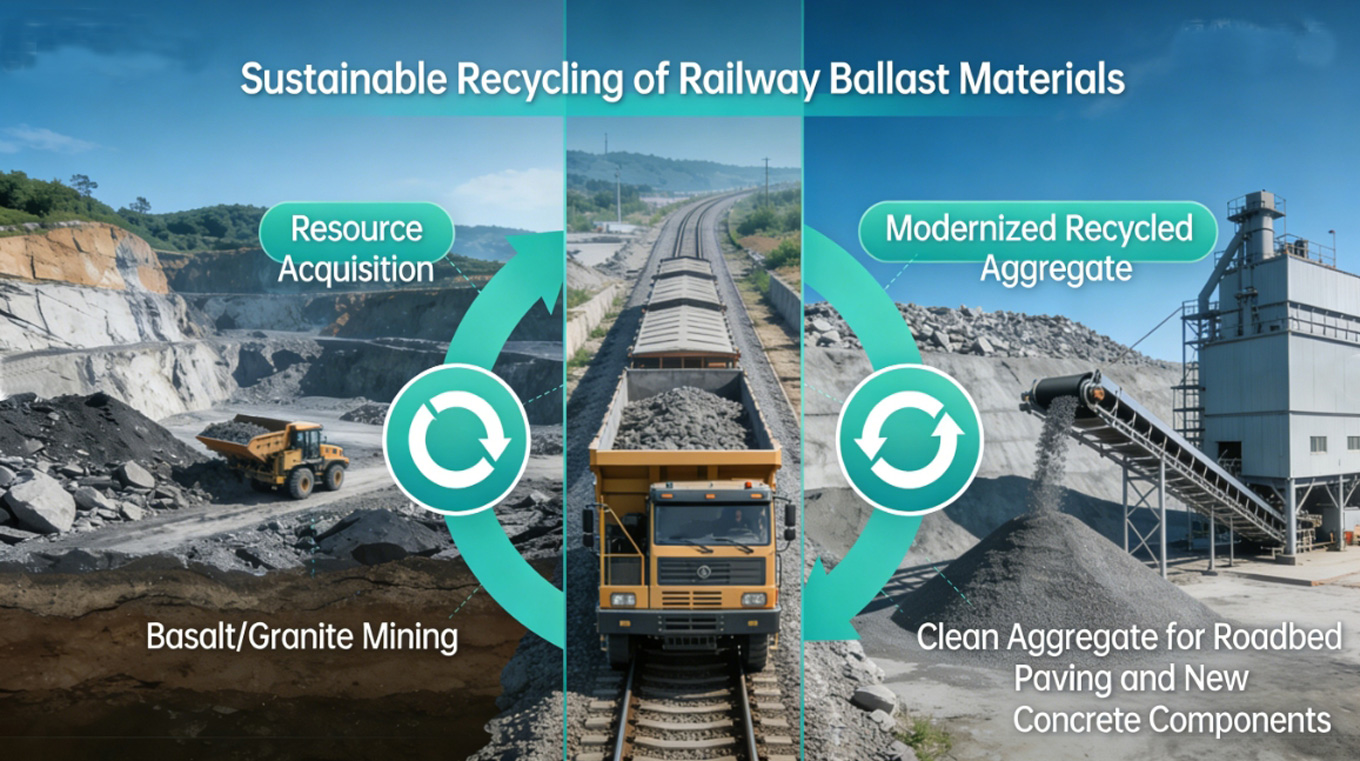
Resource Extraction
Both materials come from natural rock, which means open-pit mining. This type of extraction does affect local terrain and ecosystems. So, you really need to evaluate each quarry’s environmental permits and its plans for land restoration.
Carbon Emissions
The energy used in mining, crushing, and transport is where most of the carbon footprint comes from. Processing harder basalt might generate higher emissions per ton upfront. But here’s the trade-off: basalt’s longer service life means less frequent maintenance and replacement down the road. That can offset some of those initial emissions.
Sustainability and Recycling
- Old ballast doesn’t have to go to waste. You can use it for filling embankments or as aggregate in concrete production. In fact, waste basalt, with its high hardness and chemical stability, makes an excellent source of recycled aggregate.
- There’s also growing interest in engineered ballast made from industrial byproducts—things like blast furnace slag or recycled concrete aggregate. That’s an emerging area of research. But for now, natural basalt and granite remain the benchmarks that these alternatives are measured against.
Both basalt and granite have their environmental pros and cons. But by digging deeper into their sustainability profiles and embracing circular economy thinking, we can find solutions that work better for both the project and the planet. The key is matching the material to the specific context while keeping the whole life cycle in view.
Case Studies: Real-World Applications in Global Rail Projects
Nothing tests a material’s performance quite like real-world engineering. Let’s look at how basalt and granite hold up in actual railway projects around the globe.
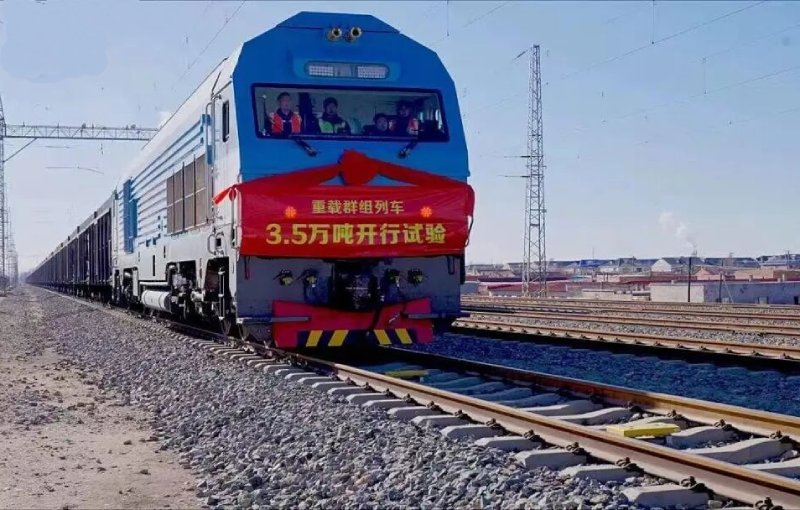
China’s Datong–Qinhuangdao Heavy Haul Railway
- Overview:This railway moves more freight annually than any other heavy haul railway globally.
- Material Used:High-strength basalt ballast.
- Reasons for Choice: Designed to withstand the impact from 10,000-tonne trains.
- Performance Results: Enhanced long-term track bed stability. Reduced maintenance windows, leading to increased efficiency.
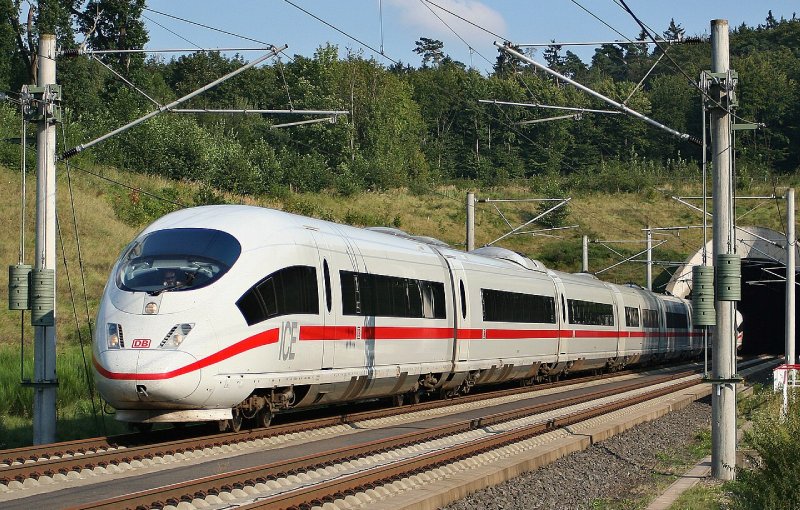
Europe’s High-Speed Rail Network
- Overview:Focused on the high-speed rail lines built by Germany and France.
- Materials Used:High-quality basalt and selected granite.
- Performance Requirements: Must meet high standards for wear resistance, resistance to breakdown, and cleanliness.
- Standards & Testing: Adhere to rigorous technical standards like the German rail code, specifying requirements for abrasion values and freeze-thaw resistance.
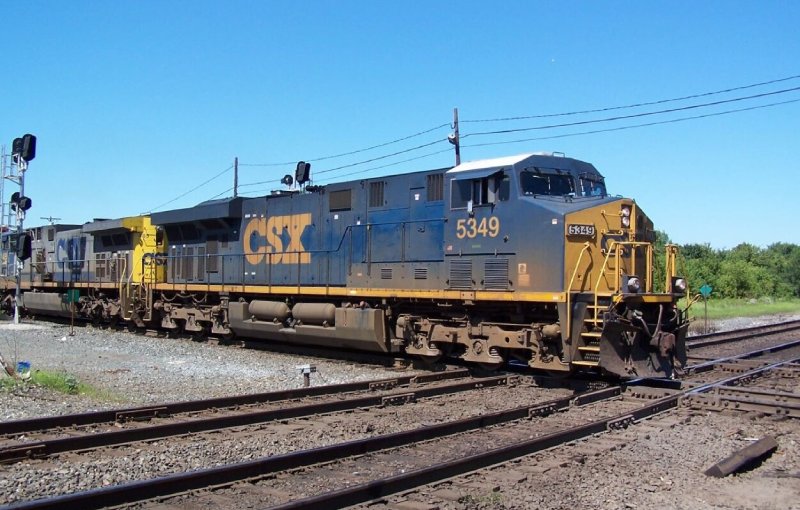
North American Class I Railroads
- Overview: Major freight corridors in the US and Canada.
- Material Used: Granite ballast.
- Reasons for Choice: Abundant local high-quality granite, reducing sourcing costs.
- Performance Management: Tight control of gradation and regular maintenance practices.
Selection Recommendations for Different Railway Application Scenarios
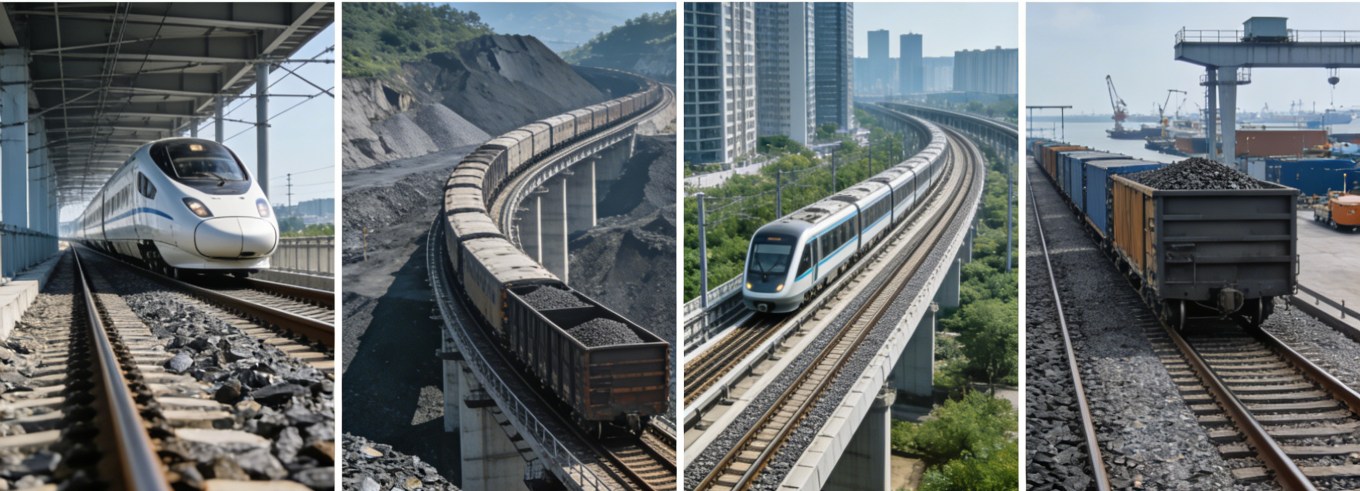
High-Speed Railway
- Recommended Material: Basalt
- Reason: Basalt provides exceptional stability and durability, crucial for high-speed operations. Its dense structure absorbs vibrations and withstands dynamic loads, ensuring long-term performance and low maintenance.
Heavy-Haul Railway
- Recommended Material: Basalt
- Reason: Basalt is ideal for heavy-haul railways due to its strong impact resistance. It effectively supports heavy freight loads, maintaining track integrity and enhancing safety and reliability.
Urban Rail Transit
- Optional Materials: Basalt or High-Quality Granite
- Considerations: Both materials are suitable, depending on cost and supply conditions. Basalt offers durability, while high-quality granite provides aesthetic appeal. The choice should balance budget constraints and urban design goals.
Branch Lines or Industrial Dedicated Lines
- Recommended Material: Granite
- Economic Advantage: Granite is often preferred for branch lines due to its cost-effectiveness while meeting engineering standards. It offers substantial strength and stability without the higher costs of premium materials.
Conclusion: Which One Delivers Superior Performance?
In summary, basalt outperforms granite in most key performance indicators, especially in railway applications under high stress and harsh environments, where it offers superior long-term performance and economic benefits. However, engineering material selection always requires finding the optimal balance between performance, cost, and resource availability. A scientific assessment of the specific technical requirements and operating conditions of a railway line is the cornerstone for making the most rational and economical choice.
Future Outlook: New Materials Trends and Research Directions
The future development of railway ballast materials will focus on performance improvement, resource conservation, and environmental friendliness. Main research directions include:
Performance Optimization
Through petrology and fracture mechanics research, more accurately predict and improve the long-term performance of ballast from specific rock and mineral deposits. Develop novel bonding materials or surface modification technologies to enhance the interlocking force and anti-breakage ability between ballast particles.
Composite Materials and Engineering Ballast
Research the mixing of rubber particles, polymers, and crushed stone to enhance the elasticity and vibration and noise reduction performance of the track bed. Simultaneously, utilizing industrial solid waste (such as steel slag and copper slag) to prepare high-performance synthetic aggregates is an important direction for resource recycling.
Intelligent Monitoring and Life Cycle Management
Embedding sensors in the ballast layer to monitor stress, humidity, and deformation in real time, achieving condition-based precision maintenance. Establishing a full life cycle database for ballast materials, utilizing big data and AI to optimize material selection and maintenance decisions.
