

In today’s rapidly urbanizing world, the global demand for construction materials is surging. With increasing populations moving into cities, the demand for infrastructure development is skyrocketing. Traditional building materials are facing dual pressures: resource shortages and environmental challenges. In this context, innovative construction materials emerge as one of the viable solutions.

One such promising option is the conversion of river pebbles into high-quality sand for construction standards. This process not only addresses the shortage of traditional sand but also offers significant environmental benefits. Let’s dive into the process of river pebble-to-sand conversion, its advantages, and its market potential.
The “Sand Shortage” Crisis Under The Wave Of Urbanization
Concrete forms the skeleton of modern cities, and sand is its essential “flesh.” As global urbanization accelerates at an unprecedented rate, a hidden crisis around this fundamental resource—the “sand shortage”—is now deeply threatening the sustainability of urban development. Understanding its causes and urgency is the first step toward solutions.
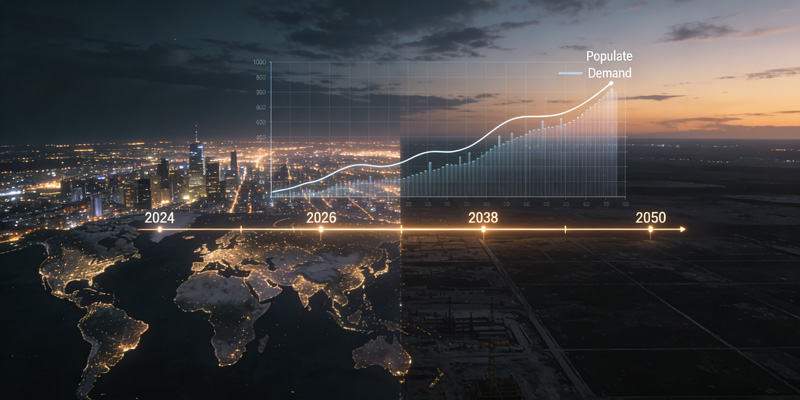
Soaring Demand: An Unmatched Construction Boom
- Population Growth: According to UN data, nearly 70% of the global population will live in cities by 2050. This means that in the next three decades, humanity needs to build an urban area roughly equivalent to all cities ever constructed.
- Material Reliance: As the core material of modern construction, concrete demand has skyrocketed. Sand makes up about 30% of concrete’s volume, making it the world’s second most consumed natural resource, after water.
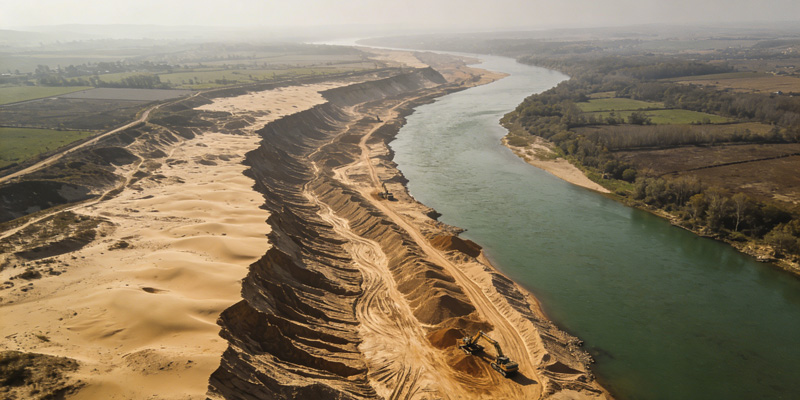
Dwindling Supply: Unsustainable and Destructive Extraction
- Staggering Scale: The world consumes approximately 40-50 billion tonnes of sand and gravel each year. The current extraction rate far exceeds nature’s ability to replenish it.
- Ecological Disaster: Excessive mining of natural river and lake sand directly causes severe environmental consequences. These include river channel alterations, coastline erosion, groundwater depletion, and the collapse of freshwater ecosystems. From the Mekong to the Niger River, illegal sand mining has become a global environmental and governance challenge.
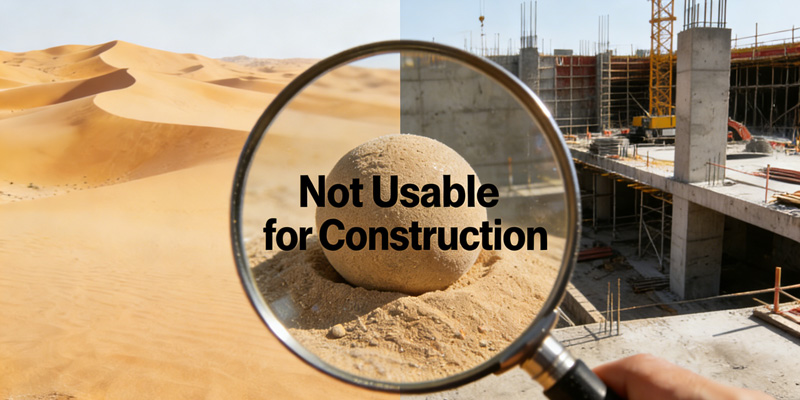
The Substitution Challenge: Not All Sand Is Usable
- The Desert Sand Problem: Deserts are vast, but their sand grains are too smooth and rounded from wind erosion. They lack the angular edges needed to create effective mechanical bonds in concrete, making them unsuitable for most construction.
- Economic & Social Impact: The shortage of natural construction sand drives up global building material costs. This can increase housing prices, delay critical infrastructure projects (including affordable housing), and hinder socio-economic development.
The current “extract-and-consume” model for construction sand is unsustainable. What began as a local issue is now a global challenge. Therefore, the construction industry must fundamentally shift its resources.
Finding a scalable, eco-friendly, and high-performance alternative sand source is crucial for the healthy development of future cities. This is why efficiently utilizing abundantly available river pebbles and transforming them into high-quality construction sand is more than just a technical fix—it’s a strategic necessity.
Why River Pebbles? A Resource and Advantage Analysis
River pebbles are primarily formed from hard rocks like quartzite and granite. Over time, river water smooths and rounds them through erosion and transport. They are widely distributed across riverbeds and banks globally. Unlike dwindling natural sand, river pebbles exist in vast quantities. Moreover, with scientific planning, their collection disturbs river ecosystems far less than direct sand dredging. Choosing river pebbles as raw material for manufactured sand hinges on three core advantages:
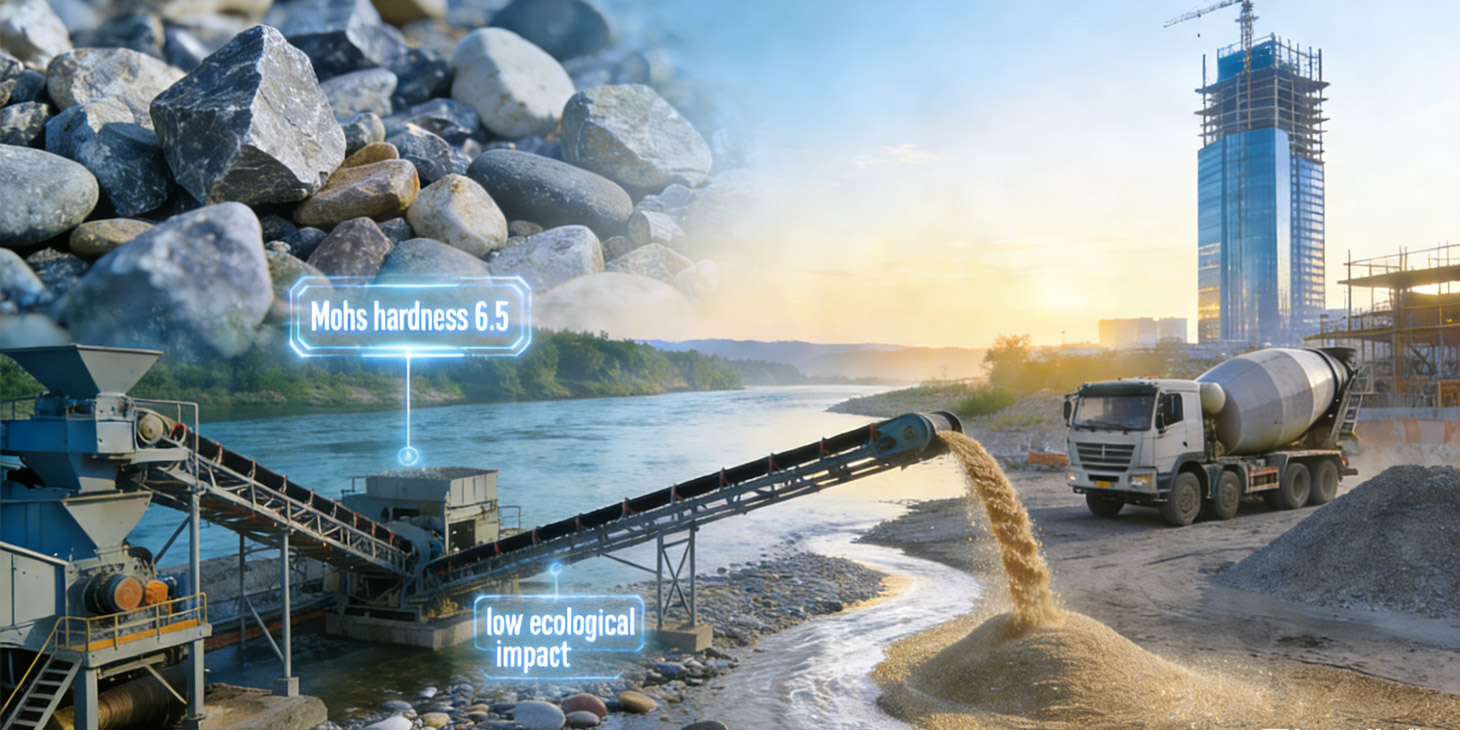
Superior Physical and Chemical Properties
River pebble source rocks are very hard, typically rating 6-7 or above on the Mohs scale. The resulting manufactured sand features multi-angular, rough-surfaced particles. This shape significantly improves mechanical interlocking with cement paste, thereby enhancing concrete strength. Furthermore, they have stable chemical properties. They are free from impurities harmful to concrete durability, such as mica, organic matter, or chloride ions. This ensures the long-term reliability of construction materials.
Outstanding Environmental and Sustainability Benefits
Compared to quarrying and crushing mountain rock for sand, collecting surface river pebbles from riverbeds causes zero damage to mountain vegetation and geological structures. More importantly, implementing a dynamic management model of “planned collection and ecological restoration” allows river pebble utilization as a manageable resource. This approach minimizes excessive impact on river hydrology. The World Bank’s report, Sand and Sustainability: Finding New Solutions, clearly states that promoting alternative aggregates like manufactured sand is a key strategy to ease pressure on natural sand sources.
Significant Economic and Supply Chain Advantages
They are often located near cities or transport hubs along rivers. This enables “local sourcing and processing,” drastically reducing raw material transport distances and carbon emissions. The process for transforming them into sand is mature. It allows precise control over product gradation, meeting diverse demands from ordinary masonry to high-strength ready-mix concrete. Consequently, river pebble-based sand offers strong market adaptability and competitiveness.
Production Process: The Core Steps from River Pebbles to Manufactured Sand
Transforming hard river pebbles into high-quality, construction-grade sand is more than simple crushing. It’s a precise technology that combines mechanical engineering, materials science, and intelligent control. The modern pebble-to-sand process typically involves these core stages:

Crushing and Shaping
Crushing is a critical step. Common processes include:
- Primary Crushing: First, jaw crushers break large river pebbles into smaller pieces. This prepares the material for the next stage.
- Secondary Crushing: Next, cone crushers or impact crushers further refine the coarsely crushed material. The goal is to produce uniformly sized, mid-range particles.
- Shaping: Finally, to control the final particle shape and fineness modulus, VSI crushers (Sand making machines) shape the particles. This crucial step ensures the final sand product has more regular, uniform grains, which directly improves its performance.
Throughout this stage, closed-circuit systems and automated adjustments work together. They maintain stable output and consistent quality, ensuring all particle sizes meet required standards.
Screening, Washing, and De-sludging
- Screening: After crushing, the material passes through multi-layer vibrating screens. These screens classify the particles by size. By adjusting screen mesh sizes, operators separate aggregates into different gradations. This guarantees the final sand’s quality and particle size distribution meet specifications.
- Washing: For raw material with high clay content or projects with strict powder limits, wheel or spiral sand washers can be added. Modern washing systems feature fine sand recovery units and closed-loop water treatment with settling ponds. This enables efficient recovery of fine particles and allows for zero wastewater discharge. This system solves the traditional industry pain points of high water consumption and pollution.
Gradation Optimization and Powder Content Control
During production, adjusting the fineness modulus is key to ensuring optimal sand performance. Typically, the target fineness modulus is set between 2.6 and 3.0, with room for fine-tuning based on specific standards and uses.
A controlled amount of stone powder (particles smaller than 75μm) can be beneficial. It improves the filling and bonding properties of the concrete paste. However, it’s crucial to keep this powder content within standard limits to avoid negatively affecting concrete strength.
Intelligent Control Systems
Modern river pebble sand manufacturing plants are often equipped with intelligent control systems. These systems monitor and optimize production in real-time. For example, sensors collect operational data from equipment. The smart system then dynamically adjusts the working parameters of sand and aggregate crushers and screens. This ensures each stage runs at peak efficiency.
This high level of automation boosts productivity while minimizing errors associated with manual operation.
Combined AIMIX APY Series Mobile Crushers: The Ideal Solution for Pebble-to-Sand Production
In modern construction and infrastructure projects, demand for high-quality sand from river pebbles is growing. The AIMIX APY combined mobile crushers stands out as the industry’s premier choice. It excels in smart control, easy relocation, and simple operation and maintenance.

Smart Control
The AIMIX APY series features an advanced intelligent control system. This system significantly boosts automation throughout the entire sand-making process. With real-time monitoring and feedback, operators can track equipment status instantly. They can quickly adjust production parameters to achieve optimal sand quality. This intelligent design not only improves efficiency but also minimizes human error. The result is a substantial increase in production safety.
Easy Relocation
Compared to traditional stationary equipment, the AIMIX APY series offers exceptional mobility. Its tri-axle chassis allows for quick and easy transport between different job sites. This dramatically cuts transportation costs and downtime. Furthermore, the equipment is designed to handle various terrains. It performs reliably even in complex environments, ensuring project continuity and stability.
Simple Operation and Maintenance
User-friendly operation and straightforward maintenance are key strengths of the APY series. The equipment comes with an intuitive interface. This allows operators to get started quickly, even without extensive prior expertise. Routine maintenance procedures are simple and clear. They help ensure long-term, efficient operation and extend the equipment’s service life. The overall design prioritizes convenience, aiming to minimize unplanned downtime in daily use.
In summary, the AIMIX APY series mobile crushers are the top choice for river pebble-to-sand production. Its combination of smart control, easy relocation, and simple operation delivers unmatched benefits. It significantly boosts productivity while providing exceptional convenience for project management. For future sand production needs, choosing the AIMIX mobile series promises greater economic returns and a stronger competitive edge.
Performance Analysis: River Pebble-Based Manufactured Sand vs. Traditional Building Materials
In the construction industry, the science behind material selection determines project quality and durability. As construction technology advances, river pebble-based manufactured sand is gaining significant attention for its unique advantages. Extensive lab tests and real-world project data now confirm that this high-quality manufactured sand not only matches traditional natural river sand but often exceeds it in several key performance areas.
So, how exactly does riverstone-based manufactured sand outperform traditional building materials in strength, durability, and environmental impact? Let’s explore its potential value and application prospects in modern construction.
 |
 |
 |
|---|---|---|
| 0.075 – 4.75 mm | Particle size range | 0.125 – 4.75 mm |
| 42 – 55 MPa | 28-day compressive strength | 50 – 60 MPa (increase of 10%-20%) |
| 5 – 7 MPa | 28-day flexural strength | 6 – 9 MPa (increase of 10%-20%) |
| Moderate workability, poor fluidity | Workability | High degree of freedom, good flowability |
| Poor water retention | Water retention | Good water retention |
| Typically 2%-4% | Bleeding rate | Below 2% |
| High water permeability coefficient | Impermeability | Low water permeability coefficient |
| Typically withstands less than 100 cycles | Impermeability | Low water permeability coefficient |
| Fragile, easily eroded | Resistance to sulfate attack | Good resistance to sulfate attack |
| Long-distance transportation increases carbon emissions | Environmental impact | Reduces long-distance transportation and lowers carbon emissions |
| High transportation costs and price fluctuations | Cost | Low permeability, especially when produced locally |
Meeting Urbanization Demands: An In-Depth Look at 4 Key Applications
The exceptional performance of river pebble-based manufactured sand allows it to play a vital role across all aspects of urban construction. It serves as a green cornerstone for future cities. This material not only meets the high-strength and durability demands of modern building but also offers a solution for better environmental protection and resource utilization. Below, we explore four core application scenarios to show how this sand is crucial for urban development.
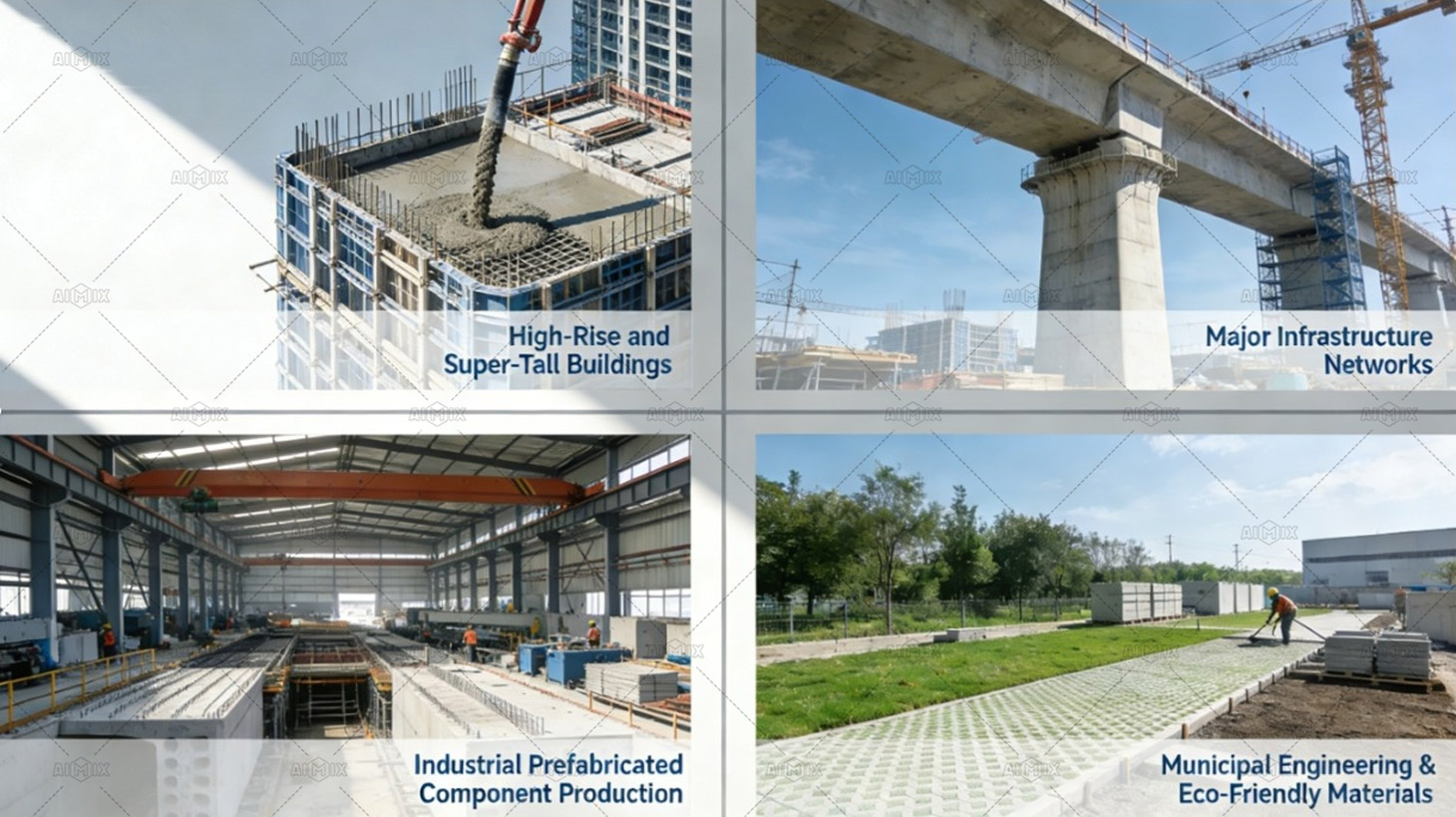
High-Rise and Super-Tall Buildings
Urbanization often means building upward. High-rise structures demand concrete with exceptional strength, flowability, and durability. High-performance concrete (C50 and above) made with river pebble-based manufactured sand perfectly meets the needs of critical components like core tubes and mega-columns. Its consistent quality and enhanced binding strength ensure structural safety and support a building’s longevity for decades to come.
Major Infrastructure Networks
A city’s foundation lies in its complex and robust infrastructure. As a stable and reliable material, river pebble-based manufactured sand provides concrete solutions for roads, bridges, and tunnels that exceed traditional standards. Its superior fatigue and impact resistance make it ideal for infrastructure that must withstand heavy traffic and extreme environmental conditions.
Industrial Prefabricated Component Production
Construction industrialization is the future for improving quality, efficiency, and sustainability. Prefabricated elements like staircases, wall panels, and hollow-core slabs require mass production in factories. This demands concrete materials with exceptional uniformity and batch-to-batch consistency. Produced via controlled industrial processes, river pebble-based manufactured sand shows minimal variation between batches. It is therefore the ideal raw material for the prefabrication industry, helping to drive the shift toward a manufacturing-like approach in construction.
Municipal Engineering & Eco-Friendly Materials
As focus on sustainable development grows, river pebble-based manufactured sand shows great potential in municipal projects. From road construction to water treatment facilities, its high performance and environmentally friendly characteristics enable more efficient construction that also meets green building standards.
The Green Revolution: Environmental Benefits of Pebble-to-Sand Production
River Pebble-to-sand technology is not just an innovative solution to the resource crisis—it represents a profound green revolution. Throughout its lifecycle, this method delivers clear environmental benefits, demonstrating its potential and necessity for sustainable development. By reducing reliance on natural sand, it offers a dual solution for ecological protection and resource efficiency, promoting harmony between environmental and economic progress.
Source Protection
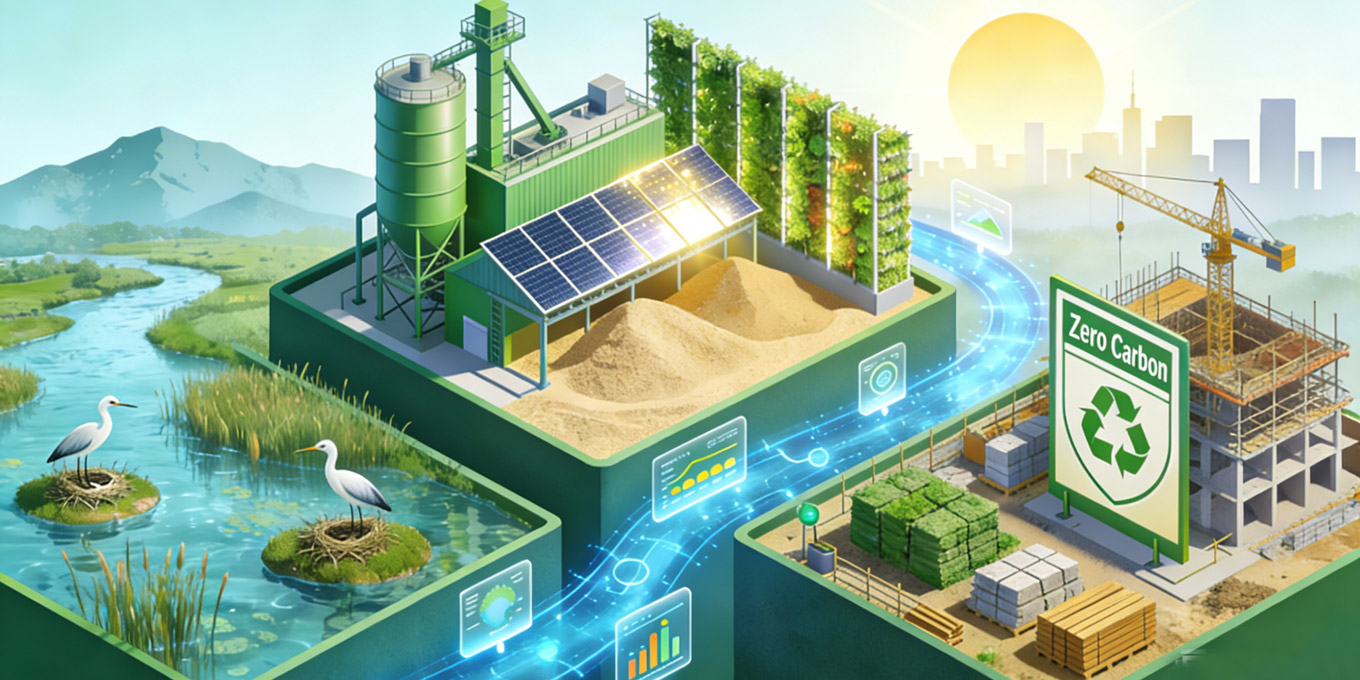
This technology directly reduces the need to extract natural river and lake sand. As a result, it helps protect the ecosystems of rivers, lakes, and coastlines. By preserving aquatic habitats and groundwater resources, we can better support key UN Sustainable Development Goals, such as ensuring clean water and protecting life below water.
Reduced Carbon Footprint
The “local sourcing, local processing” approach means sand is produced near construction sites. This significantly shortens transportation distances. Since transporting building materials accounts for a large portion of lifecycle carbon emissions, localized supply chains effectively cut down on this footprint. This supports cities in achieving their carbon neutrality goals.
Resource Circulation & Ecological Restoration
Modern sand and aggregate production plants can operate in coordination with river dredging and waterway maintenance projects. This turns dredged river pebbles—often seen as waste—into valuable construction material. Moreover, by applying scientific planning and ecological restoration to areas where river pebbles are collected, we can create new habitats such as wetlands or shallow water zones. This achieves a win-win outcome: efficient resource use and environmental conservation. This model offers a fresh perspective for global river management and sustainable resource utilization.
Economic Analysis: Cost, Supply Chain & Market Competitiveness
From an economic perspective, the river pebble-to-sand industry demonstrates strong viability and market competitiveness. Here are several key aspects:
Optimized Cost Structure
- Initial Investment: Upfront investment focuses primarily on crushing, screening, and dust removal equipment. However, raw material costs for pebbles are generally lower than for natural sand, especially in regions where natural sand is scarce, and prices are rising.
- Economies of Scale: As production scales up and automation increases, the unit production cost continuously decreases. The process is unaffected by seasons or weather, ensuring a highly stable supply.
Enhanced Supply Chain Resilience
- Traditional Supply Chain Issues: Traditional natural sand supply chains are often vulnerable. They face challenges from geographical constraints, environmental bans, and policy fluctuations.
- The Pebble Advantage: In contrast, pebble resources are more widely distributed. Manufactured sand production can be located close to market demand. This setup helps build a distributed, resilient supply network, strengthening resource security for urban development and economic growth.
Full Lifecycle Value
- Cost Comparison: In some markets, manufactured sand may be priced similarly to or slightly higher than traditional sand. However, it significantly enhances concrete performance—delivering higher strength and longer lifespan. This allows for optimized material mix designs in structures and can even reduce cement consumption.
- Environmental & Economic Advantage: Cement production is a major source of carbon emissions. Reducing cement use helps lower the comprehensive lifecycle costs of construction and maintenance. Over time, the economic benefits of manufactured sand become increasingly clear.
The river pebble-to-sand industry holds distinct advantages in cost, supply chain resilience, and full lifecycle value. Together, these factors strengthen its competitiveness in the market.
Global Case Studies: Successful Applications & Scalable Practices
Pebble-to-sand technology has been successfully applied and validated in multiple countries and regions. Key case studies are outlined below.
Asia – China
To protect major water systems like the Yangtze and Yellow Rivers, the Chinese government has strictly restricted or even banned natural river sand mining nationwide. This policy has greatly accelerated the growth of the manufactured sand industry.
Successful Applications:
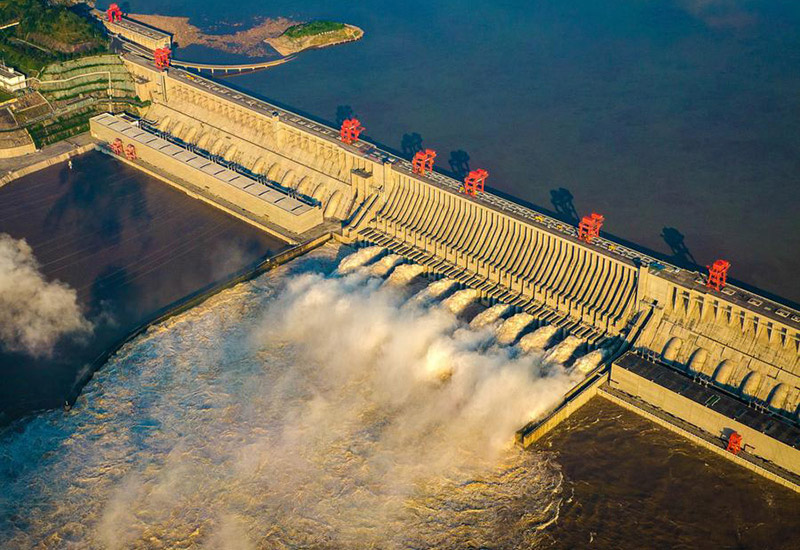
- Three Gorges Follow-up Projects: Manufactured sand was used in dam and cofferdam construction, ensuring project stability and durability.
- Chengdu Tianfu International Airport: High-quality manufactured sand was applied in runway and infrastructure work, significantly improving material performance.
- Chengdu-Chongqing High-Speed Railway: Manufactured sand contributed to the strength and stability of the track bed, ensuring safe operation.
Europe – Switzerland / Germany
Facing strict environmental regulations, Western European countries adopted manufactured sand early on.
Successful Applications:
- Alpine Road Construction: Manufactured sand enhanced road durability while meeting rigorous environmental standards.
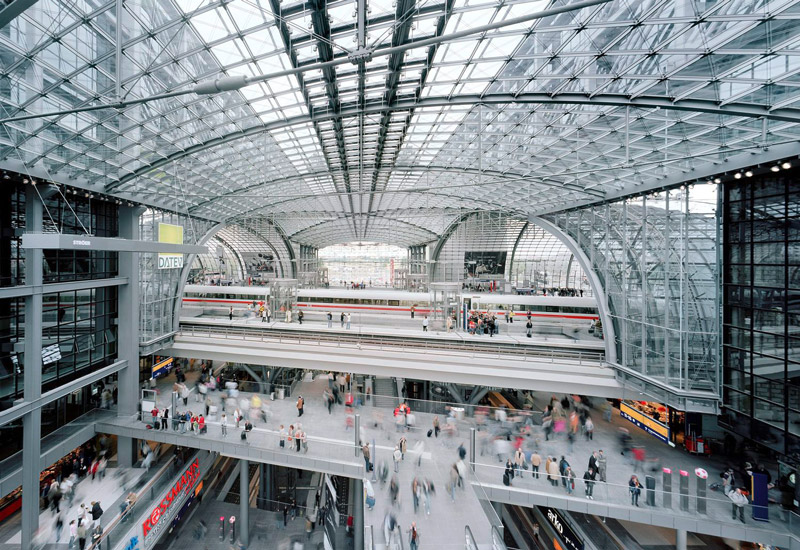
- Berlin Central Station Expansion: The material was widely used in foundations and structural components, ensuring high construction quality.
- Frankfurt International Airport Expansion: High-standard manufactured sand was applied in runway and terminal construction.
Developing Regions – East Africa
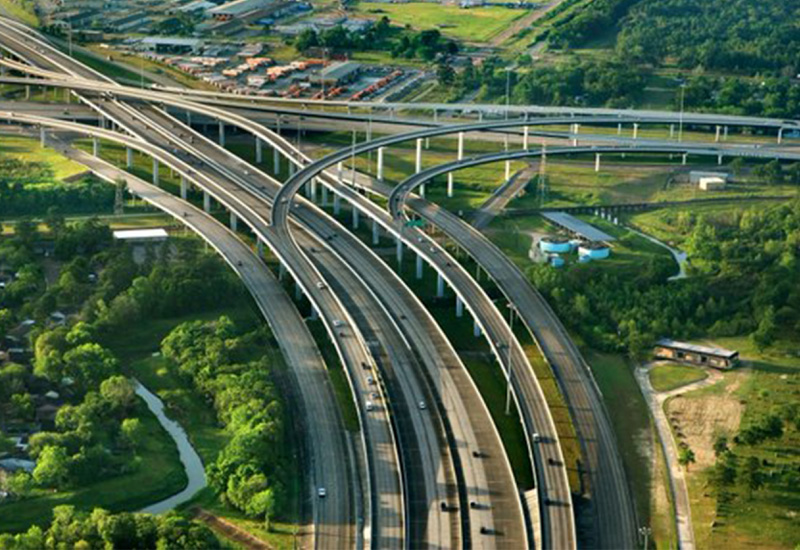
In Kenya, projects like the Nairobi Expressway faced challenges with poor-quality natural sand and high transport costs.
- Solution & Application:
A mobile river pebble sand production plant was established along the Athi River. Using riverbed gravel, it produced high-quality manufactured sand for the Nairobi Expressway, ensuring project timelines and quality. The material was also used in the Mombasa-Nairobi Highway and Kisumu infrastructure projects, improving subgrade stability and sustainability. - Result:
This approach reduced material costs by 20% and shortened construction time by 25%. It also established a sustainable local supply model, setting a template for future large-scale projects in the East African Community (EAC).
Middle East – UAE
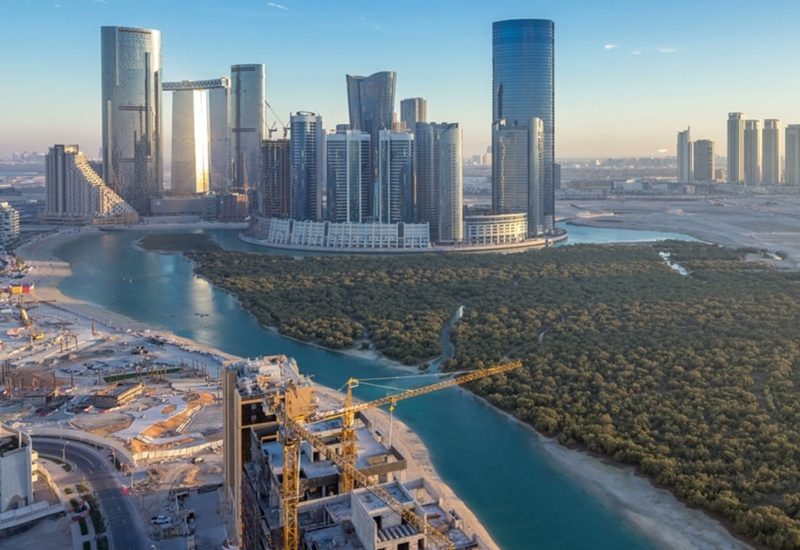
With growing demand for construction materials in cities like Dubai and Abu Dhabi, and limited natural sand resources, manufactured sand has become a viable alternative.
Successful Applications:
- Dubai Water Source Project: Manufactured sand was used in pipeline and infrastructure construction, improving quality while meeting environmental regulations.
- Abu Dhabi Urban Expansion: The material supported residential and commercial building foundations, ensuring sustainable sourcing.
- Burj Khalifa Expansion: During the expansion of the world’s tallest building, manufactured sand was extensively used in concrete mixes and foundation works, enhancing structural stability.
Challenges & The Future: Bottlenecks & Innovation Pathways
While the outlook is promising, the industry still faces challenges. These very challenges are guiding the direction of future innovation.
Challenge 1: Insufficient Process Refinement & Standardization
The Issue: Inconsistent manufactured sand quality and inadequate production control.
The Solutions:
- Introduce AI: Use vision recognition systems to analyze particle shape and size in real-time.
- Adopt IoT Technology: Monitor equipment status and product gradation throughout the process, enabling real-time production optimization.
- Promote standardization: Establish globally or regionally unified standards for manufactured sand products and applications to improve market transparency and reduce technical barriers.
Challenge 2: Energy Consumption & Noise
The Issue: The crushing process is a major source of energy use and noise.
The Solutions:
- Develop High-Efficiency, Low-Energy Stone Crushers: Utilize new materials and advanced mechanical designs.
- Implement Modular Design: Allow flexible equipment configuration based on production needs to minimize energy waste.
- Optimize the Entire Production Line: Design energy-saving layouts and noise-reduction enclosures using sound-absorbing materials.
- Integrate Clean Energy: Install onsite solar power generation, moving toward the goal of “zero-carbon sand production lines.”
Challenge 3: Policy & Market Perception Barriers
The Issue: Many building codes are still based on natural sand, leading to low acceptance of manufactured alternatives.
The Solutions:
- Promote Proven Technology: Increase market confidence through successful demonstration projects.
- Foster Industry Dialogue: Share information and case studies to shift traditional perceptions in the engineering community.
- Advocate for Supportive Policies: Encourage, or even mandate, the prioritized use of sustainable alternative aggregates in public projects. This helps create market demand for green materials.
Conclusion: Reshaping the Resource Future of Construction
Rapid urbanization is an inevitable trend for human society. However, we cannot afford to achieve it by overdrawing our natural resources. The advancement and adoption of river pebble-to-sand technology provide the construction industry with a crucial key. This key unlocks a future built on resource circulation, environmental care, and economic viability.
The use of this new material signals a shift in development philosophy. Urban growth no longer needs to mean plundering nature. Instead, it can mean making better use of underutilized resources. The journey from river pebbles to the concrete framework of skyscrapers represents a powerful shift. It marks a move toward greater harmony between human progress and the natural world.
Therefore, architects, engineers, and policymakers worldwide should actively champion sustainable materials. Investing in river pebble-to-sand technology is an investment in a more resilient and sustainable urban future. When urbanization meets the river pebbles in our rivers, we gain more than just sand. We lay the foundation for shared prosperity between humanity and our planet.
Let’s work together to build better urban environments for all.
