

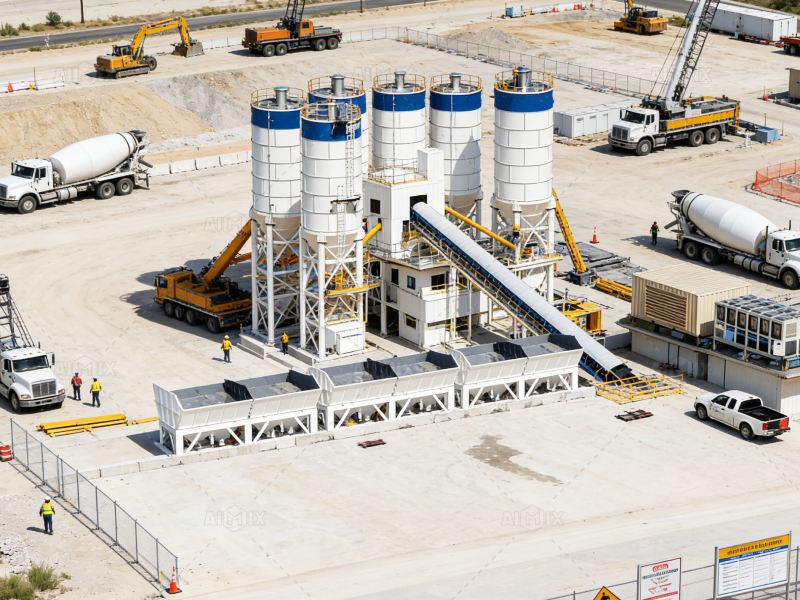
The global concrete and batching plant industry is entering a new phase shaped by infrastructure expansion, urbanization, and the shift toward low-carbon construction. As demand patterns evolve, clear differences are emerging between mature markets — where efficiency, automation, and sustainability dominate—and emerging markets, where rapid growth and flexible deployment drive investment decisions.
For companies and investors, the key challenge is how to balance stability and growth across these diverse regions. The dual-circulation strategy offers a practical pathway, combining strong domestic operations with targeted international expansion. Understanding how to navigate both market types is essential for capturing long-term value and staying competitive in a changing global landscape.
Global Concrete and Batching Plant Market Overview
Market Size and Growth Trends
The global concrete and batching plant market is maintaining steady and resilient growth, supported by continuous infrastructure expansion and accelerating urban development across both mature and emerging economies. In recent years, demand has been driven not only by new construction projects but also by the need to upgrade existing production facilities to meet higher efficiency and environmental standards.
Global Market Scale
The overall market size is estimated at approximately USD 28–32 billion in 2024–2025, with a projected compound annual growth rate (CAGR) of 5%–6% between 2025 and 2030. This growth reflects a balanced combination of new infrastructure demand and equipment replacement cycles, particularly in regions where older batching plants are being modernized.
Regional Distribution and Market Share
Market demand is unevenly distributed across regions, with clear differences in growth dynamics and development stages:
| Region | Market Share | Growth Level | Key Drivers |
|---|---|---|---|
| Asia-Pacific | 40–45% | High | Urbanization, infrastructure boom |
| North America | 20–25% | Moderate | Infrastructure renewal |
| Europe | 15–20% | Moderate | Environmental regulations |
| Middle East & Africa | 8–10% | High | Government investment |
| Latin America | 5–8% | Moderate-High | Urban expansion |
Asia-Pacific clearly dominates the global market due to large-scale infrastructure projects and rapid urbanization, while North America and Europe represent mature markets characterized by stable demand and slower growth. In contrast, emerging regions such as the Middle East, Africa, and Latin America exhibit stronger growth momentum, supported by ongoing urban expansion and public investment programs.
Opportunities and Challenges
Key Growth Drivers
The batching plant market is supported by several long-term structural drivers that continue to sustain global demand.
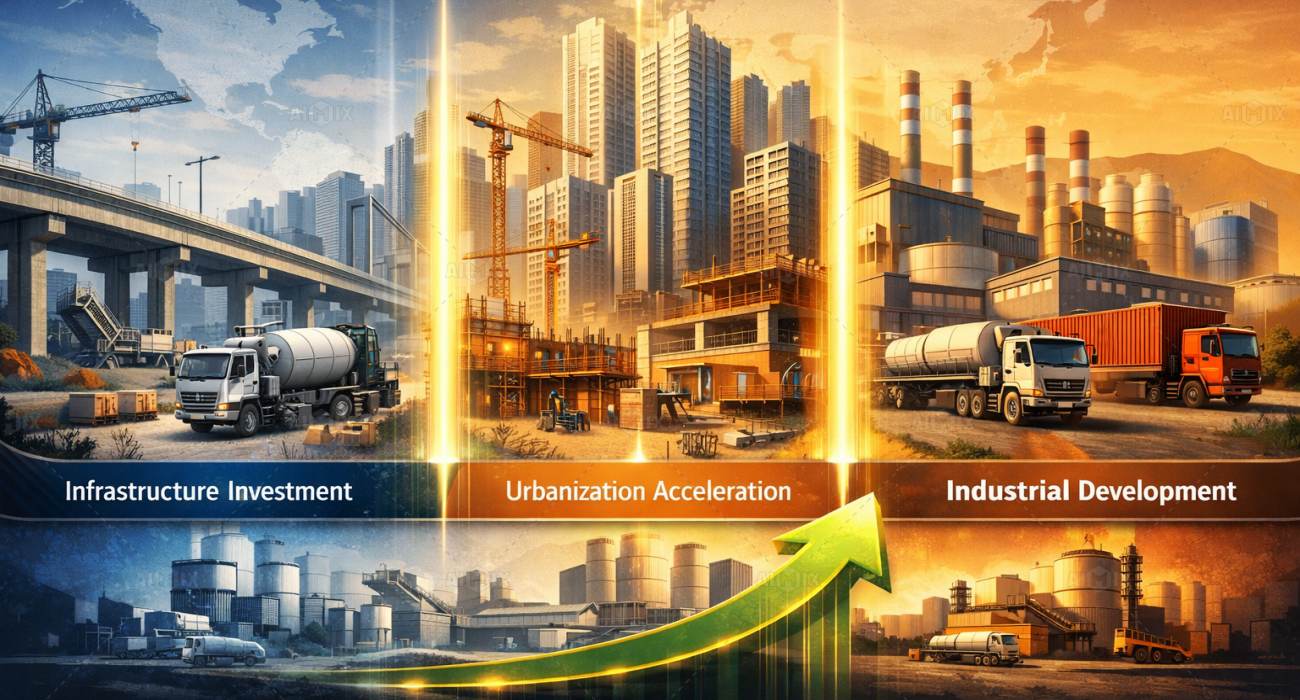
Infrastructure InvestmentOngoing investment in roads, bridges, and public utilities remains the primary driver of growth. The World Bank estimates global infrastructure demand will exceed USD 90 trillion by 2040, providing a strong foundation for concrete consumption.
Urbanization AccelerationRapid urbanization, especially in Asia and Africa, is increasing demand for residential and commercial construction, which in turn drives the need for efficient batching plant solutions.
Industrial DevelopmentGrowth in logistics, energy, and manufacturing sectors is further boosting demand for large-scale and stable concrete supply systems.
Major Challenges
Despite strong growth momentum, the industry faces several key challenges across regions.
Regulatory and Environmental PressureStricter environmental regulations in mature markets are increasing compliance costs and accelerating the shift toward low-carbon production.
Regional ImbalanceMature markets are characterized by slower growth and intense competition, while emerging markets offer higher potential but also greater uncertainty.
Supply-Side ConstraintsVariations in raw material availability and limitations in logistics infrastructure, particularly in developing regions, continue to affect cost control and operational efficiency.
Mature Market Characteristics and Development Strategies
Key Countries and Market Profiles with High Automation and Regulatory Standards
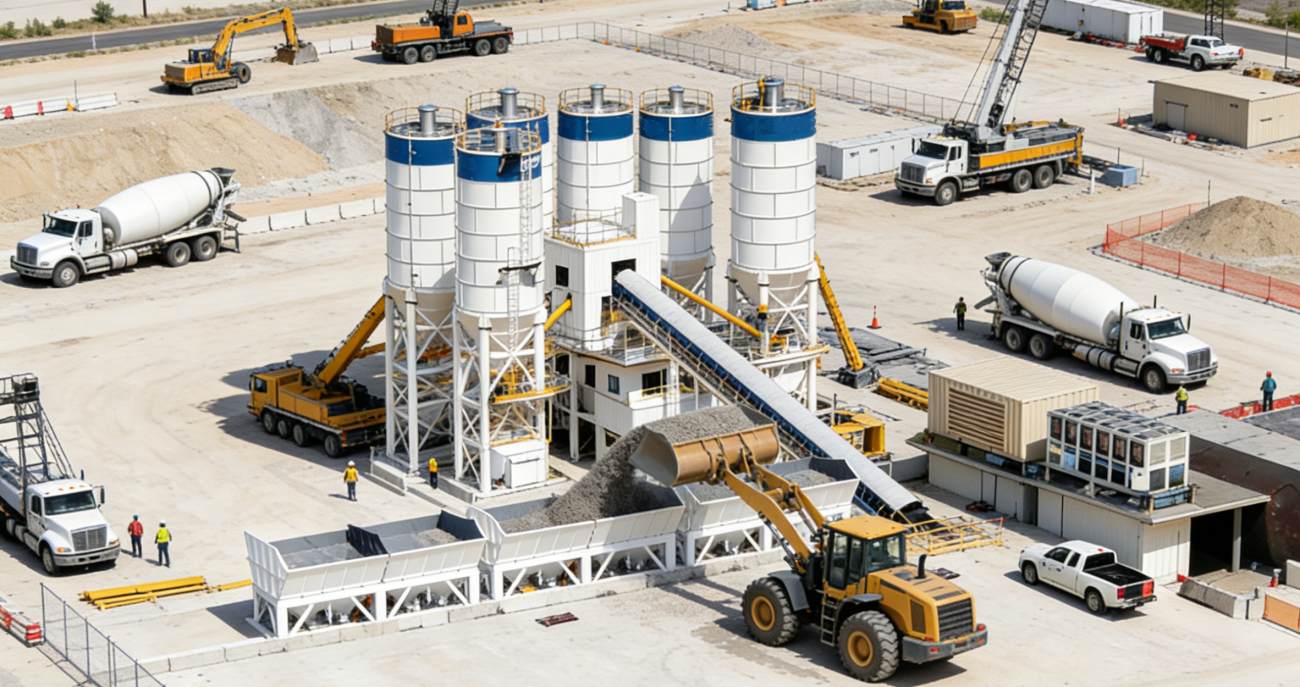
Mature markets, including the United States, Germany, and Japan, represent highly developed segments of the global concrete and batching plant industry. These markets are distinguished by long-established construction systems, robust industrial infrastructures, and strict regulatory frameworks.
Indicators of market maturity:
- High automation level: Batching plants commonly integrate PLC systems, automated feeders, and process monitoring technologies, ensuring precise and consistent production.
- Standardization: Unified technical specifications and standardized operating procedures allow for repeatable quality across different projects.
- Regulatory rigor: Environmental, safety, and product quality standards are strictly enforced, shaping both equipment design and operational protocols.
These characteristics make mature markets stable yet demanding, where efficiency, reliability, and compliance are essential for maintaining competitiveness.
| Feature | Mature Markets (US, Germany, Japan) | Global Average |
|---|---|---|
| Automation Level | High | Medium |
| Standardization | Strict | Moderate |
| Equipment Upgrade Frequency | Frequent | Occasional |
| Regulatory Compliance | Strict | Varies |
Market Features Highlighting Technology, Competition, and Equipment Upgrades
Mature markets exhibit stable demand and high competitiveness, with growth driven more by optimization than by large-scale expansion.
Distinctive features include:
- Widespread adoption of high-tech operations: Smart and automated batching plants are the norm, enhancing production accuracy and operational reliability.
- Market saturation and competitive intensity: Limited opportunities for new projects mean companies compete primarily on quality, service, and operational excellence rather than price.
- Frequent equipment upgrades: Existing plants are frequently upgraded to meet stricter environmental standards and improve energy efficiency, with a strong focus on gradual performance improvements.
These features highlight a market focused on continuous refinement rather than expansion, making technological and operational leadership critical.
Strategic Considerations Focusing on Technology, Services, and Investment
In mature markets, long-term profitability and competitiveness rely heavily on technological capabilities and value-added services.
Key strategic points:
- Technological leadership: Leveraging automation, smart controls, and standardized processes allows companies to optimize efficiency, reduce waste, and maintain consistent concrete quality.
- Value-added services: Maintenance, training, and technical support enhance customer loyalty and generate additional revenue, differentiating companies in saturated markets.
- Investment focus: Opportunities mainly involve upgrading existing plants, improving energy efficiency, and meeting stricter environmental regulations. While risks are lower than in emerging markets, companies still need to handle strong competition and high compliance costs carefully.
Emerging Market Potential and Development Strategies
Key Regions Experiencing Rapid Infrastructure Growth and Technology Gaps
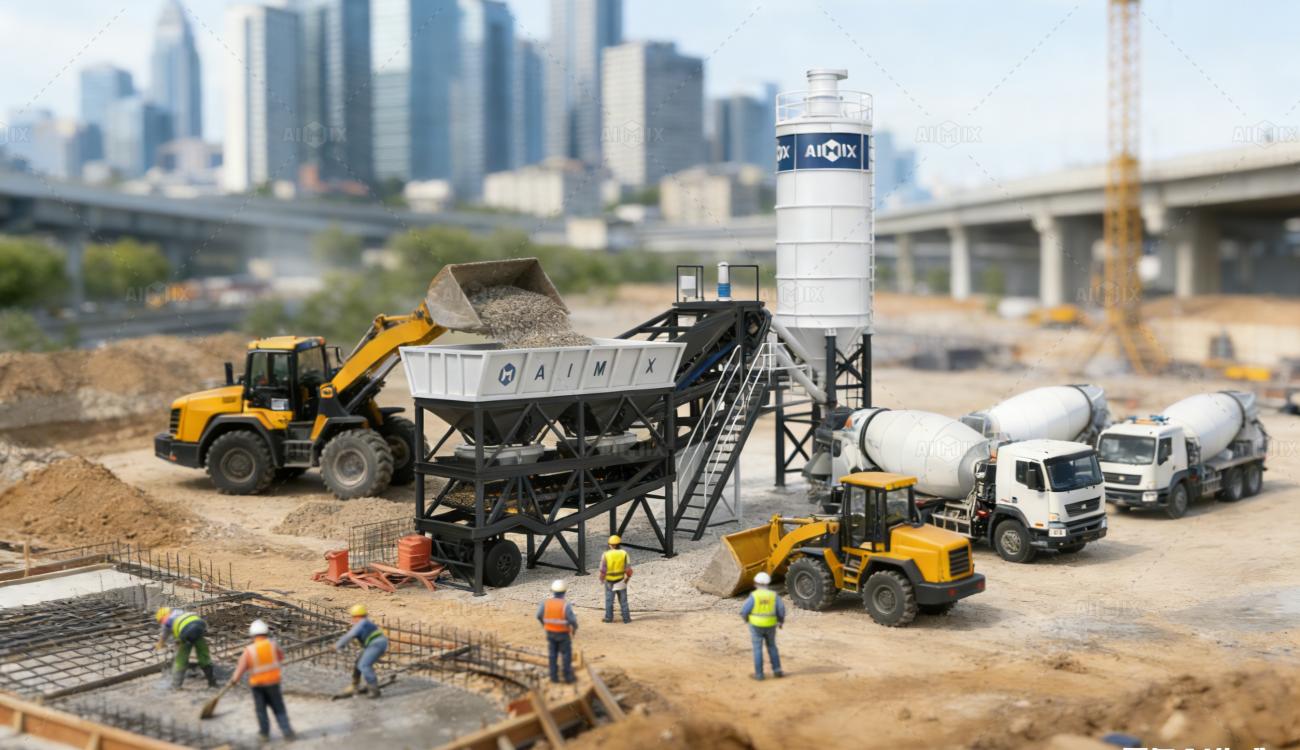
Emerging markets, including Southeast Asia (Indonesia, Malaysia), Africa, the Middle East, and Latin America, are characterized by fast-growing construction demand and ongoing industrial development. Unlike mature markets, these regions exhibit uneven technology adoption, with some urban centers having modern facilities while rural areas rely on basic batching operations.
Core characteristics:
- Rapid infrastructure expansion: High demand for roads, bridges, housing, and utilities drives concrete consumption.
- Variable technology levels: Some projects use advanced batching systems, while others depend on conventional plants.
- Regulatory environments in flux: Policies differ by country and may change quickly, affecting compliance and project planning.
Key regional indicators are summarized in the table below:
| Region | Key Countries | Urbanization Rate | Annual Infrastructure Growth |
|---|---|---|---|
| Southeast Asia | Indonesia, Malaysia | 60–78% | High |
| Africa | Nigeria, Kenya | 30–55% | High |
| Middle East | UAE, Saudi Arabia | 80-90% | Moderate-High |
| Latin America | Brazil, Mexico | 80-88% | Moderate |
The data above represents indicative ranges derived from recent estimates by the World Bank and UN DESA, combined with regional infrastructure investment trends, providing a realistic overview of urbanization and construction demand dynamics across emerging markets.
Market Opportunities and Challenges
Emerging markets present significant opportunities, but companies should navigate distinct challenges.
Opportunities:
- High investment potential: Infrastructure projects, urban development, and industrial growth create demand for new and upgraded concrete batching plants.
- Scalability advantages: The relatively low starting point for technology adoption allows companies to introduce modern, efficient solutions quickly.
Challenges:
- Regulatory instability: Frequent policy shifts and inconsistent enforcement can increase project risk.
- Raw material constraints: Local shortages or logistics limitations may affect supply chains and operational efficiency.
- Technology gaps: Limited access to skilled operators and modern equipment can slow project execution and reduce consistency.
Enterprise Considerations for Market Entry and Growth
To succeed in emerging markets, enterprises need to adapt their approach to local conditions and leverage flexible solutions.
Key considerations:
- Mobile and modular batching plants: These plants allow rapid deployment, easy relocation, and adaptation to project-specific needs.
- Local partnerships: Collaboration through agents, joint ventures, or technology transfer helps navigate regulatory complexities and build market presence.
- Focus on flexibility and scalability: Companies can gain competitive advantage by offering adaptable solutions and services tailored to regional requirements.
Dual-Circulation Development Path in the Concrete Industry
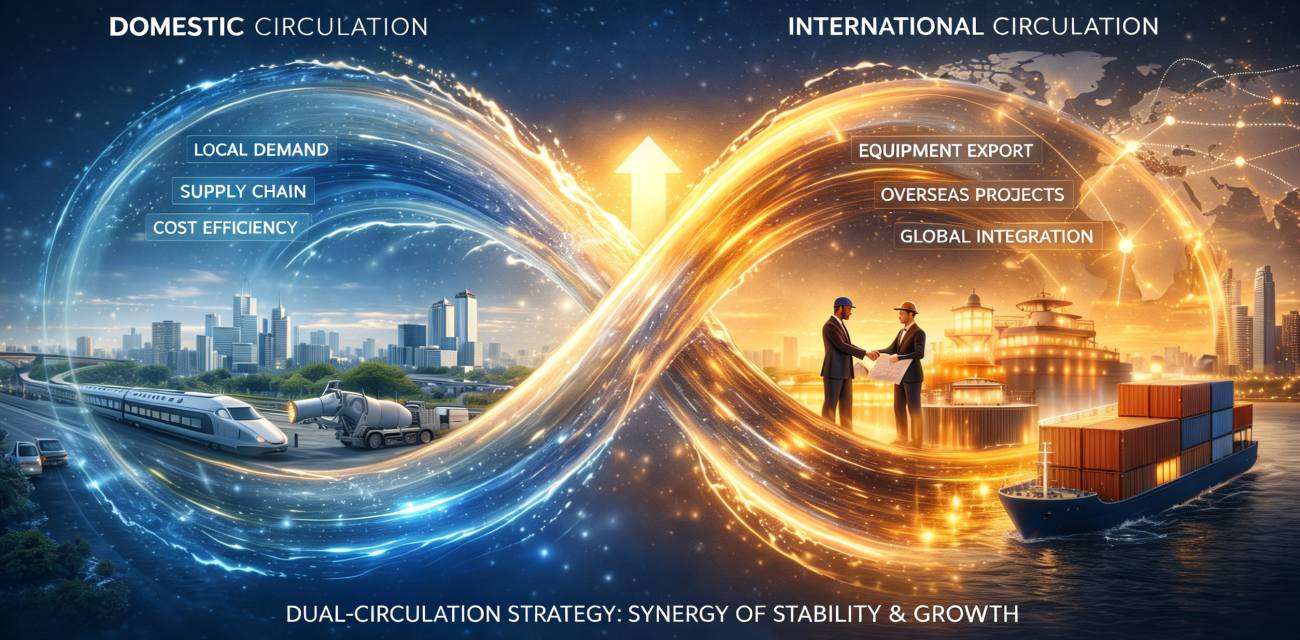
Domestic Circulation: Leveraging Local Demand and Supply Chains
Domestic circulation focuses on optimizing the industry’s operations within national boundaries by fully utilizing local resources, raw materials, and construction demand.
Key points:
- Local demand-driven production: Concrete batching plant deployment is guided by domestic infrastructure projects, urbanization, and industrial development.
- Efficient supply chain management: Access to local aggregates, cement, and logistics networks reduces production and transportation costs.
- Cost and reliability optimization: Proximity to construction sites improves delivery efficiency, minimizes delays, and enhances overall production reliability.
This approach emphasizes strengthening the domestic market foundation as a stable base for sustainable growth.
International Circulation: Exporting Equipment, Technology, and Services
International circulation focuses on expanding the industry’s footprint globally, capitalizing on overseas demand for concrete solutions and equipment.
Key points:
- Export of equipment and technology: Companies can supply advanced batching plants, modular systems, and process expertise to foreign markets.
- Participation in overseas projects: Engagement in large-scale infrastructure projects abroad allows businesses to diversify revenue sources and gain international experience.
- Global market integration: Access to emerging and high-demand markets creates long-term growth opportunities while enhancing brand recognition and competitiveness.
Synergy of Domestic and International Circulation: Balancing Stability and Growth
The dual-circulation approach is most effective when domestic and international strategies are integrated, creating synergy between stable local operations and growth-oriented global expansion.
Key points:
- Balancing domestic stability with international growth: A strong domestic foundation ensures continuous operations and reliable revenue, while international projects provide scale and expansion opportunities.
- Risk diversification: Exposure to multiple markets mitigates the impact of local regulatory changes, economic fluctuations, or market saturation.
- Profit maximization: Coordinated deployment of resources, technology, and services across domestic and international channels enhances overall efficiency and profitability.
Technology and Innovation Trends
Automation and Smart Batching Plants
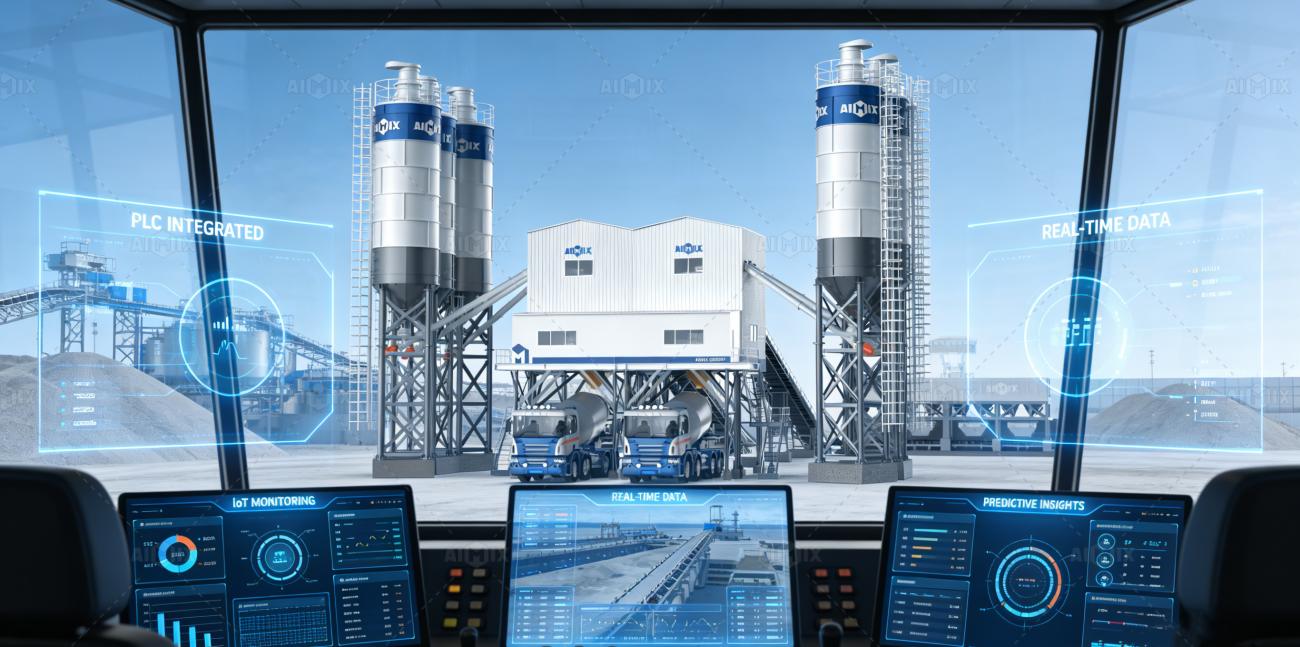
Automation and smart control systems are transforming concrete batching operations by enhancing precision, reducing errors, and lowering operational costs.
Key features:
- PLC control systems: Automate feeding, mixing, and batching processes, ensuring consistent concrete quality.
- IoT-enabled monitoring: Tracks machine status, output, and maintenance needs in real time.
- Data analytics: Predictive insights help optimize production schedules, reduce downtime, and anticipate equipment failures.
Operational impact:
- Improved production efficiency and reduced material waste.
- Enhanced reliability and consistent output, supporting profitability.
Mobile and Modular Batching Plant Designs
Mobile and modular batching plants address the need for flexible deployment in diverse construction environments, particularly for temporary or rapidly changing project sites.
Advantages:
- Rapid deployment: Mobile batching plants can be set up or relocated within days.
- Reduced installation and transportation costs: Modular units lower logistical and setup expenses.
- Adaptability: Modular configurations allow customization to project scale and requirements.
These designs provide operational agility, enabling project teams to handle multiple projects efficiently while maintaining consistent concrete quality.
Green and Low-Carbon Technologies
Sustainability is increasingly a competitive factor, as companies adopt low-carbon and environmentally friendly technologies.
Key trends:
- Recycled aggregates: Reduce dependency on virgin materials, cutting costs and environmental impact.
- Alternative cements: Fly ash, slag, and other supplementary materials reduce CO₂ emissions.
- Energy-efficient machinery: Mixers, conveyors, and pumps optimized for lower energy consumption.
Business impact:
- Compliance with environmental regulations and participation in green construction projects.
- Enhanced brand reputation and long-term operational savings.
Comparative Impact of Technology on Efficiency and Energy Use
| Technology Type | Production Efficiency Improvement | Energy Consumption Reduction | Key Benefit |
|---|---|---|---|
| PLC & Smart Control Systems | 8–12% | 5–7% | Consistent quality, lower material waste |
| IoT Monitoring & Data Analytics | 5–10% | 3–6% | Reduced downtime, predictive maintenance |
| Mobile / Modular Plant Design | 7–15% | 4–8% | Flexibility, rapid deployment, cost savings |
| Green & Low-Carbon Solutions | 3–8% | 10–15% | Reduced carbon footprint, regulatory compliance |
Supply Chain and Raw Material Management
Key Raw Materials in Concrete Production
Concrete production relies on several critical raw materials that directly affect quality, cost, and sustainability:
- Cement: The primary binder, with variations including Portland cement, blended cements, and low-carbon alternatives.
- Aggregates: Coarse and fine aggregates provide structural strength; source quality and consistency are vital.
- Sand: Essential for workability and mix consistency; grading and purity affect concrete performance.
- Mineral additives: Fly ash, slag, silica fume, and other supplementary materials improve durability, reduce cement content, and lower environmental impact.
Careful selection and management of these materials are essential for consistent concrete quality and operational efficiency.
Supply Chain Differences Between Mature and Emerging Markets
Supply chain structures vary significantly between mature and emerging markets, influencing project execution and cost management:
Mature markets:
- Well-established supply networks with reliable, high-quality raw material sources.
- Predictable logistics and low variability in delivery times.
- Opportunities to leverage long-term contracts and strategic partnerships for efficiency.
Emerging markets:
- Supply networks are often fragmented, with varying material quality.
- Logistics and infrastructure constraints can lead to delays and higher transportation costs.
- Greater need for flexible sourcing strategies and local partnerships to mitigate risk.
Understanding these differences helps companies adapt procurement strategies to regional conditions, reducing delays and optimizing costs.
Cost Optimization and Sustainability in Raw Material Management
Effective supply chain and material management can significantly enhance profitability and brand image:
- Strategic sourcing: Leveraging multiple suppliers, bulk contracts, and local sourcing reduces cost volatility.
- Sustainable materials: Incorporating recycled aggregates, industrial by-products, and low-carbon cements lowers environmental impact and aligns with green building trends.
- Operational impact: Efficient supply chains reduce waste, minimize downtime, and ensure consistent production, directly affecting margins.
- Market perception: Companies using sustainable and reliable sourcing gain competitive advantage, particularly in environmentally regulated markets.
Effective management of raw materials and supply chains ensures consistent concrete quality, reduces costs, supports sustainability, and provides a clear competitive advantage across both mature and emerging markets.
Market Investment and Enterprise Strategy Recommendations
Mature Market Action Directions
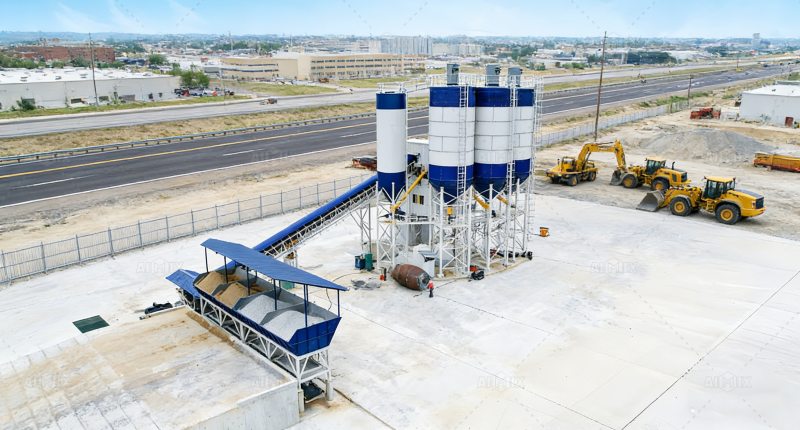
In mature markets such as the USA, Germany, and Japan, enterprises operate in stable but highly competitive environments. Strategic actions focus on enhancing operational efficiency, maintaining market leadership, and leveraging technology to differentiate:
- Technology upgrades: Implement automation, smart controls, and predictive maintenance to improve efficiency, reduce downtime, and lower production costs.
- Low-carbon retrofits: Modernize existing plants with energy-efficient mixers, conveyors, and alternative cement solutions to comply with stricter environmental standards.
- Premium services: Offer maintenance, operator training, and technical support to strengthen client relationships and create added value.
- Operational optimization: Streamline workflows and logistics to protect margins in a saturated market.
These measures enable companies to maintain profitability while adapting to evolving regulations and competitive pressures.
Emerging Market Action Directions
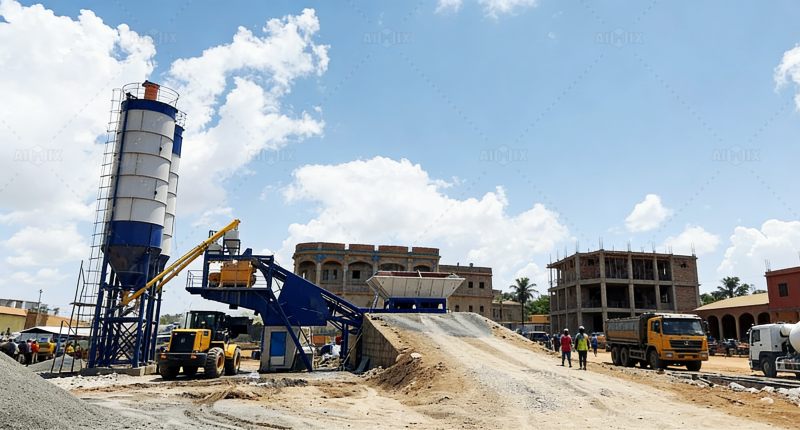
In emerging markets—including Southeast Asia, Africa, the Middle East, and Latin America—rapid growth offers opportunities but requires agile approaches:
- Rapid market entry: Deploy mobile or modular batching plants to respond quickly to local project demand.
- Flexible deployment: Utilize scalable modular designs to adjust to varying project sizes and site conditions.
- Local partnerships: Collaborate with agents, joint ventures, or technology partners to navigate regulatory landscapes and gain market insights.
- Adaptive business models: Tailor solutions to regional construction requirements, balancing efficiency, cost, and quality.
These steps allow enterprises to capture growth opportunities while managing operational risks and uncertainty.
Implementing Dual-Circulation Strategy
The dual-circulation approach integrates domestic and international operations to maximize growth and resilience:
- Coordinated operations: Use domestic production to meet local demand while leveraging exports and overseas projects for revenue diversification.
- Smart management systems: Deploy ERP, IoT, and analytics platforms to enable data-driven decision-making across multiple regions.
- Risk diversification: Spread operations across markets to mitigate currency, regulatory, and logistical risks.
- Profit optimization: Align plant deployment, technology adoption, and resource allocation with market potential to enhance returns.
This framework transforms strategic intent into actionable steps, enabling enterprises to integrate growth, efficiency, and risk control for sustainable global success.
Key Takeaways and Strategic Outlook
The concrete and batching plant industry is entering a phase where technological adoption and strategic agility determine long-term competitiveness. Mature markets focus on efficiency, automation, and regulatory compliance, while emerging markets reward rapid deployment, scalable solutions, and strong local partnerships.
By integrating domestic operations with selective international expansion through a dual-circulation approach, enterprises can diversify risk, optimize resources, and maximize profitability. Emphasizing smart, modular, and low-carbon production ensures operational efficiency, sustainability, and a lasting competitive advantage across diverse global markets.
