


In today’s diverse construction landscape, the small concrete pump has emerged as the ideal choice for small-scale projects and urban development, thanks to its unmatched flexibility and cost-efficiency. These compact machines are engineered to navigate tight job sites with ease, while their lower investment threshold and rapid return on investment make them particularly attractive for small to medium-sized contractors and independent builders. By solving the common problems of equipment inaccessibility and high rental costs, a concrete pump small enough to fit through a standard gate brings on-site pouring capability directly to your project—whether it’s a villa foundation, indoor floor heating, or rural road repair. To help you match this versatility to your exact needs, let’s explore our complete small pump family—each designed to be your ultimate construction ally.
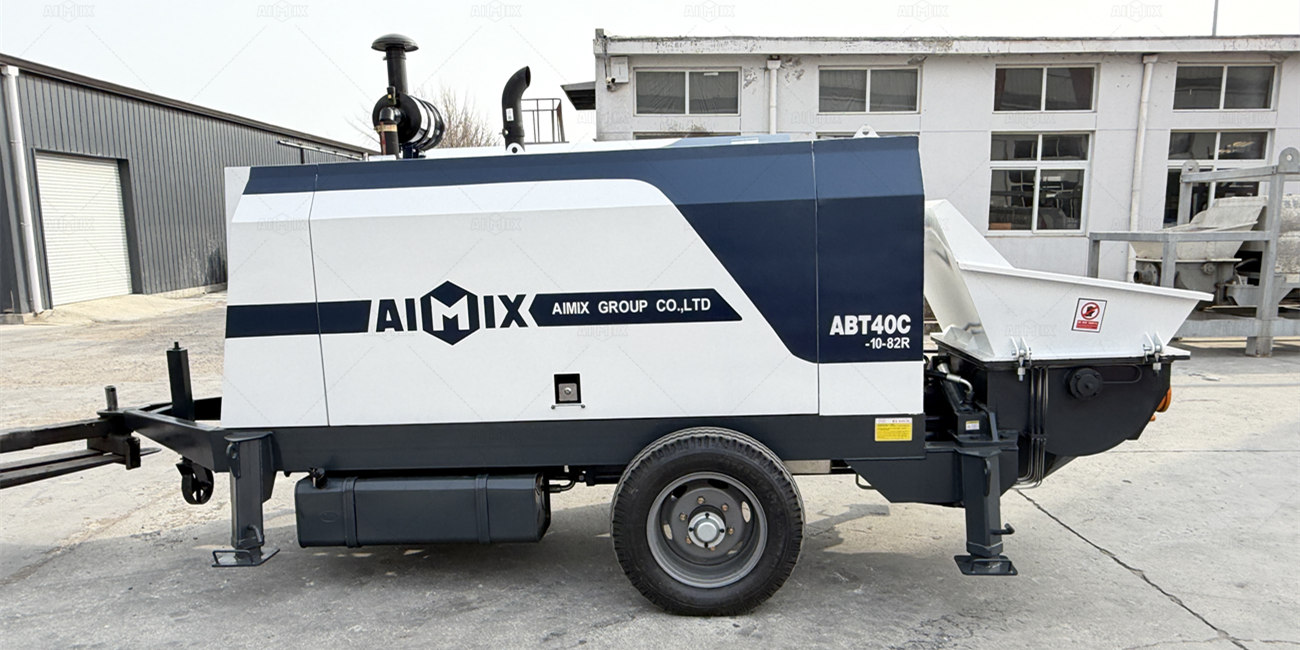
Small Pump Family: Modest Output, Maximum Precision
When we talk about “small output,” we’re not describing a limitation—we’re talking about perfect alignment with your project’s actual needs. Why invest in a massive machine that pumps 100 m³/h when your job calls for 30 or 40? Our small concrete pump machines are engineered to deliver right-sized capacity with surgical precision—every cubic meter lands exactly where it should, with zero waste and maximum control.
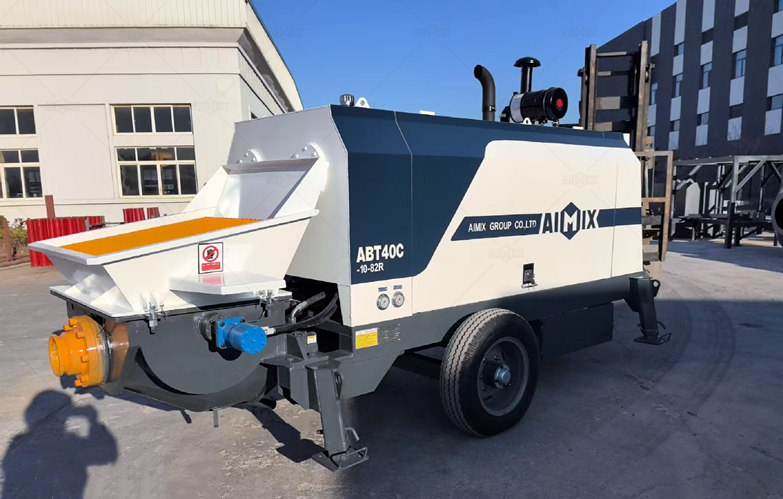
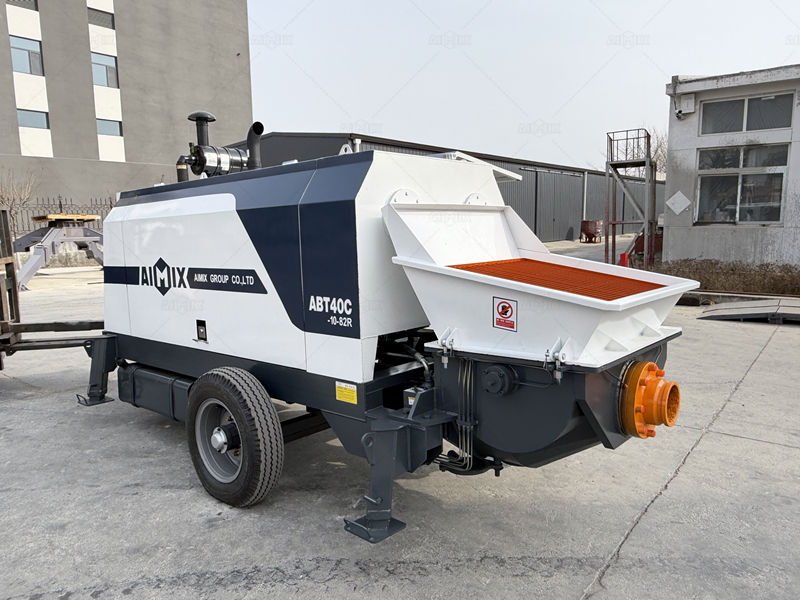
Small Trailer Concrete Pumps – Pure Pumping Power
If you already have a steady concrete supply and simply need to move it to the right place, our small trailer concrete pump is your most straightforward solution.
- Horizontal reach: 400-500m
- Vertical reach: 120-150m
- Weight: 4,000-5,200kg
- Model: ABT30 (30 m³/h) is best for villa foundations, floor heating layers, small residential slabs. ABT40 (40 m³/h) is best for mid-sized pours, commercial walkways, multi-room floor projects
- Why it’s precise: The concrete pump small trailer design means you’re not paying for capacity you don’t need. At 30-40 m³/h, these machines match the pace of small crews perfectly—no waiting, no rushing, no waste.
- Applications: Building construction, road and bridge projects, mortar spraying operations
Small Concrete Mixer Pumps – Mix and Deliver, All in One
For remote sites or areas without ready-mix suppliers, a small concrete mixer with pump is a complete on-site solution. We offer two mixing small concrete pump types, each delivering “precision” in a different way.
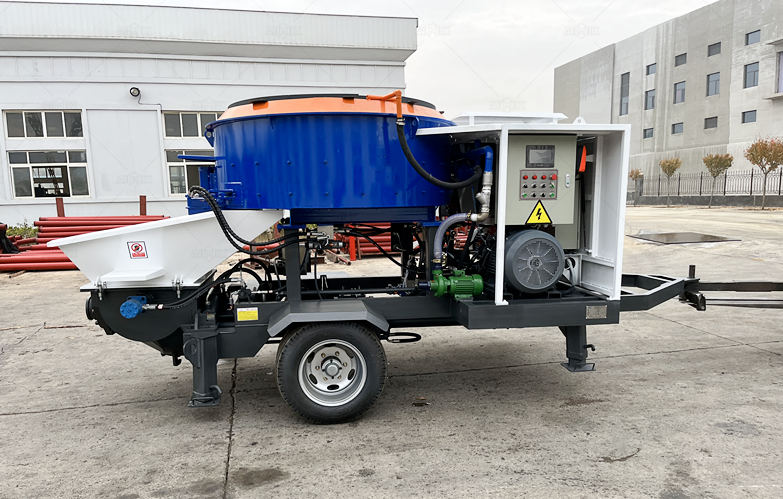
Vertical Shaft Mixer Kind – For Quality-Critical Projects
- Model: ABJW40
- Output: 40 m³/h
- Mixer type: Dual vertical shaft pan
- Key advantage: Increases mixing speed by 2.3 times while delivering superior uniformity
- Best for: Structural columns, precision foundations, projects demanding highest concrete quality
- Applications: Building construction, road and bridge construction
- Why it’s precise: Every batch meets spec—no variation, no compromise.
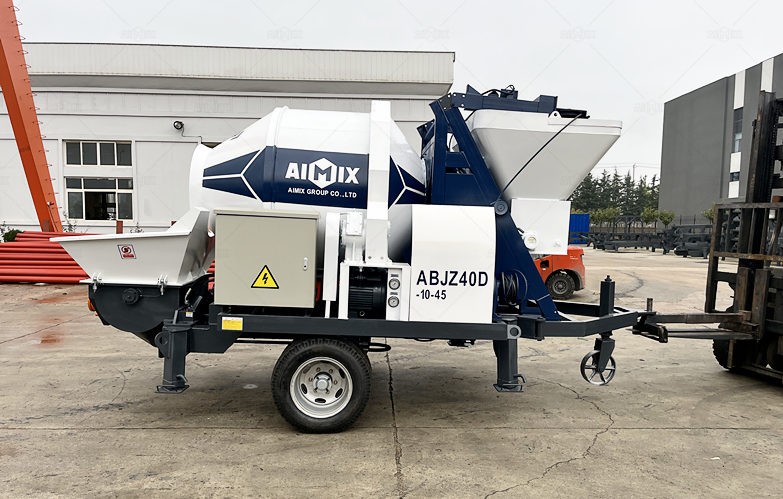
Drum Mixer Kind-The Cost-Effective Performer
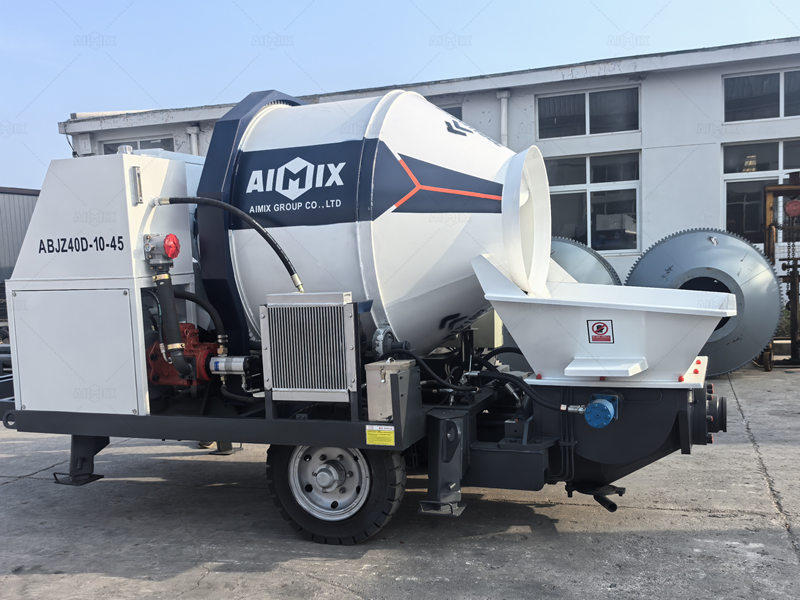
- Model: ABJZ30, ABJZ40
- Output: 30 – 40 m³/h
- Horizontal reach: 500-600m
- Vertical reach: 120-140m
- Weight: 2,500-3,500kg
- Why it’s precise: When you’re searching for small concrete mixer pump for sale with high cost-performance, these drum-type units deliver. They handle standard projects beautifully—road bases, building slabs, general construction—while keeping your initial investment low.
- Applications: Road, bridge, and building construction
Small Concrete Boom Pumps-Reach Without the Footprint
Think a boom pump means a massive truck blocking city streets? Not anymore. Our small concrete boom pump line brings pinpoint placement to congested sites, available on three chassis types.
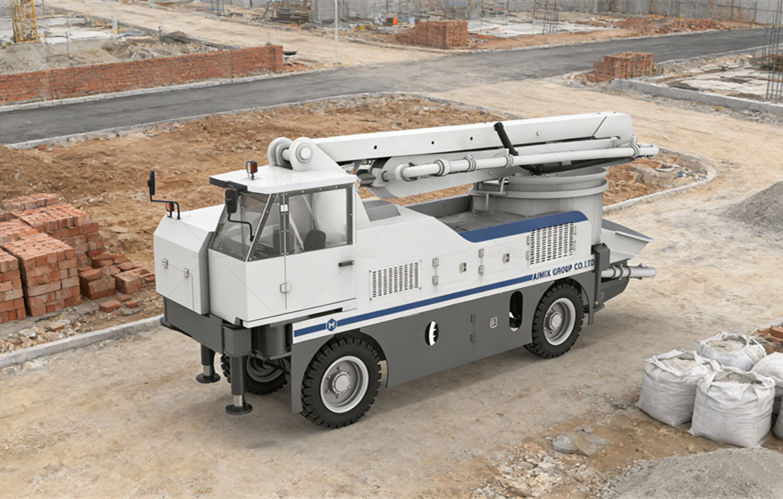
Wheel Chassis-For Flat, Open Sites
- Model: ABY20
- Boom length: 20m
- Max output: 89 m³/h
- Best for: Rural housing, drainage projects
- Requirement: Construction site needs to be flat and wide enough
- Why it’s precise: Place concrete exactly where it’s needed without moving the truck constantly.
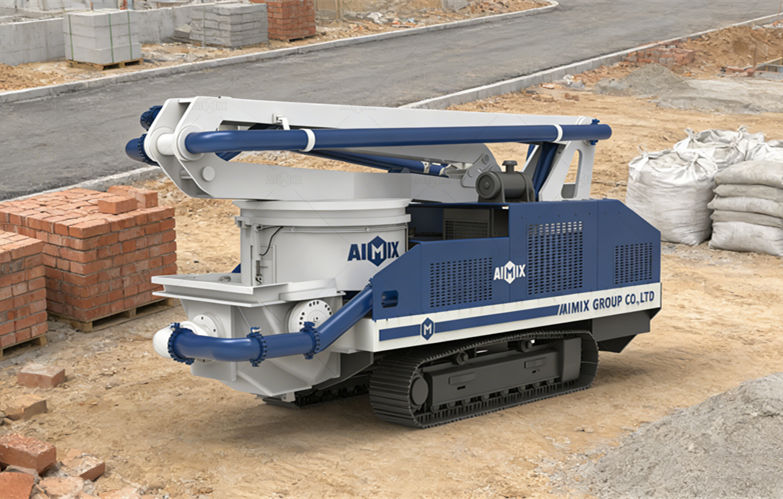
Caterpillar Chassis-Conquer Rough Terrain
- Model: ABY8, ABY15
- Boom length: 8 – 15m
- Max output: 50 m³/h
- Why it’s precise: Mud, steep slopes, rocky ground? The caterpillar’s grip means you can position this small boom concrete pump exactly where trucks can’t go.
- Applications: Mountainous regions, farmland drainage, sites inaccessible to concrete transport trucks
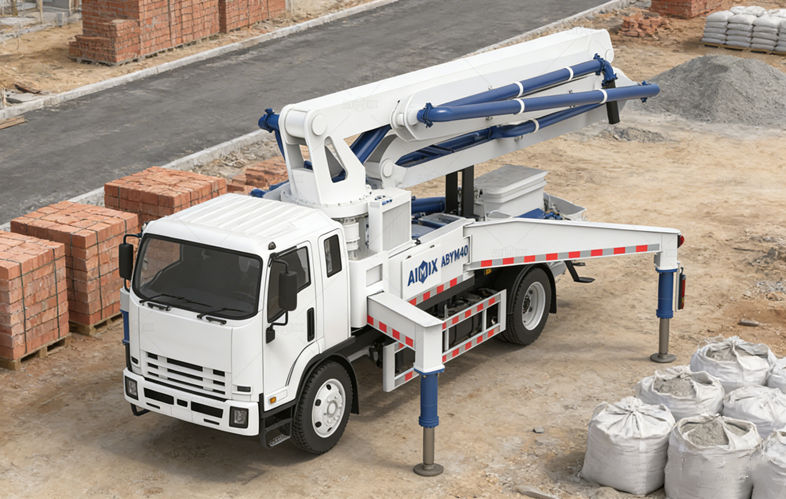
Truck Chassis-Speed Meets Flexibility
- Model: ABY26
- Boom length: 26m
- Max output: 120 m³/h
- Best for: Farmland drainage, rural civil construction, narrow working spaces
- Why it’s precise: Drive at road speeds between sites, then maneuver into tight spaces once you arrive. It’s the small concrete pump truck that thinks like a big one—but fits where big ones can’t.
Why “Small Output” Is Your Competitive Advantage
Look closely at these numbers—30, 40, 50, even 89 m³/h. They’re human-scale. They match the pace of your team and the rhythm of a well-run small site. Every cubic meter goes exactly where and when you need it.
Built for Tight Spaces: Where Our Small Concrete Pumps Deliver
Here’s the truth about tight job sites: sometimes the pump itself can’t get right next to the pour. But that’s okay—because with the right small concrete pumping machine, the concrete can travel to where you need it, even if the machine stays where it fits. Let’s look at the scenarios where this matters most.
Backyard Projects with Narrow Access
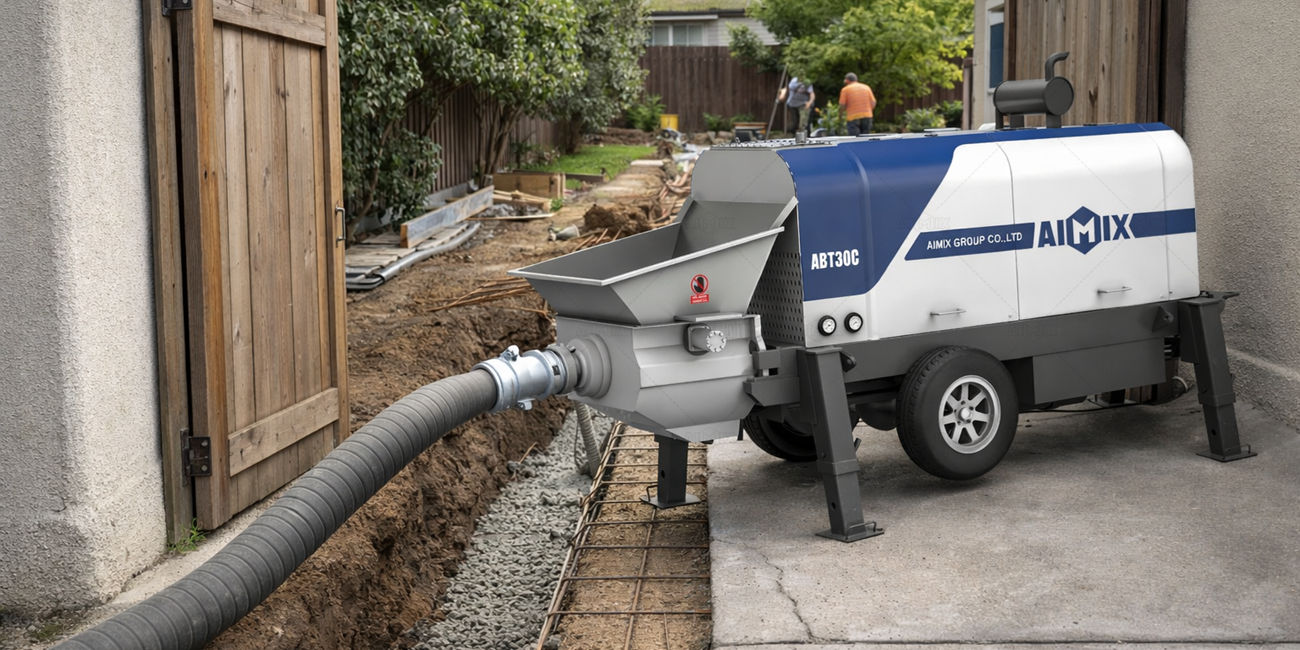
- The situation: You’re pouring a villa extension or a garden foundation, but the only access is a narrow side gate. The pump can’t get through—but the concrete needs to get to the backyard.
- How we solve it: Park a small trailer concrete pump like the ABT30 or ABT40 at the nearest accessible spot—the street, the driveway, the front yard. Run your pumping pipe through the house, over the wall, or down the side passage. With horizontal conveying distances up to 500 meters, the pump stays put while the concrete travels to you.
- The result: No gate is too narrow, no pathway too tight. You pour exactly where you need, without tearing down fences or hand-carrying wheelbarrows.
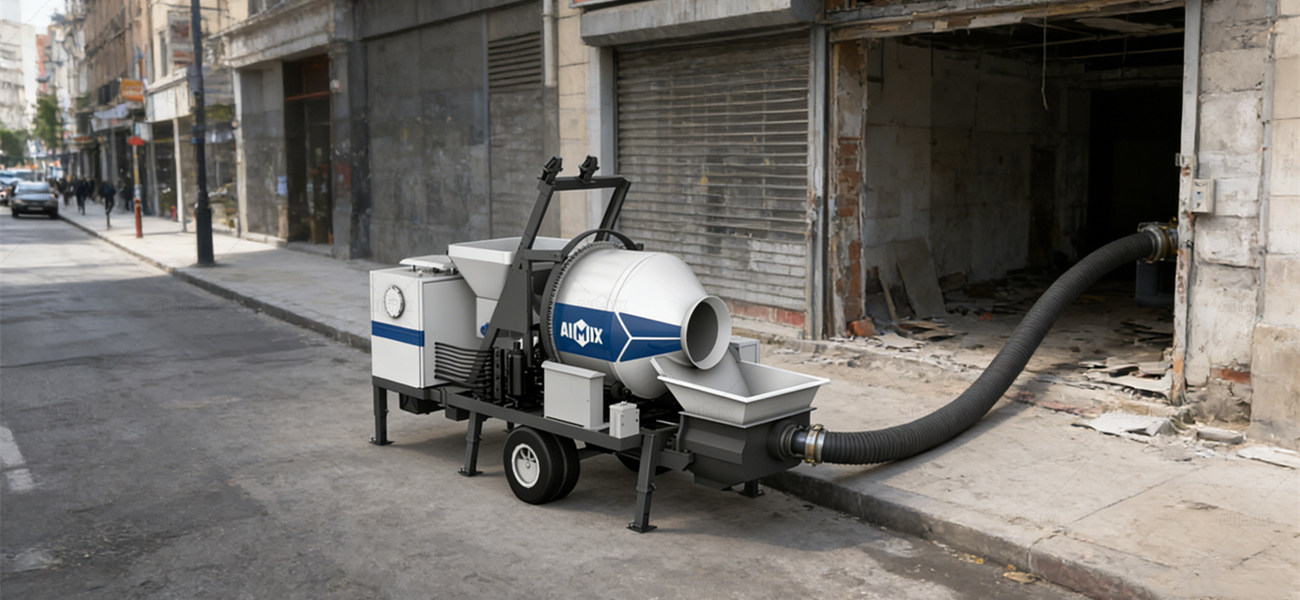
Urban Streets and Alleyways
- The situation: You’re working on a row of townhouses or a shop renovation in a busy city center. Street parking is limited, alleys are narrow, and blocking traffic isn’t an option.
- How we solve it: A small concrete pump with extended hoses snakes through the alleyways to reach the pour point.
- The result: Your equipment stays where it’s legal and practical. The concrete still arrives precisely where your crew is waiting.
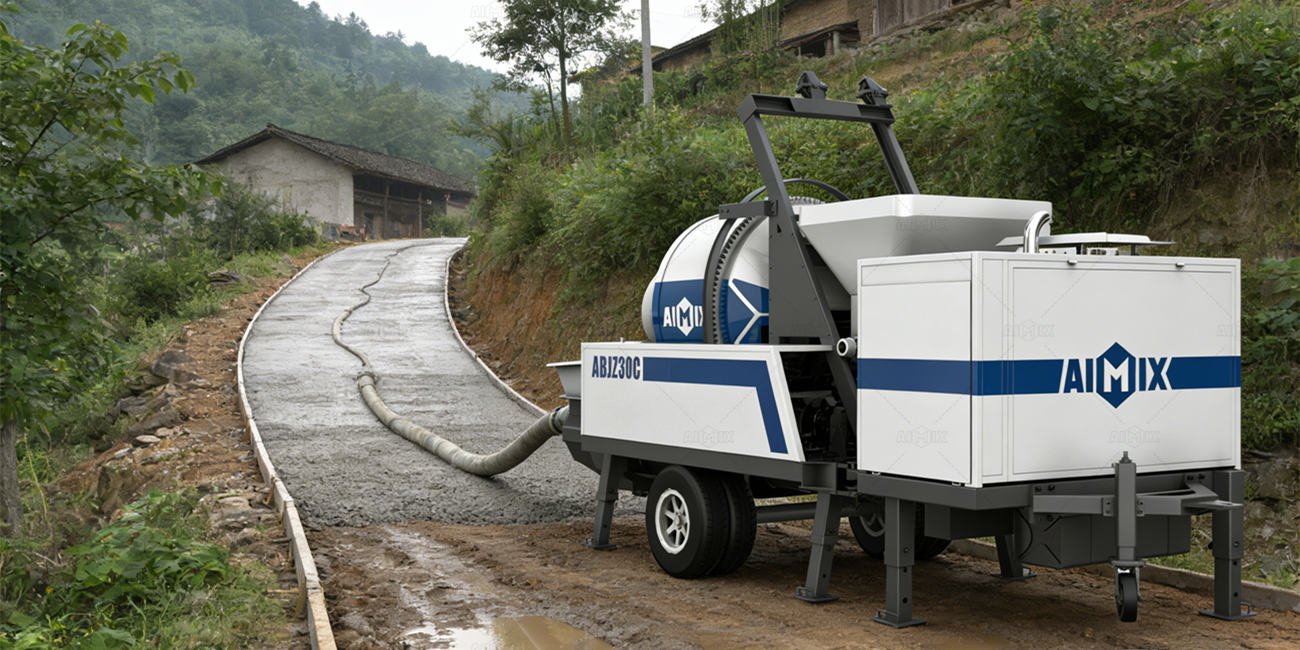
Remote Sites with Rough Terrain
- The situation: The job is up a hillside, across a farm field, or deep in a rural area. The last 200 meters are too rough, too steep, or too muddy for any wheeled vehicle.
- How we solve it: Park your pump—whether it’s a small concrete mixer pump like the ABJZ series mixer pump or a trailer pump—at the last accessible point. Then run pipeline along the ground, up the slope, and right to the forms. Our pumps handle vertical distances up to 150 meters, so even hillside sites are within reach.
- The result: You’re not fighting to get the machine to the pour. You’re letting the concrete do the traveling.
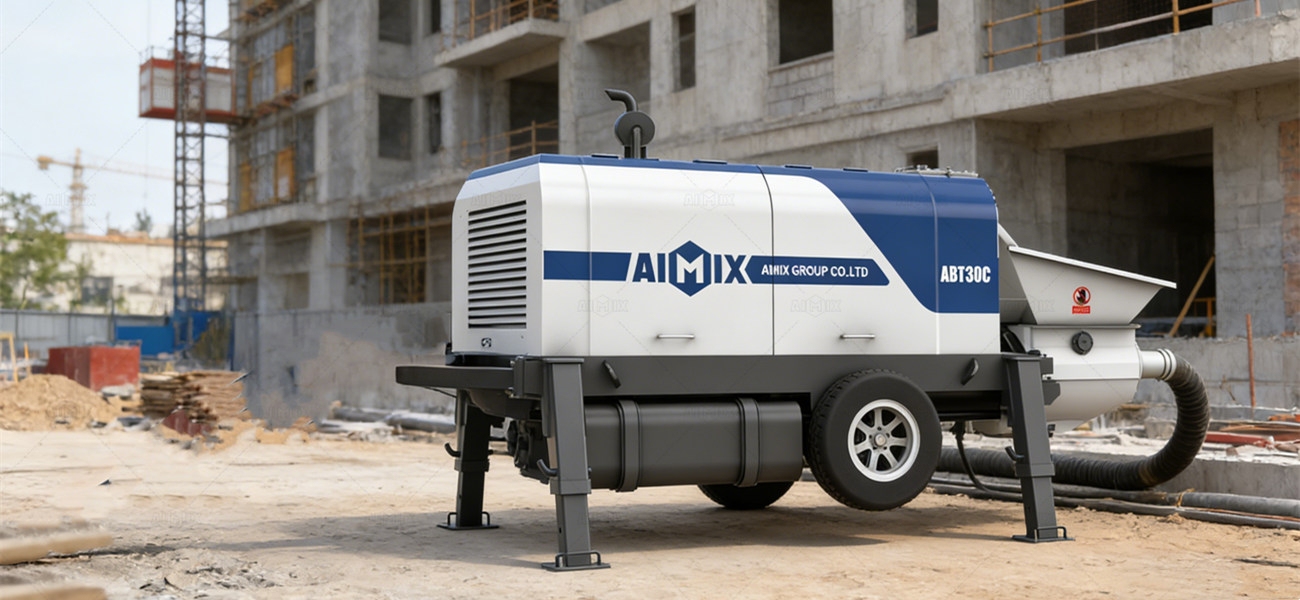
Indoor and High-Rise Work
- The situation: You’re pouring floor screed on the 10th floor of a building, or working in a basement with limited ramp access. Getting a pump inside is complicated—or impossible.
- How we solve it: Stage a small concrete pump at ground level, near the hoist or ramp. Run delivery lines up the side of the building, through windows, or down into the basement. The pump pushes concrete vertically and horizontally to reach every corner of the job.
- The result: No need to dismantle equipment or fight with elevators. Your crew works upstairs while the pump works downstairs.
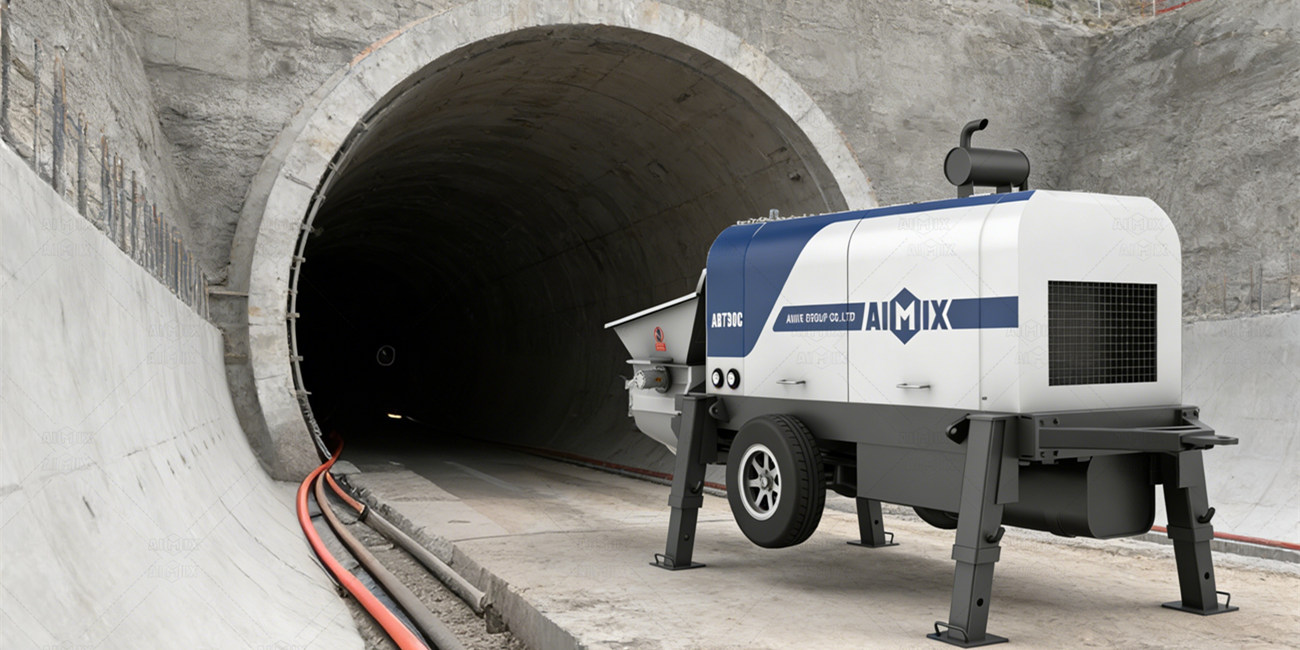
Tunnels and Enclosed Spaces
- The situation: You’re repairing a tunnel, a drainage channel, or an underground parking structure. The space inside is tight, ventilation is poor, and diesel fumes are a real concern.
- How we solve it: Choose an electric-powered small concrete pump—like the ABT30C—and position it at the tunnel entrance. Run pumping tubes deep into the tunnel, sometimes hundreds of meters, to reach the repair site. Electric power means zero fumes, quiet operation, and safer working conditions inside.
- The result: The confined space stays clean and breathable. Your crew focuses on the pour, not on the exhaust.
The Common Thread
Notice what ties these scenarios together? In every case, the pump finds a place where it can sit. And then, through the power of long-distance pumping, the concrete reaches the place where it needs to go.
That’s the real meaning of small concrete pump versatility. It’s not about squeezing the machine into impossible spaces. It’s about parking it where it fits—and letting the concrete do the rest.
Got a tight site of your own? Tell us about it. We’ll help you figure out where the pump should sit—and how far the concrete needs to travel.
Smart Money: Why a Small Concrete Pump Makes Financial Sense
When you’re checking small concrete pump price, you’re really asking: “Can I afford this? Will it pay off?” Let’s look at the numbers that matter.
Lower Entry Point, Faster Returns
Here’s the simple truth: a small concrete pump for sale costs a fraction of large equipment. That means:
- You keep more cash in your business
- You start seeing returns faster—often in months, not years
- You say “yes” to more jobs without taking on big debt
Picture this: one medium-sized project, and you’ve already saved what you would have spent on rentals. A few more, and the pump has paid for itself. Everything after that? Pure profit.
Own Your Equipment, Own Your Schedule
Renting means depending on someone else’s availability and pricing. Owning your own small concrete pump means:
- It’s always ready when you are
- No more last-minute rental cancellations
- Every job’s margin stays with you
Plus, you build a reliable income stream from equipment you actually own.
Low Risk, High Flexibility
Smaller investment means smaller risk:
- Easier to resell if your needs change
- Lower maintenance costs
- Simple to store and transport
- Works for concrete, grout, mortar—versatility built in
The small concrete pump cost isn’t an expense—it’s an investment in your business’s flexibility and independence. Lower upfront, fast to pay back, and steady income once it’s yours.
Pick Up and Go: How to Move Your Small Concrete Pump
When you’re looking at a concrete pump small portable unit, one question naturally comes up: “How do I actually get this thing from place to place?” The answer depends on where you’re going. Let’s break it down by two common scenarios.
Scenario 1: Repositioning Within the Same Job Site
You’re on site, and you need to move the pump—maybe closer to the next pour, or out of the way for other equipment. This is short-distance movement, often just meters or a few hundred meters.
What you’ll use:
A pickup truck or utility vehicle: Most small trailer concrete pumps are designed to be towed. Hook the pump’s trailer hitch to a site vehicle and reposition as needed.
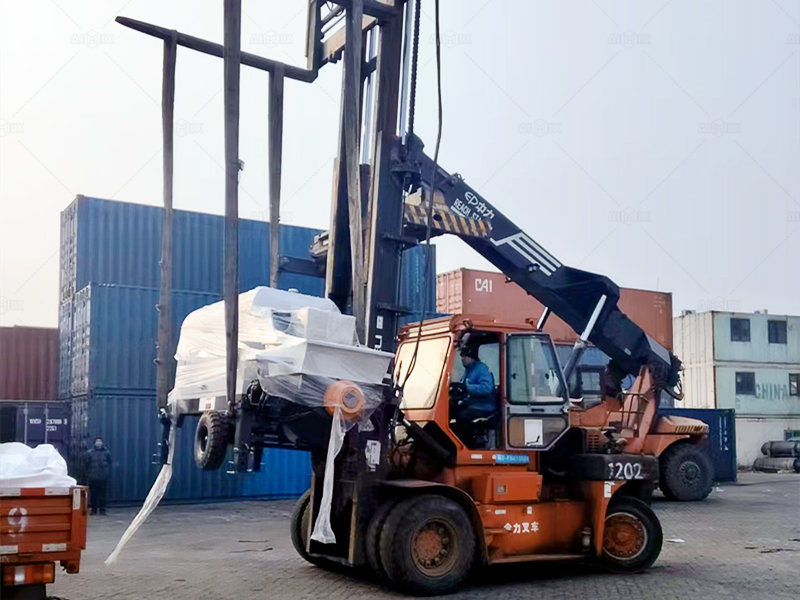
A small forklift: For very tight spots where towing isn’t practical, a site forklift can lift and relocate the pump.
How to do it safely:
- Always disconnect power and secure loose hoses before moving
- Check your path for soft ground, holes, or steep slopes
- If lifting, ensure the forklift has adequate capacity and the pump is balanced
- Move slowly—this isn’t a race
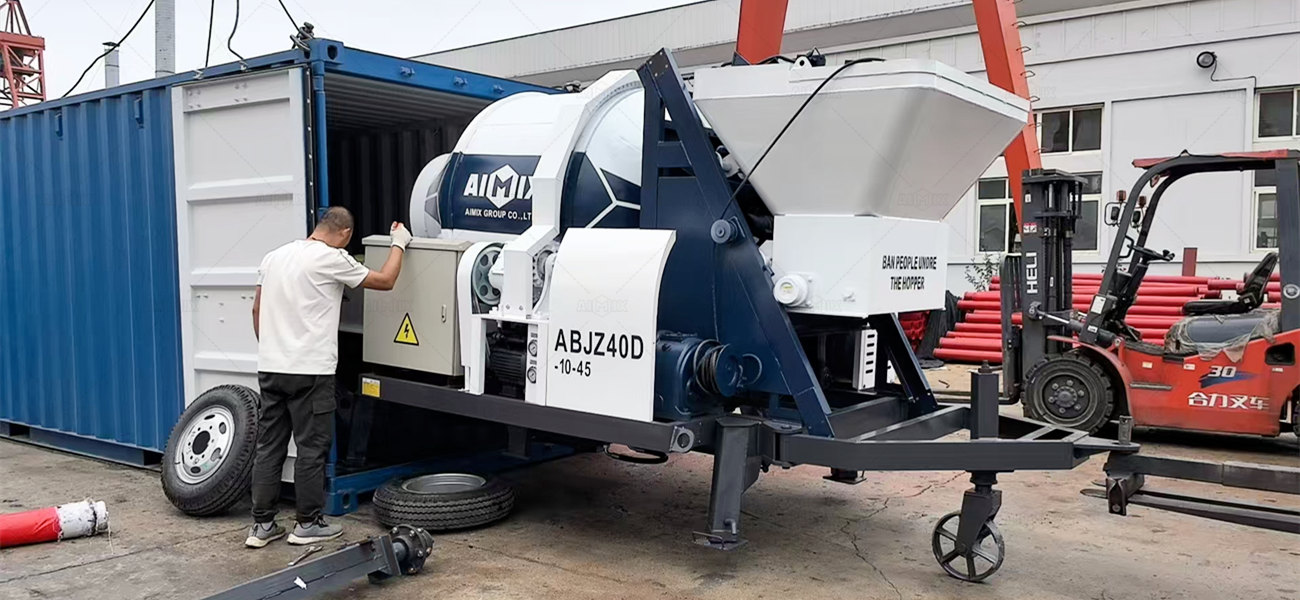
Scenario 2: Transporting Between Different Job Sites
Now you’re wrapping up one job and heading to the next—maybe across town, or even to a different city. This is road transport, and the rules are different.
What you’ll use:
- Your own truck or vehicle: Most small concrete pumps for sale come with a standard trailer hitch. If your truck or SUV has the proper towing capacity, you can hook up and go. No special permits needed for most models—just a properly rated vehicle.
- A small flatbed truck: For longer distances, or if you prefer not to tow, load the pump onto a flatbed. This is common for contractors moving multiple machines or traveling on highways.
- A hired transport service: Don’t have a suitable vehicle? Local equipment movers can handle it. Just provide them with the pump’s weight and dimensions.
How to do it safely:
- Check that your towing vehicle is rated for the weight (most small concrete pump models range from 2,500–5,200 kg)
- Ensure all lights and brakes on the pump’s trailer are functioning
- Use safety chains—always
- Confirm the hitch is locked and secure
- Allow extra stopping distance; you’re pulling significant weight
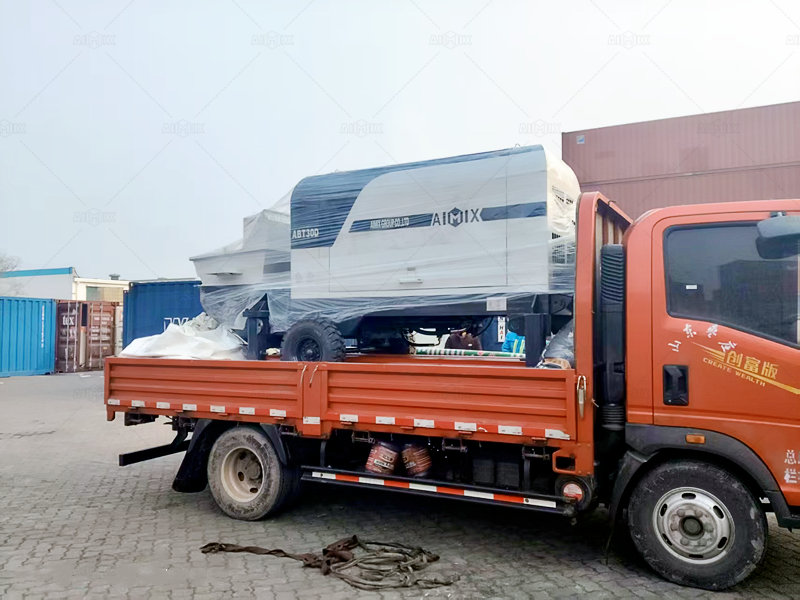
A concrete pump small size portable design means you’re never stuck. Whether you’re nudging it a few meters across a site or hauling it to the next county, you’ve got practical options.
Ready to Make the Move?
You’ve seen how a small concrete pump fits tight spaces, protects your budget, and moves where you need it. Now it’s just about taking the next step. Whether you’re ready to compare small concrete pump price options or just want to confirm which model suits your work best, our team is here to help. Tell us about your projects. Let’s find the right fit.
