

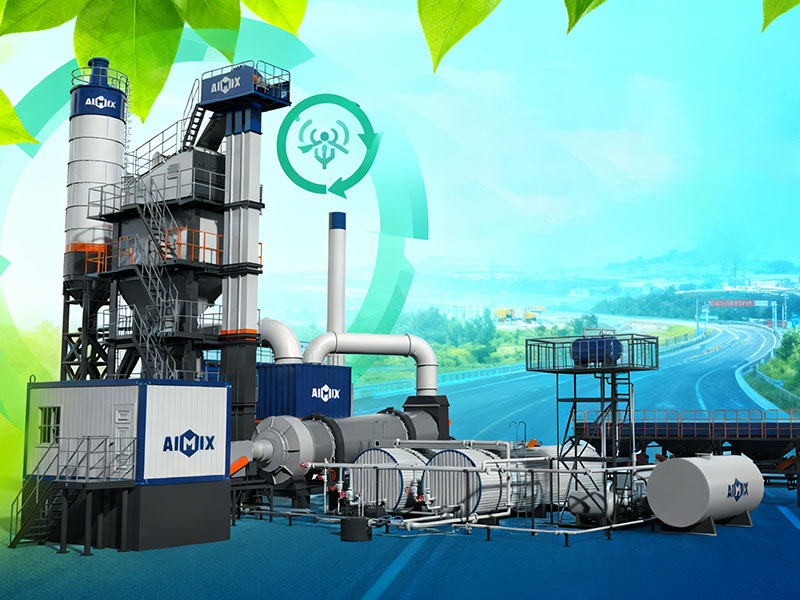
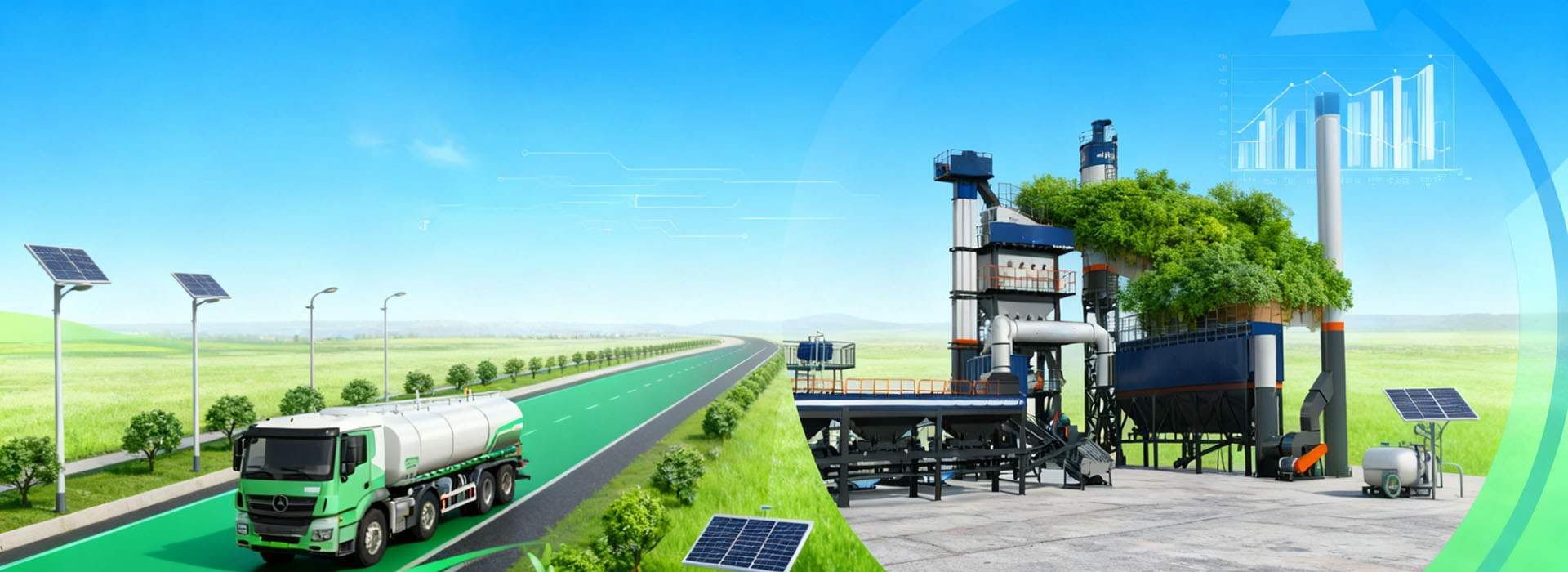
The world is rapidly moving toward carbon neutrality, and the road construction industry is undergoing a green transformation. Asphalt plants have become central to this shift, enabling low-carbon and sustainable road construction. They support carbon emission reduction, energy efficiency, material recycling, and intelligent management. With these capabilities, modern asphalt plants provide technical, economic, and environmental benefits for contractors, regulators, and investors alike.

Transforming Road Construction Under the Global Carbon Neutrality Wave
As global climate change concerns intensify, countries worldwide are setting ambitious carbon neutrality targets, putting unprecedented green transformation pressure on the road construction industry. Road transportation accounts for approximately 24% of global CO₂ emissions, with road construction and asphalt production contributing significantly to this footprint.

International Policy Drivers
Technological and Construction Model Shifts
Global road construction is transitioning from traditional high-energy consumption models to low-carbon, intelligent approaches:

Warm-Mix Asphalt (WMA) and Recycled Asphalt Pavement (RAP) have become mainstream, with some projects incorporating 40–60% RAP.

Modular or mobile asphalt plants reduce transportation distances in urban and remote areas, lowering fuel consumption and carbon footprints.

Digital construction management enables full monitoring of materials, energy use, and emissions, enhancing overall resource efficiency.
Market Drivers and Investment Opportunities
- The global green road construction market is projected to exceed USD 30 billion by 2030, with a compound annual growth rate (CAGR) of around 5.8%.
- For asphalt producers, contractors, and investors, using low-carbon equipment and recycled materials boosts competitiveness. It also ensures compliance with environmental regulations.
- In the context of a global shift toward low-carbon road construction, it is essential to focus on the most carbon-intensive stages of road projects.
- Asphalt production and paving represent one of the highest-emission segments, and understanding their emission sources and pain points is a critical prerequisite for achieving green construction and carbon neutrality.
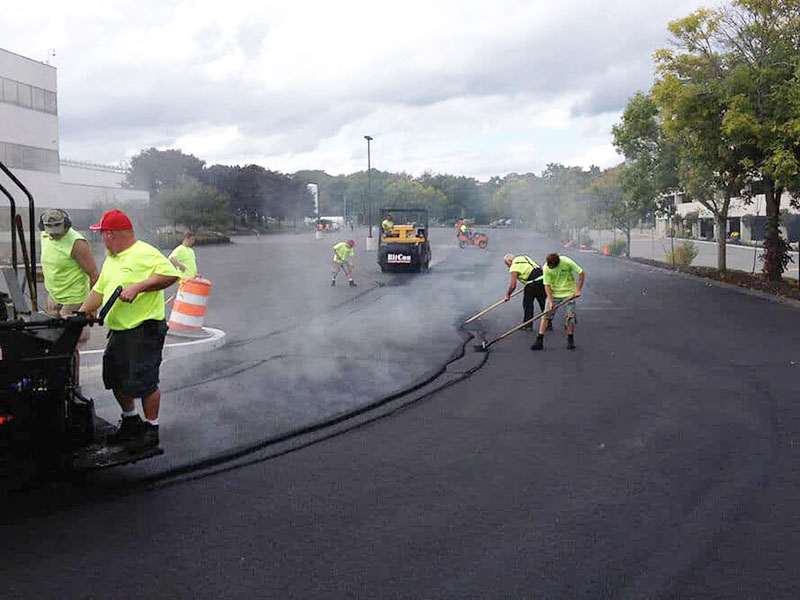
Carbon Footprint of the Asphalt Industry: Key Emission Sources and Challenges
To understand the role of asphalt plants in the green transformation, it is essential to examine the structure of carbon emissions within the industry. According to studies by NAPA (National Asphalt Pavement Association) and MIT CSHub, the lifecycle emissions of asphalt pavements are primarily divided into four stages:

| Stage | Main Emission Sources | Approx. Share |
|---|---|---|
| Raw Material Acquisition & Transportation | Aggregate extraction, asphalt refining, transportation fuel | 25–35% |
| Mixing & Production | Aggregate heating, asphalt heating, fuel combustion | 40–50% |
| Construction & Maintenance | Machinery energy consumption, equipment operation | 10–15% |
| Use & Recycling | Pavement service life, recycled material usage | 10–20% |
👉 Among these, the mixing and production stage, dominated by asphalt plants, is the largest contributor to total lifecycle emissions. Therefore, energy efficiency and emission reduction at asphalt plants represent a critical breakthrough for the road construction industry in achieving carbon neutrality.
Once the key emission sources are clear, the next step is to explore how technological upgrades and equipment optimization can reduce carbon emissions. As the central node in production, the green transformation of asphalt plants directly determines a company’s competitiveness in the low-carbon construction market.
Green Transformation Pathways for Asphalt Plants
In the context of global decarbonization, asphalt plants are not only the core production facilities in road construction but also critical nodes for achieving green construction and carbon reduction. The green transformation of modern asphalt plants mainly focuses on energy optimization, warm-mix and recycled asphalt technologies, emission control, and digital management.
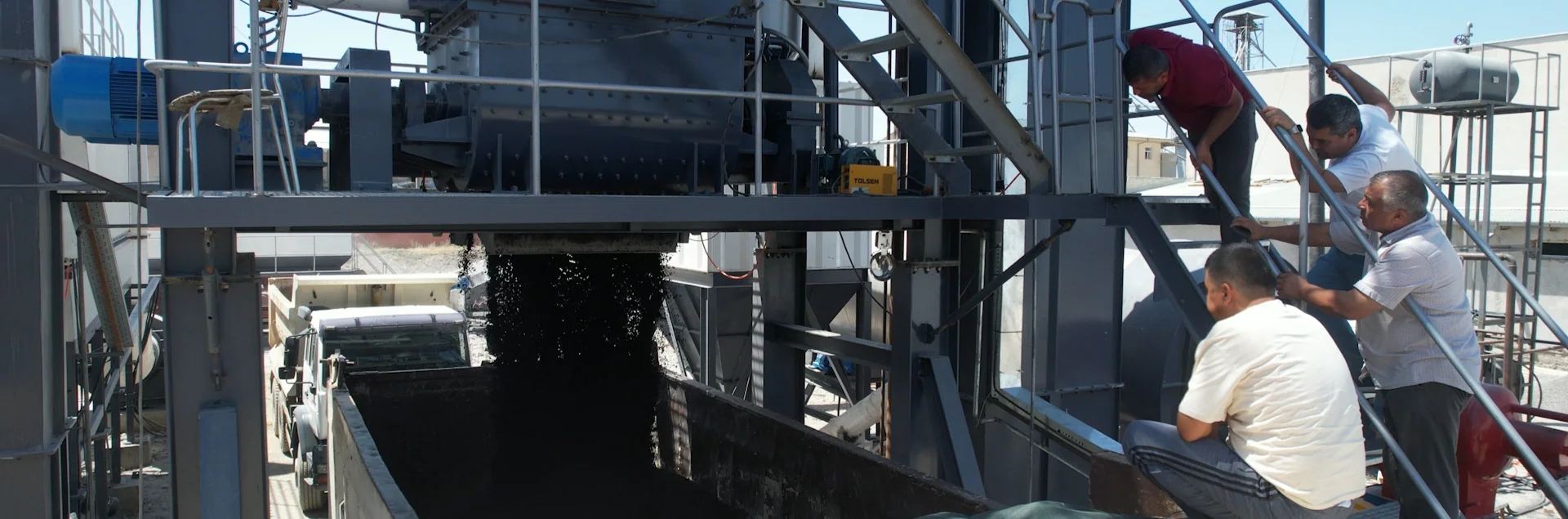
Energy Efficiency Optimization & Fuel Substitution
Traditional asphalt plants rely heavily on diesel or heavy oil, contributing over 60% of total production emissions. Key strategies for green transformation include:
Fuel Substitution
Using natural gas, LPG, or biofuels can reduce carbon emissions by 20–35%. Some projects in Northern Europe and Southeast Asia adopt electric heating systems to achieve zero direct carbon emissions.
Combustion Optimization
Intelligent control systems dynamically adjust the combustion strategy based on production volume and ambient temperature, reducing over-heating and fuel waste, saving 10–15% of energy annually.
Heat Recovery Technology
Recovering exhaust heat to preheat aggregates, bitumen, or drying towers improves thermal efficiency and reduces fuel demand by 10–20% annually.
Warm-Mix Asphalt (WMA) & Recycled Asphalt Pavement (RAP) Applications
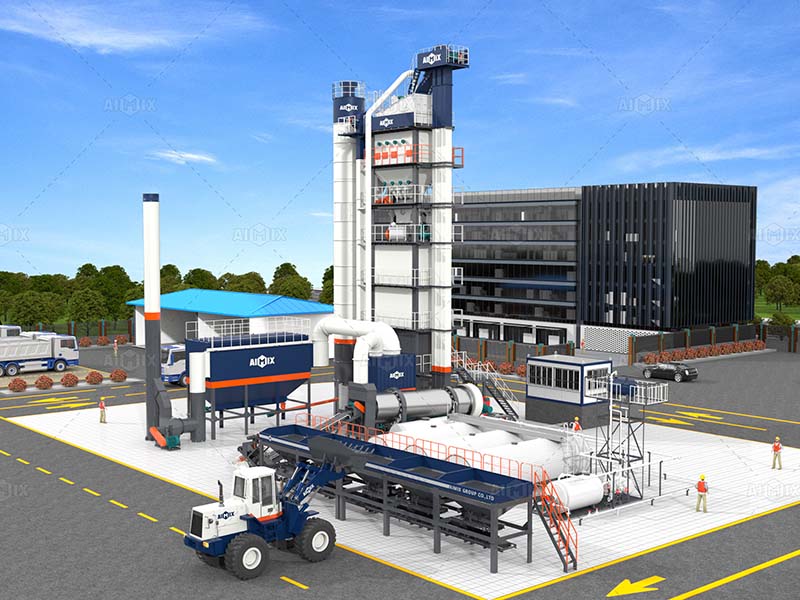
- Warm-Mix Asphalt (WMA): By adding chemical additives or injecting steam, mixing temperatures are reduced from the traditional 170°C to 130–140°C, lowering fuel consumption by 20–30% and CO₂ emissions by around 15%.(HOLCIM)
- Recycled Asphalt Pavement (RAP): Old pavement materials are reused in new mixes, saving raw materials and reducing demand for virgin asphalt and aggregates.
Average RAP content in Europe and the US is 40–60%.
Some advanced projects achieve over 80% RAP content.
By combining WMA and RAP, modern asphalt plants can reduce carbon emissions per ton of mix by 30–40%, gaining a competitive edge in policy-compliant and green-certified projects.
Emission Control & Environmental Technologies
Modern hot mix asphalt plants implement multi-stage pollution control to meet environmental standards:
- Dust control: Baghouse or electrostatic precipitators reduce particulate emissions to below 20 mg/Nm³.
- VOC & blue smoke control: Adsorption, condensation, or combustion recovery technologies can remove or recover over 95% of volatile organic compounds and blue smoke.
- Noise & waste heat management: Acoustic enclosures and waste heat recovery systems reduce environmental impact in urban construction, supporting low-carbon city requirements.
Digital & Intelligent Management
Digitalization is becoming a key driver of asphalt plant green transformation:
With energy optimization, warm-mix and recycled materials, and advanced emission control technologies, asphalt plants significantly improve production efficiency and environmental performance. To achieve precise, measurable low-carbon production, digital and intelligent management is indispensable. Through data-driven control, companies can simultaneously enhance operational efficiency while realizing both economic and environmental benefits.
Digital Empowerment: The New Engine for Green Asphalt Production
As green construction and carbon neutrality targets advance, traditional asphalt production is gradually shifting from experience-driven to data-driven operations. Digital technologies not only improve production efficiency but also serve as core tools for controlling carbon emissions, optimizing energy use, and ensuring material quality.
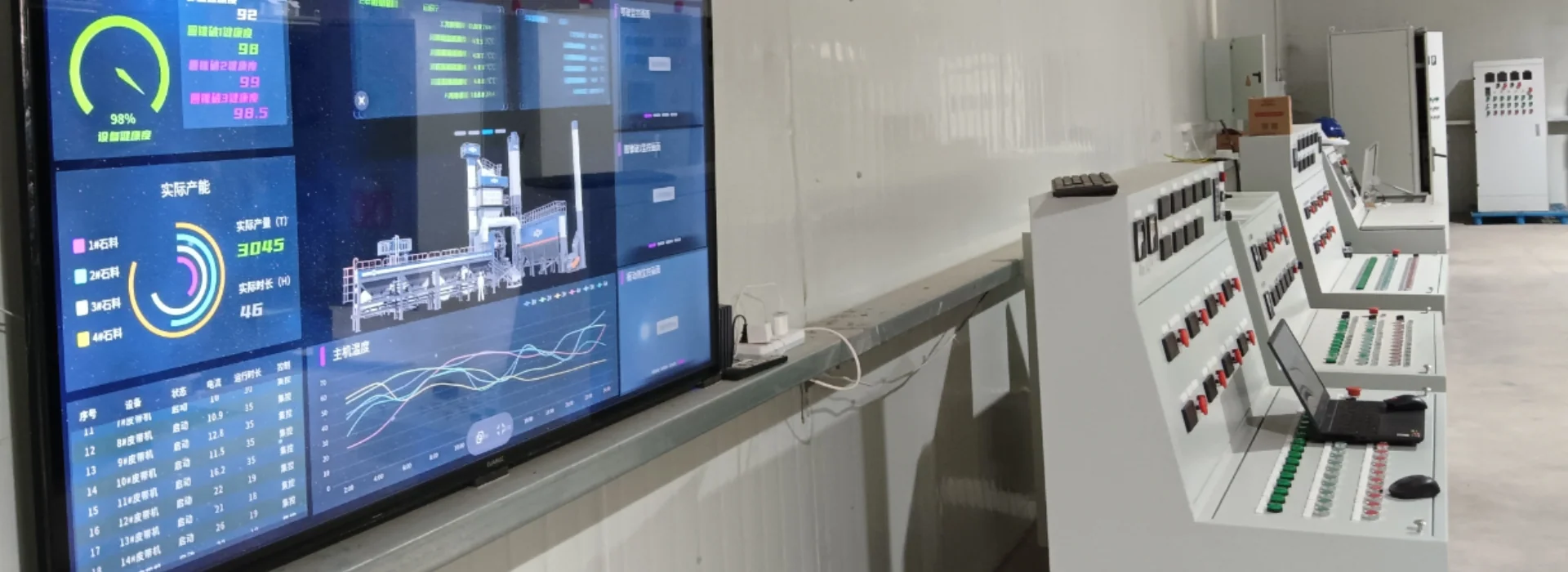
Real-Time Energy and Carbon Emission Monitoring
- Energy Management System (EMS): Integrates sensors and meters to monitor fuel, power, and steam consumption in real time.
- Carbon Tracking: Calculates the carbon footprint per ton of mix by analyzing RAP use, fuel consumption, and transport distance.
- Optimized Scheduling: Uses live energy data to adjust production rhythm and heating temperature, reducing over-combustion and saving 10–15% energy annually.
Intelligent Batching and Temperature Control Systems
- Automated Batching: Precisely controls aggregate, asphalt, and additive ratios, avoiding human errors and material waste.
- Smart Temperature Control: Dynamically adjusts mixing temperature based on ambient conditions and RAP ratio, reducing CO₂ emissions by about 15%.
- Quality Feedback: Continuous data supports performance prediction and quality consistency, minimizing rework and ensuring uniform mix quality.
Remote Management and Predictive Maintenance
- Cloud-Based Monitoring: Enables contractors and suppliers to remotely access plant operations, energy use, and material inventory.
- Predictive Maintenance: Analyzes sensor data to detect potential failures early, reducing downtime and maintaining production continuity.
- Multi-Plant Coordination: Centralized management of multiple asphalt plants optimizes resource allocation and scheduling efficiency.
Data-Driven Green Decision-Making
- Process Optimization: Combines production and environmental data to recommend the best RAP ratio, warm-mix process, and fuel type.
- Carbon Reporting and ESG Compliance: Automatically generates emission reports for green certification and regulatory approval.
- Smart Planning Simulation: Models the impact of different processes and equipment on cost, emissions, and project timelines to guide investment.
Digitalization enables efficient, low-carbon, and transparent asphalt production, supporting material recycling and full lifecycle management. Through intelligent monitoring and precise control, asphalt plants can achieve closed-loop, low-carbon operations from raw material sourcing to recycling and reuse.
Circular Economy and Resource Loop: From “Production” to “Regeneration”
Under the concept of green road construction, the circular economy has become a core strategy for reducing carbon footprints and material consumption. Modern asphalt plants are no longer just production facilities; they are critical hubs for building a closed-loop system that integrates material recycling, energy optimization, and carbon reduction — enabling full lifecycle management from raw material sourcing to road regeneration.

Reclaimed Asphalt Pavement (RAP) Reuse
- RAP (Reclaimed Asphalt Pavement) refers to the reuse of old asphalt and aggregates from demolished pavements. After crushing, screening, and drying, RAP materials are reintroduced into the asphalt mix production process.
- In Europe and North America, the average RAP utilization rate has reached 40–60%, with some projects exceeding 80%, achieving remarkable carbon reduction and raw material savings.
- Data shows that for every 1,000 tons of RAP used instead of virgin materials, approximately 50 tons of natural aggregates and 7–10 tons of CO₂ emissions can be saved.
Integration of Recycled Asphalt and Warm-Mix Technology
- Warm-Mix Asphalt (WMA) technology reduces the mixing temperature, and when combined with RAP, it further minimizes energy consumption.
- For example, in a Southeast Asian highway project, with 50% RAP content and WMA technology, fuel consumption per ton of mix decreased by about 28%, while CO₂ emissions dropped by 22%.
- This “WMA + RAP” model not only reduces dependency on virgin asphalt and aggregates but also lowers thermal emissions during paving, improving urban livability and environmental compatibility.
Closed-Loop Material Management and Lifecycle Perspective
- Intelligent Proportioning and Quality Tracking: Digital management systems ensure accurate blending ratios between recycled and virgin materials, preventing waste and ensuring mix consistency.
- Full Lifecycle Carbon Accounting: From raw material extraction and transportation to production, construction, and maintenance, carbon emissions can be quantitatively monitored, providing data for green certifications and ESG reporting.
- Recycling Rate Visualization: Both enterprises and governments can monitor RAP usage rates in real time, ensuring compliance with green construction standards.
Investment and Policy Implications
- High RAP ratios combined with WMA technologies help asphalt producers and contractors reduce material costs by 10–20% while complying with international green road standards and regulations.
- Closed-loop management allows infrastructure investors to evaluate long-term carbon emissions and operational expenses, facilitating low-carbon financing and green bond projects.
- Encouraging recycling and circular management enables governments to promote local material use, ease pressure on natural resources, and achieve a sustainable balance between environmental protection and economic growth.
Recycling and regeneration technologies effectively reduce carbon emissions and conserve resources, yet their broad adoption depends on policy and market support. As green road policies, subsidies, and certifications accelerate, low-carbon asphalt technologies are rapidly expanding. Understanding these trends is key for companies to make informed strategic and investment decisions in sustainable road construction.
Policy Drivers and Market Trends
Green construction and carbon neutrality are not merely technical challenges—they are strongly influenced by policy guidance and market dynamics. The low-carbon transformation of asphalt plants and road construction is now driven globally by policy, technology, and investment.
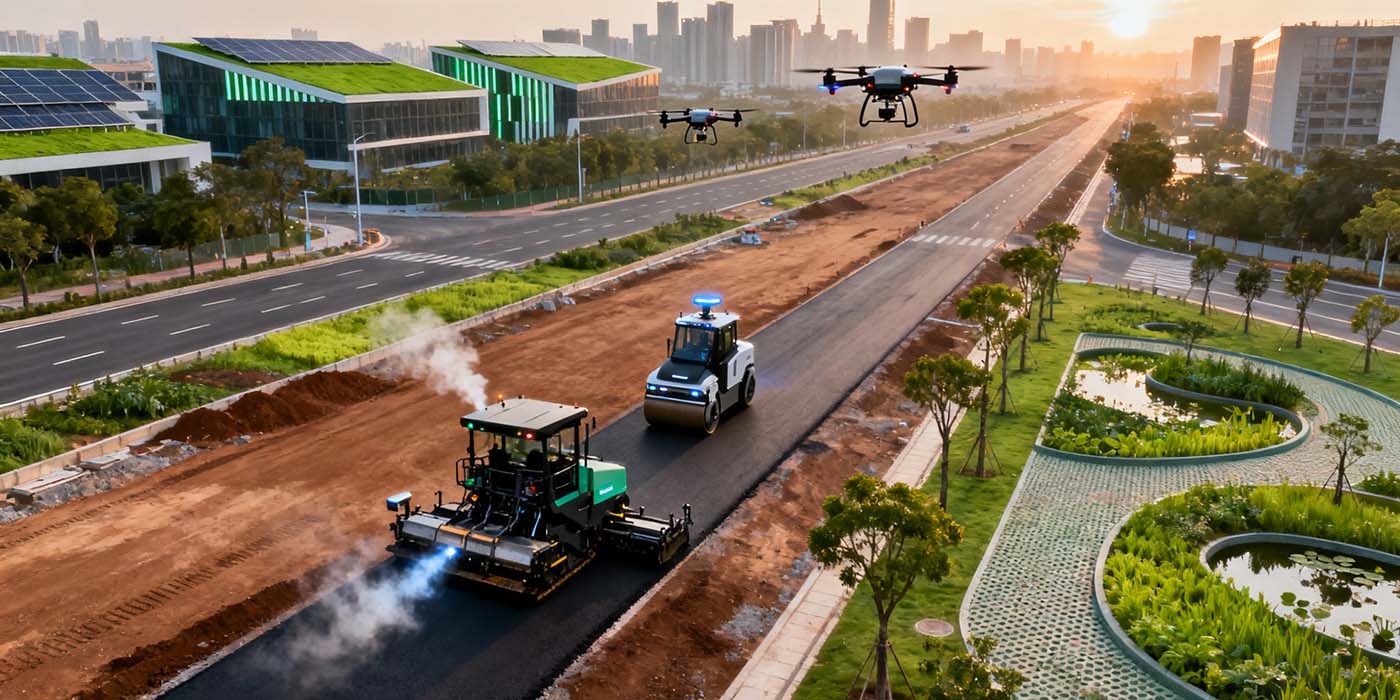
Global Policy Drivers
Market Trends and Investment Opportunities
- Green Road Construction Market Size: The global market is projected to exceed USD 30 billion by 2030, with a compound annual growth rate (CAGR) of around 5.8%.
- Rising Demand for Low-Carbon Asphalt Plants: There is growing procurement demand for asphalt plants equipped with WMA technology, RAP utilization, digital management, and emission control.
- Investment and Financing Opportunities: Infrastructure investors can leverage low-carbon road projects to secure green financing and green bonds, while supporting corporate ESG reporting.
- Technology-Driven Procurement: Contractors and buyers increasingly prefer energy-efficient, high-performance asphalt plants compatible with recycled materials, reducing long-term operational costs and carbon footprints.
Industry Implications
Contractors
Early adoption of WMA, RAP, and smart asphalt plants gives an advantage in green and policy-compliant project bids.
Asphalt Producers
Green equipment and recycling technologies meet regulations while lowering material and energy costs, improving competitiveness.
Transportation Authorities
Enforcing policy standards, carbon accounting, and green certifications supports low-carbon regional infrastructure.
Financial Institutions
Returns from green road projects include both economic benefits and carbon/ESG performance.
Policies and market trends guide green construction. In the future, asphalt mixing plants will evolve from single production facilities into core hubs of a low-carbon ecosystem. They will combine energy efficiency, recycled material use, smart management, and full lifecycle carbon control. The next section explores how this ecosystem can lead the industry toward zero-carbon road construction.
Future Outlook: The Low-Carbon Ecosystem of Asphalt Plants
As global road construction moves toward carbon neutrality, the role of asphalt plants is changing fundamentally. Future asphalt plants will not only produce mixes but also serve as core hubs of low-carbon ecosystems, integrating green material production, energy optimization, digital management, and full lifecycle carbon control.
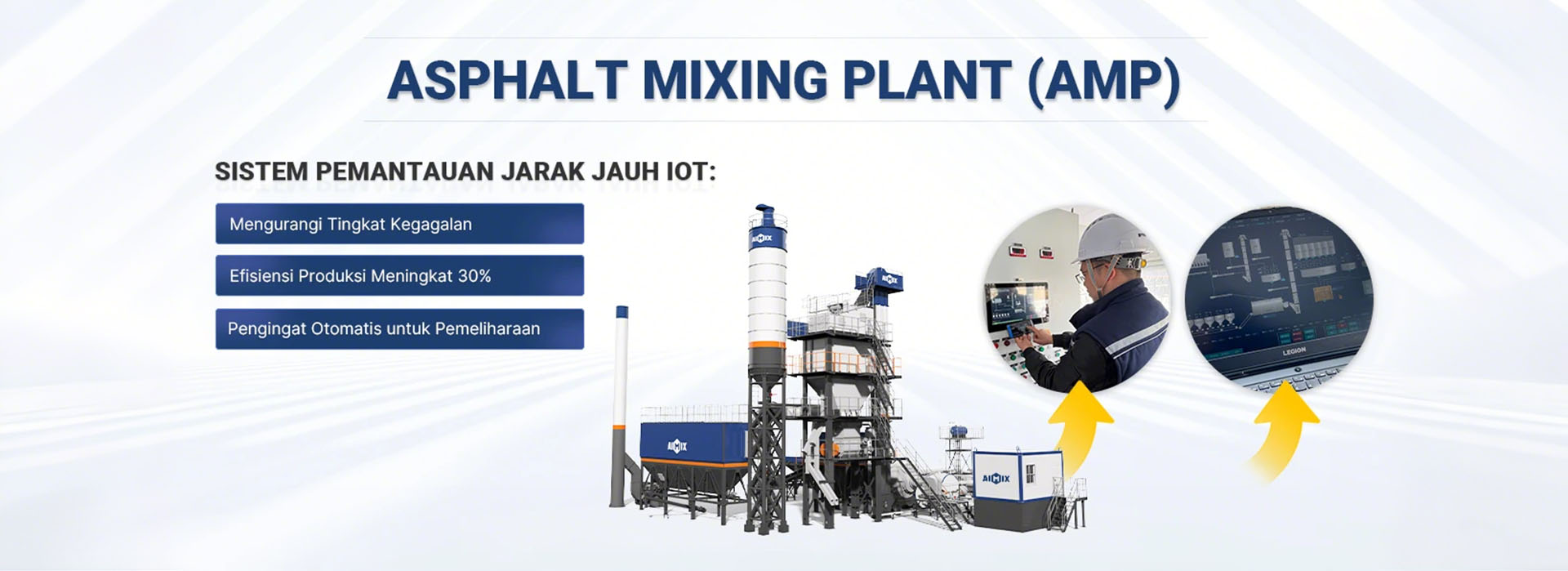
Renewable Energy and Zero-Carbon Production
- Energy Diversification: Asphalt plants will integrate solar PV, wind power, and energy storage, achieving low-carbon energy supply.
- Electric Heating and Efficient Combustion: Combining intelligent temperature control with waste heat recovery can reduce carbon emissions per ton of asphalt by 20–30%.
- Zero-Carbon Demonstration Projects: Some projects in Europe and North America have achieved zero direct carbon emissions, setting benchmarks for green construction.
Full Lifecycle Carbon Management and Green Certification
- Carbon Accounting Platforms: All stages—from raw material sourcing to production, construction, and maintenance—can be monitored in real time.
- Green Construction Certification: RAP utilization, WMA application, and emission control data enable mixes to receive green road or low-carbon certifications, supporting bids and financing.
- Carbon Trading and ESG Value: Quantified emission reductions can participate in carbon trading, generating economic benefits and improving ESG ratings.
Intelligent and Digital Ecosystem Integration
- AI and Data Analytics: Asphalt plants will use AI to predict schedules, optimize temperature, and adjust mix ratios, improving efficiency.
- Digital Closed-Loop Management: Integrating RAP recycling, emission data, energy use, and construction progress enables smart decisions and end-to-end green management.
- Multi-Plant Coordination: Networking multiple plants and sites allows optimal scheduling of materials, energy, and equipment, enhancing overall productivity.
Regional and Global Green Supply Chain Integration
- Localized Material Recycling: Recycling RAP and aggregates nearby reduces transport distances and lowers carbon footprints.
- Global Green Supply Chains: Asphalt plants collaborate with suppliers, contractors, and regulators, ensuring sustainable road construction across the value chain.
- Enhanced Investment Value: Low-carbon, intelligent asphalt plants comply with policies and standards while offering long-term economic and social benefits for investors.
Building a low-carbon ecosystem is not just a technological trend—it is a strategic direction for the asphalt and road construction industry. Green upgrades, intelligent management, and circular economy practices will become key factors for competitive advantage. Together, the industry is moving toward zero-carbon roads, creating a sustainable long-term development model.
Building the Future of Zero-Carbon Roads
Green construction and carbon neutrality are no longer distant goals—they are the future of road building. With innovative technology and smart management, asphalt plants can drive low-carbon growth and sustainable development. Let’s work together to embrace zero-carbon construction and build a greener, smarter, and lasting global road network.
