


Ready mix concrete batching plant helps builders and construction teams overcome delays, inconsistent quality, and high labor costs. By precisely mixing aggregates, cement, water, and additives, RMC plant produces uniform concrete that is delivered straight to the construction site. Compared to on-site mixing, it ensures faster production, reduces material waste, and provides reliable performance—making it perfect for commercial, residential, and large infrastructure projects.
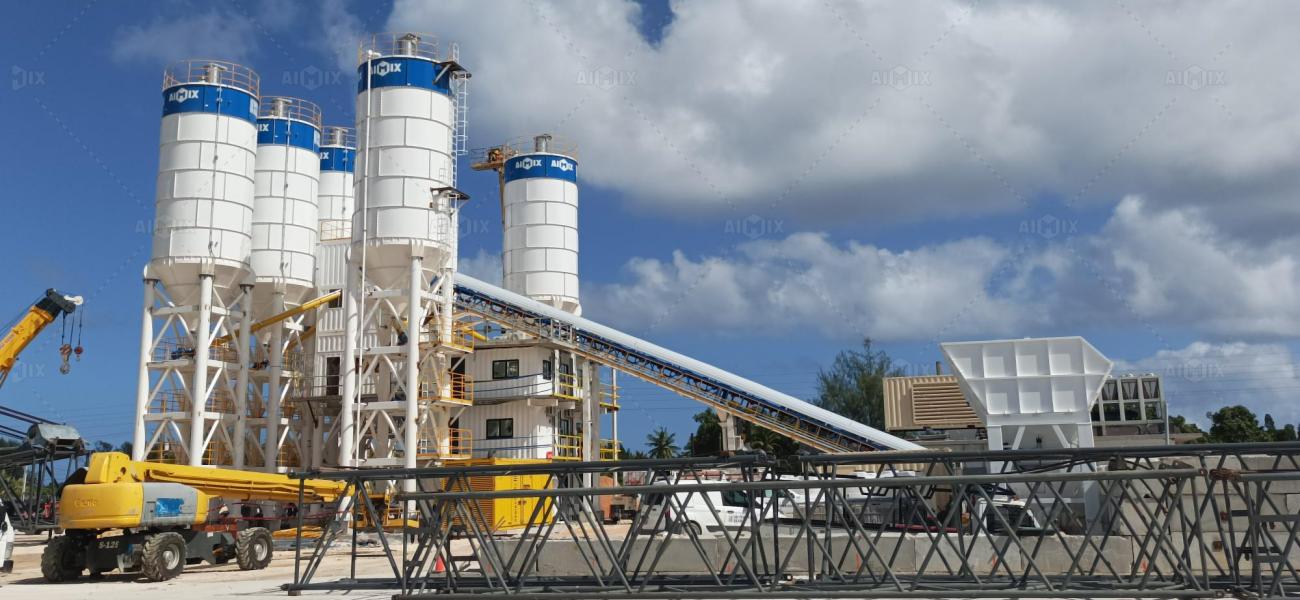
How Does a Ready Mix Concrete Batching Plant Work
A ready mix concrete batching plant works by systematically combining raw materials to produce high-quality, consistent concrete. Understanding how RMC plant works helps visualize the workflow from raw components to ready-to-use concrete delivered to the site. The process relies on precise measurement and automated controls to ensure each batch meets the required specifications.
Main Components of an RMC Plant
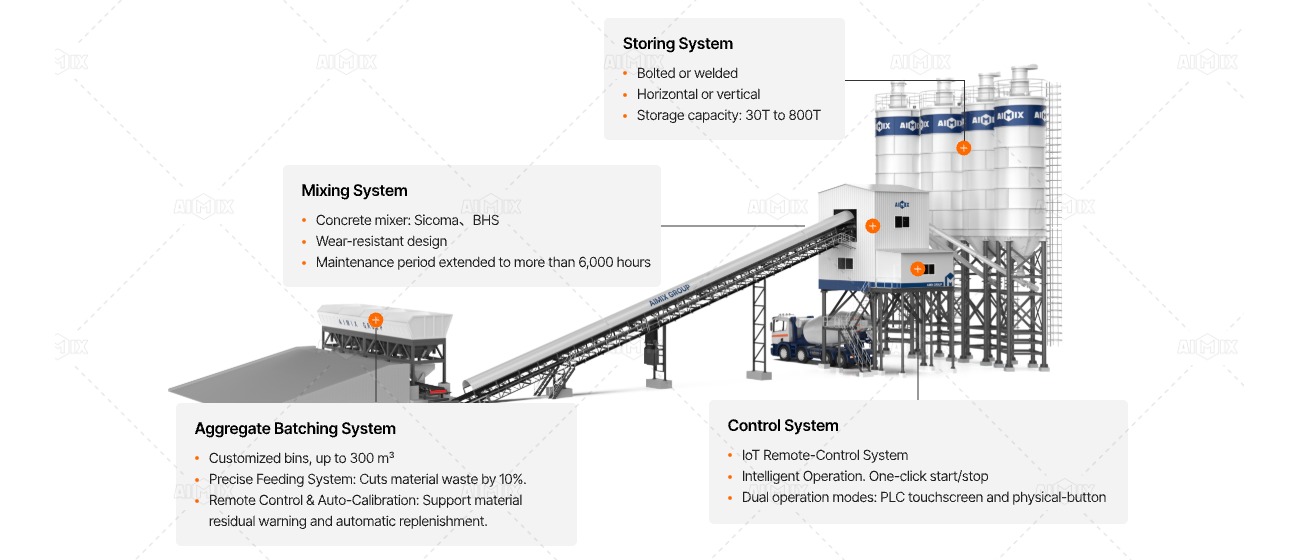
Key components and their functions:
- Aggregate Bins: Store sand, gravel, and crushed stone, often separated by size for accurate batching.
- Cement Silos: Store cement safely, usually equipped with dust filters and level sensors.
- Conveyors: Transport materials efficiently from storage bins to the mixer.
- Mixer: Combines all ingredients, including water and additives, to produce a homogeneous concrete mixture.
- Control System Automates batching and mixing processes, ensuring precise proportions and reducing human error.
Step-by-Step Working Process
The typical ready mix concrete plant working process can be broken down into four main steps:
Loading: Aggregates and cement are loaded into their respective bins or silos.
Weighing: Each material is measured accurately according to the mix design to ensure consistent proportions.
Mixing: Materials, water, and additives are combined in the mixer to produce uniform concrete.
Discharge: The ready-mix concrete is loaded into mixer trucks for immediate delivery to the construction site.
Types Of Ready Mix Concrete Batch Plant
AIMIX offers two main types of ready mix concrete batching plants—stationary and mobile—to meet the diverse needs of different construction projects. In this section, we’ll explore the key features and advantages of each type.
Stationary Ready Mix Concrete Plant – High Capacity, Fixed Installations
We offer two types of stationary ready mixed concrete batching plants based on the feeding method: Hopper Type and Belt Type. The hopper type ready-mixed concrete plants include AJ-25, AJ-35, AJ-50 and AJ-75, and the belt type plants mainly consist of AJ-60, AJ-90, AJ-120, AJ-180 and AJ-240.
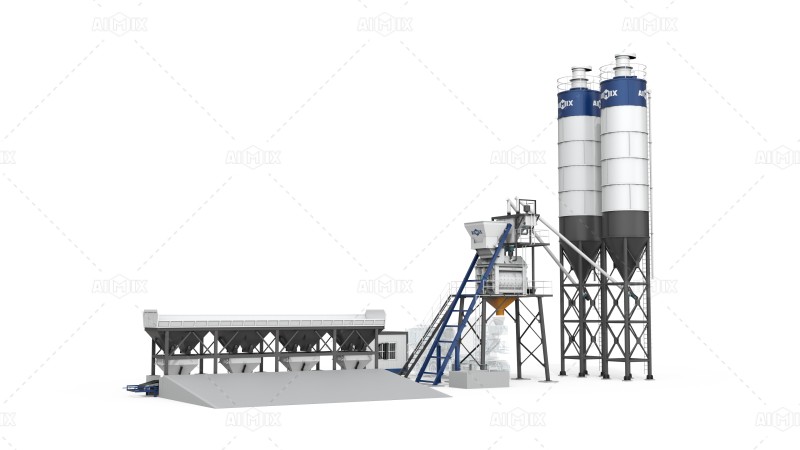
Hopper-type ready mix plant
Enhanced Durability and Strength:
- Track wheels are forged, not cast, providing superior strength and excellent wear resistance.
- Forging increases material strength by ~30%, making wheels more durable under heavy-duty use.
- Maintenance costs are significantly reduced compared to traditional casting.
Compact Design with Space Savings:
- Feed height: 7.5 meters; bucket angle: 60°
- Reduces plant length by 18 meters compared to conventional belt-type systems.
Example:
- 50 m³/h hopper-type plant → horizontal batching distance: 6.2 meters
- 60 m³/h belt-type plant → horizontal batching distance: 37.2 meters
- On-site space saved: nearly 30 meters
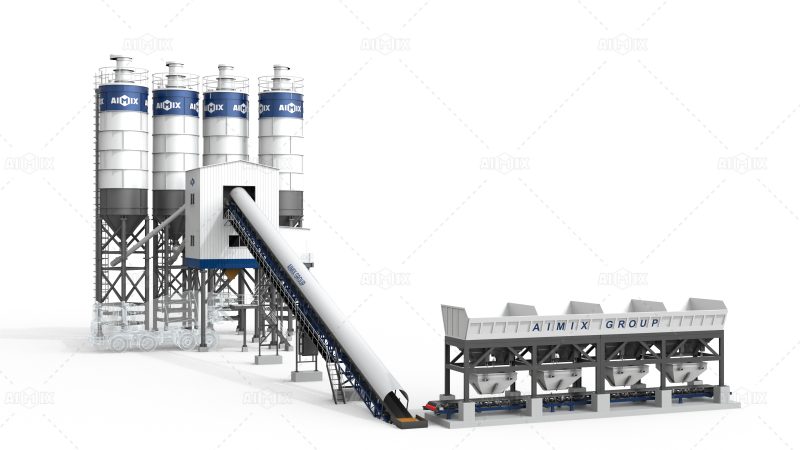
Belt-type ready mixed plant
Efficient Aggregate Conveying:
- The belt conveyor system delivers aggregate smoothly and continuously, ensuring high transport efficiency.
- This reduces downtime and lowers maintenance costs compared to conventional systems.
Example:
- An 800 mm-wide belt can handle 450–650 tons per hour, while a 1000 mm-wide belt running at 2.5 m/s can deliver up to 1000 tons per hour, meeting large-scale project demands.
High-Precision Weighing System:
- Provides accurate and consistent aggregate batching to ensure reliable concrete quality.
- The system achieves weighing precision of up to ±2%, supporting stable, continuous concrete production for demanding construction projects.
Mobile Concrete Ready Mix Plant – Portability and Rapid Deployment
A mobile type RMC plant is built on a semi-trailer unit, making it highly convenient to move between sites. It is ideal for short-term construction projects, and if you have multiple projects located close to each other, a mobile type concrete plant is the perfect choice. Customer-favorite mobile plants include the AJY-60 and AJY-90.
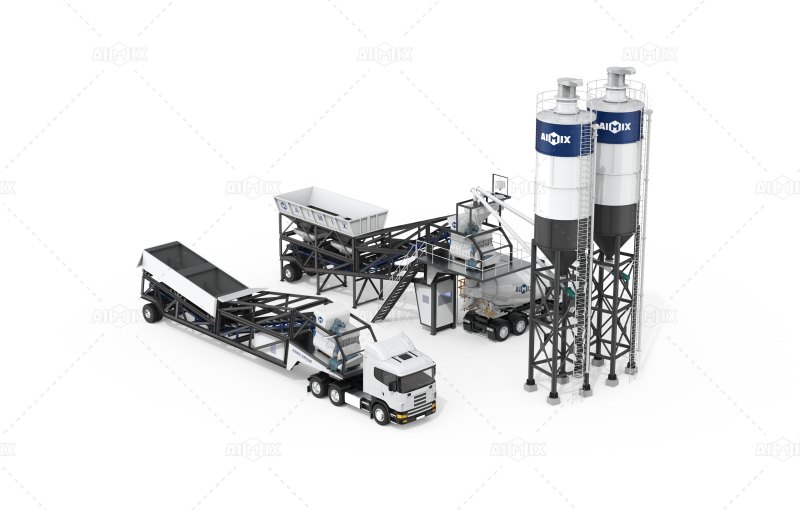
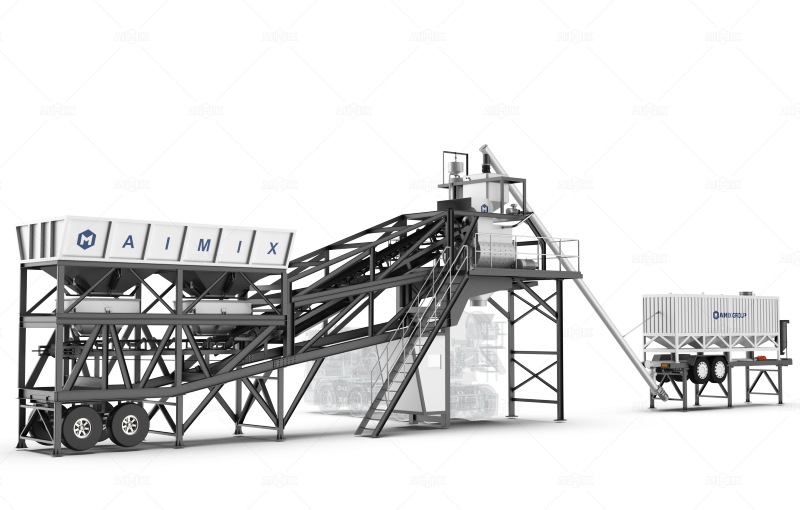
Applicable Projects: Small to medium construction projects, temporary works, rural roads, small bridges, housing, and emergency repairs.
Footprint & Installation: Compact layout (300–500 ㎡), requires only a level surface, installable in 1–3 days without foundation.
Core Features:
- Modular design: mixer, batching machine, and conveyor integrated on one mobile chassis
- Automated batching and mixing, high accuracy (aggregates ±2%, cement/water ±1%)
- Production capacity: 25–90 m³/h, flexible for small to medium batches
Mobility & Operation:
- Wheeled chassis, towable on roads and rough terrain
- Quick setup, dismantling, and redeployment
- Low labor requirement, easy operation
Environmental & Safety: Dust collection system, safety guards, emergency stop for safe operation
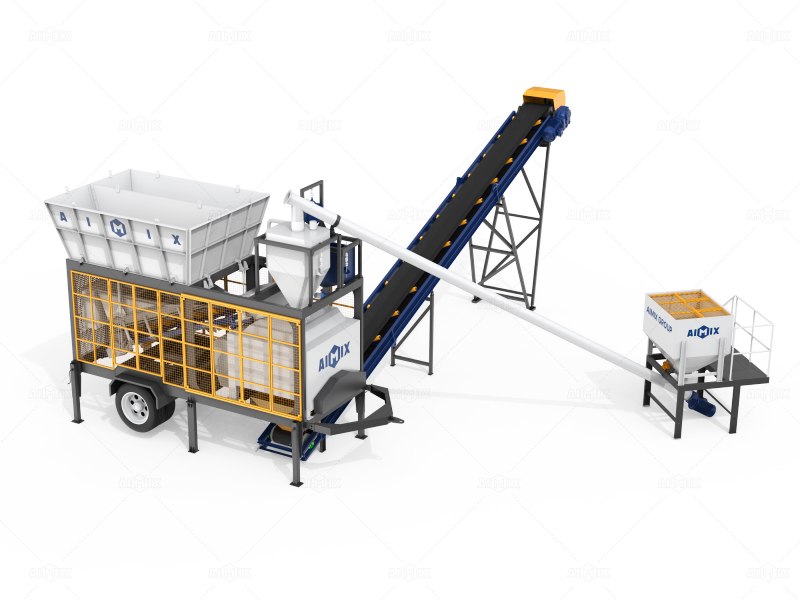
AJSY40 Compact RMC Plant for Sale
- Applicable Projects: Ideal for small-scale, temporary, short-term construction, such as rural roads and small buildings (1–6 months).
- Footprint & Installation: Requires 150–200㎡, can operate without hardened foundation, installable within 24–48 hours.
- Core Configuration: Twin-shaft mixer (1 m³), simple ton-bag cement silo (≈2 m³) or cement silo (50–100 T), embedded batching, belt weighing system.
- Production Capacity: Maximum concrete grade C30, flexible for small batches or multiple grades quickly.
- Operation & Environmental Features: Basic environmental protection (no dust collector), semi-automatic control, requires only 2–3 operators (1 operator + 1–2 batching/assistants).
- Transportation & Support: Supports 2–3 mixer trucks (8–12 m³) and 1 loader (30 T), 5–10 km transport radius to avoid concrete segregation.
Specifications of Ready Mixed Concrete Plants
| Type | Belt Type | |||||
|---|---|---|---|---|---|---|
| Model | AJ60 | AJ90 | AJ120 | AJ180 | AJ240 | AJ270 |
| Theoretical productivity (m³/h) | 60 | 90 | 120 | 180 | 240 | 270 |
| Mixer discharge volume (L) | 1000 | 1500 | 2000 | 3000 | 4000 | 4500 |
| Mixer feeding volume (L) | 1500 | 2250 | 3000 | 4500 | 6000 | 6750 |
| Mixer power (kw) | 18.5×2 | 30×2 | 37×2 | 55×2 | 75×2 | 75×2 |
| Discharge height (m) | 4.1 | 4.1 | 4.2 | 4.2 | 4.2 | 4.2 |
| Aggregate bin configuration (number × single bin volume, m³) | 4×7 | 4×15 | 4×20 | 4×25 | 4×30 | 4×30 |
| Cycle time (s) | 60 | 60 | 60 | 60 | 60 | 60 |
| Maximum aggregate particle size (mm) | 80/100 | 80/100 | 80/100 | 80/100 | 80/100 | 80/100 |
| Cement silo (optional) | 2×100 | 3×100 | 4×100 | 4×100 | 4×100 | 4×100 |
| Aggregate weighing system | ±2% | ±2% | ±2% | ±2% | ±2% | ±2% |
| Powder weighing system | ±1% | ±1% | ±1% | ±1% | ±1% | ±1% |
| Water weighing system | ±1% | ±1% | ±1% | ±1% | ±1% | ±1% |
| Additive weighing system | ±1% | ±1% | ±1% | ±1% | ±1% | ±1% |
| Installed power (kw) | ≈110 | ≈160 | ≈220 | ≈290 | ≈340 | ≈340 |
| Control mode | Fully automated computer (PC) control | |||||
| Power supply | 220V/415V/440V/380V, 50Hz/60Hz, three-phase | |||||
| Model | AJY-60 | AJY-90 |
|---|---|---|
| Theoretical production efficiency (m3 /h) | 50 | 75 |
| Mixer discharge capacity (liter) | 1000 | 1500 |
| Mixer feeding capacity (liter) | 1600 | 2400 |
| Mixer motor power (kw) | 18.5×2 | 30×2 |
| Discharge height (m) | 4.1 | 4.1 |
| Aggregate storage capacity (m3) | 8×3 | 12×3 |
| Working cycle period (sec) | 60 | 60 |
| Maximum aggregate particle size (mm) | 80/100 | 80/100 |
| Cement silo (tons) (optional) | 100×1 | 100×2 |
| Aggregate weighing system precision | ±2% | ±2% |
| Accuracy of powder weighing system | ±1% | ±1% |
| Precision of water weighing system | ±1% | ±1% |
| Accuracy of additive weighing system | ±1% | ±1% |
| Installation power (kw) | ≈100 | ≈140 |
| Traction method | semi-trailer | semi-trailer |
| Control mode | computer control | computer control |
| Power supply | 220V/415V/440V/380V, 50Hz/60Hz, three-phase | |
| Model | AJSY20 | AJSY40 | AJSY60 |
|---|---|---|---|
| Theoretical productivity (m³/h) | 20 | 40 | 60 |
| Mixer discharge volume (L) | 500 | 1000 | 1500 |
| Mixer feeding volume (L) | 750 | 1500 | 2250 |
| Mixer power (kw) | 18.5 | 18.5×2 | 30×2 |
| Discharge height (m) | 4.1 | 4.1 | 4.1 |
| Aggregate bin configuration (number × single bin volume, m³) | 2×4.5 | 2×4.5 | 2×4.5 |
| Cycle time (s) | 60 | 60 | 60 |
| Maximum aggregate particle size (mm) | 60/80 | 60/80 | 60/80 |
| Cement silo (optional) | 1×100 | 1×100 | 1×100 |
| Aggregate weighing system | ±2% | ±2% | ±2% |
| Powder weighing system | ±1% | ±1% | ±1% |
| Water weighing system | ±1% | ±1% | ±1% |
| Additive weighing system | ±1% | ±1% | ±1% |
| Installed power (kw) | ≈50 | ≈70 | ≈100 |
| Control mode | Buttons + Touch Screen + Remote Control | ||
| Power supply | 220V/415V/440V/380V, 50Hz/60Hz, three-phase | ||
How to Choose the Right Ready Mix Concrete Plant
Selecting the right ready mix concrete plant ensures efficient operations, consistent concrete quality, and smooth project execution. To make the best choice, consider factors such as project scale, site conditions, production requirements, operational flexibility, and resource allocation.
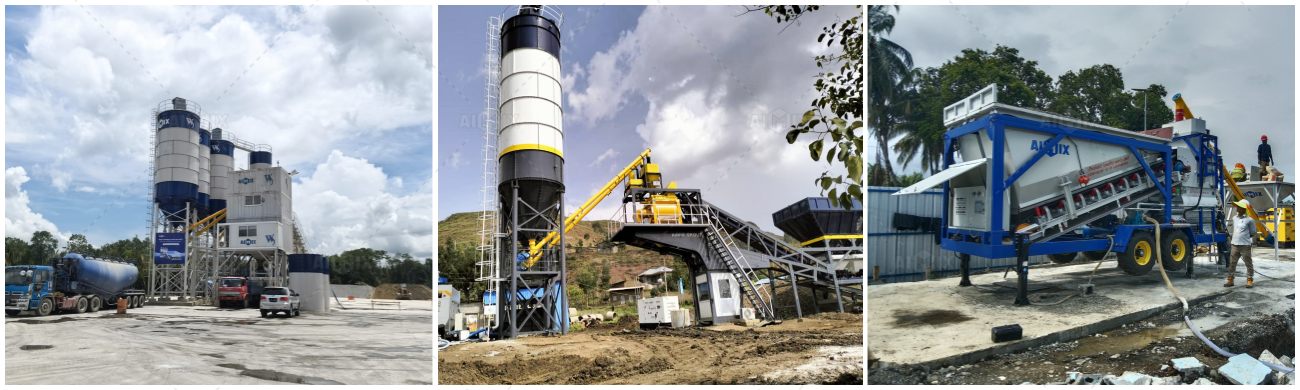
Align Plant Type with Project Scale
- Large Projects (High-rise buildings, highways, bridges) → Stationary rmc batching plants with high production capacity (120–240 m³/h+) for continuous, high-volume output.
- Medium Projects (Mid-size commercial or residential) → Mobile rmc plants (60–90 m³/h) balance efficiency and flexibility.
- Small Projects (Low-volume residential or small commercial) → Small or compact plants (≤50 m³/h), easy to operate with limited staff.
Evaluate Site Conditions and Accessibility
- Available Space: Stationary batch plants need ample space; small plants fit tight urban or suburban plots.
- Access: Mobile plants suit remote or hard-to-reach sites, reducing material transport challenges.
- Project Duration: Mobile or small plants for short-term projects; stationary plants for long-term, continuous operations.
Match Plant Capacity and Performance with Production Needs
Capacity Ranges
Ready mix concrete plants are available in various capacities to match different project scales. Common options include: 25 m³/h, 60 m³/h, 90 m³/h, 120 m³/h, 180 m³/h, 240 m³/h. Choose the plant based on your expected daily concrete demand to optimize efficiency and reduce idle time.
Daily Demand Alignment
- High-volume projects (>1000 m³/day): Large-capacity stationary ready mix plants for continuous, high-output concrete production, ideal for highways, high-rise buildings, and large infrastructure projects.
- Medium-volume projects (400–1000 m³/day): Medium-capacity stationary or mobile rmc plants to balance efficiency, flexibility, and cost for commercial or mid-scale projects.
- Low-volume or intermittent projects (<400 m³/day): Small or compact plants for residential projects, repair works, or sites that require mobility and fast setup.
Note: Daily output assumes a standard 8-hour workday. Adjust plant selection if actual working hours differ.
Key Performance Indicators (KPIs)
- Uniformity: Ensures consistent mix and concrete quality across all batches, minimizing waste and rework.
- Continuity: Maintains uninterrupted production to meet project timelines.
- Automation Level: Higher automation reduces errors, improves batching accuracy, and enhances overall operational efficiency.
Consider Flexibility, Operational Convenience, and Budget Implications
- Mix Adjustments: Mobile ready mix plants allow rapid changes in mix ratios for diverse project needs.
- Relocation: Mobile plants can be moved between sites within 1–2 days, minimizing downtime.
- Ease of Operation: Small rmc plants require fewer operators and simpler maintenance, suitable for projects with limited staff or technical expertise.
- Budget Consideration: Select a plant that matches project needs without over-investing: Large RMC plants require higher upfront investment, more site layout planning, and greater coordination resources. Compact or mobile plants have lower operational complexity, smaller footprint, and are easier to deploy.
RMC Batching Plant Applications in Road, Infrastructure and Building Projects
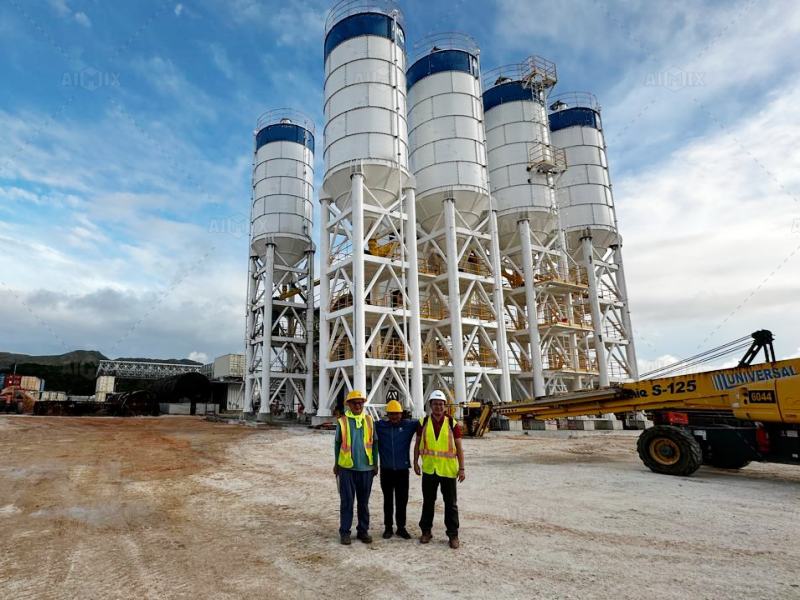
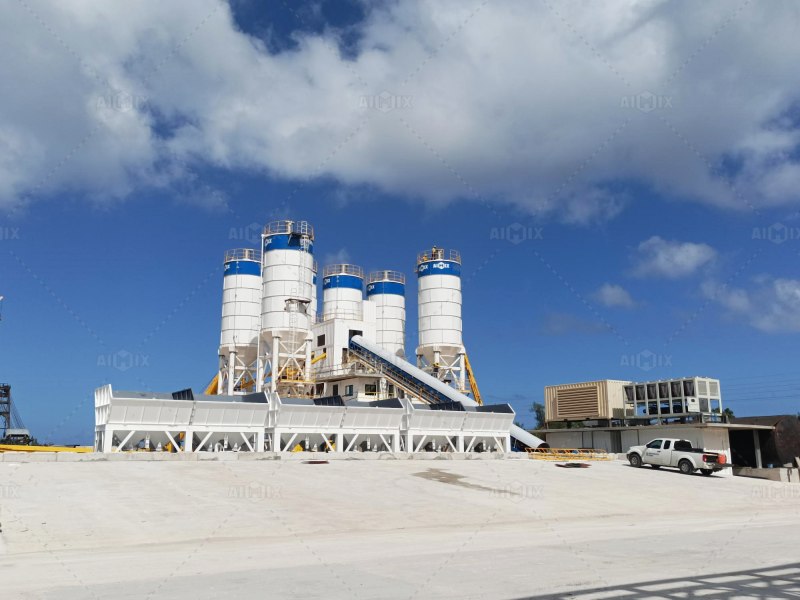
AJ180 Ready Mix Concrete Batching Plant for Large-Scale Infrastructure Projects in Guam
Location: Guam | Delivery: 2026
Customer Needs: U.S. government infrastructure projects required a high-capacity ready mix batching plant for consistent, high-quality concrete under challenging island conditions. Reliability, precision, and ease of use were key priorities.
Our Solution: Supplied the AJ180 RMC Plant, featuring:
- Advanced automated control for accurate weighing, mixing, and discharge
- Robust structural design for continuous operation in harsh environments
- High throughput capacity (180 m³/h) to meet tight project schedules
- User-friendly interface for minimal training
Client Feedback:
“We are satisfied with the equipment quality and on-site service. The control system is easy to use and has greatly improved our project efficiency.”
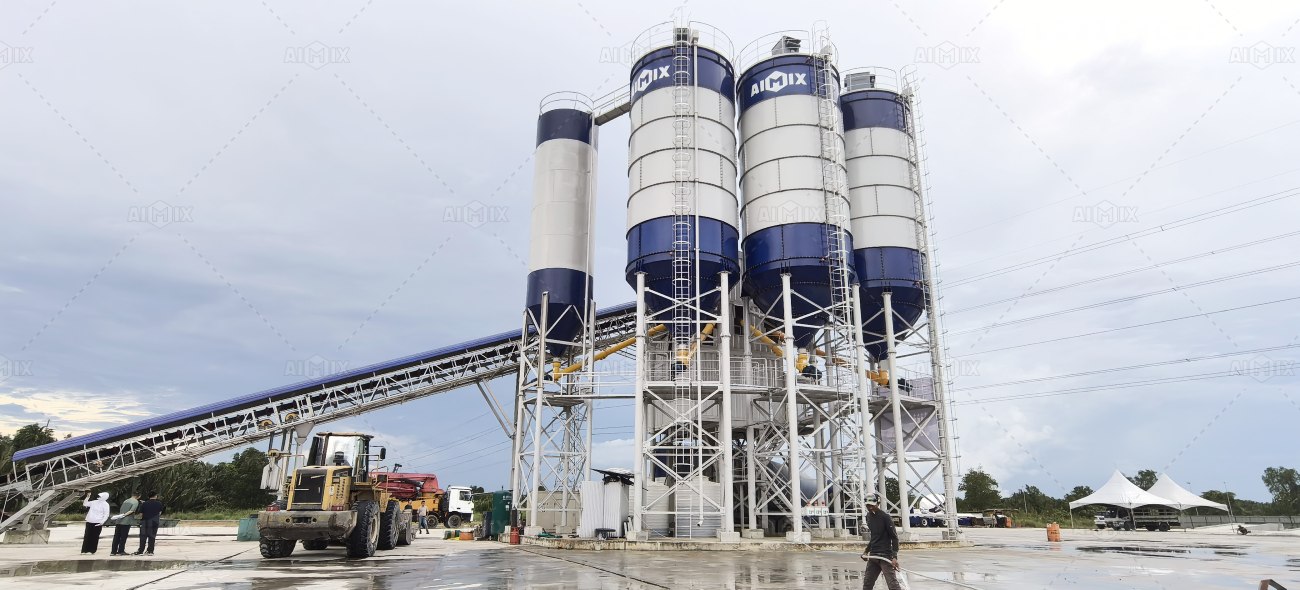
AJ180 RMC Batching Plant for Commercial Projects in Malaysia
Location: Malaysia | Delivery: 2025
Customer Needs: The client needed a high-capacity RMC concrete plant to speed up batching cycles and supply high-quality concrete for commercial construction, especially during peak seasons.
Our Solution: Supplied the AJ180 concrete plant with a 3 m³ Sicoma mixer, offering:
- Efficient high-capacity production for large-scale commercial projects
- Fast batching cycles to improve operational efficiency
- Reliable, robust components for continuous production
- Automated control system to reduce operator errors
Client Feedback:
“This plant fully meets our production needs, even during peak seasons. Its efficiency and reliability are impressive. We are happy to recommend Aimix to other customers needing high-capacity concrete plants.”
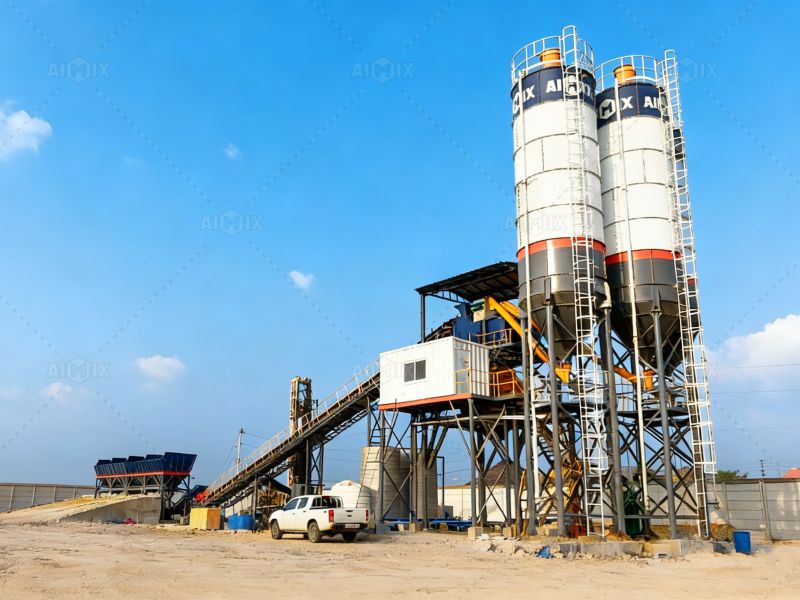
AJ90 Ready Mix Plant for Road Construction and Local Supply in Ecuador
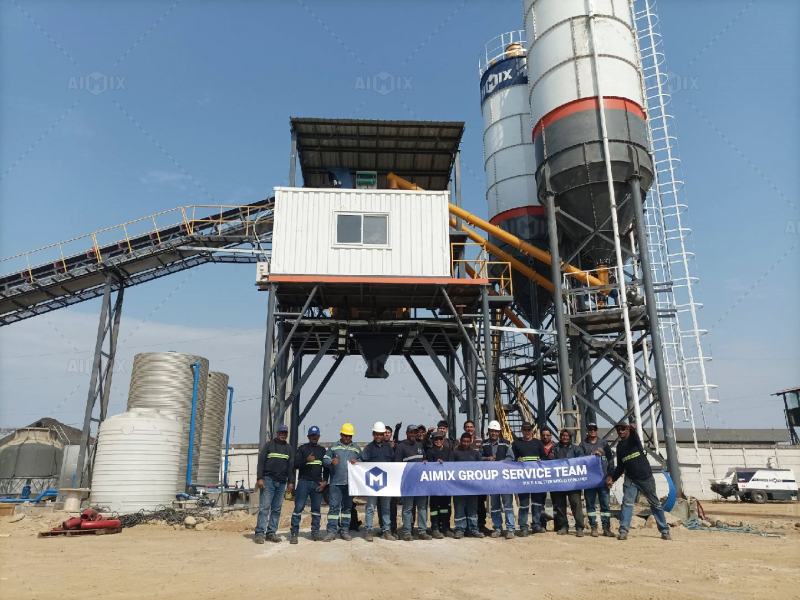
Location: Ecuador | Delivery: 2026
Customer Needs: This client wanted to produce ready mix concrete on-site for road construction projects and also enter the local concrete supply market, reducing dependency on external suppliers. Key priorities included consistent concrete quality, ease of operation, and reliable production.
Our Solution: We supplied the AJ90 batching plant, featuring:
- Siemens motors for stable, long-term performance
- High-precision automated control system for accurate batching and mixing
- Efficient production of ready mix concrete to meet both project and commercial demands
- User-friendly interface, ideal for operators with no prior batching plant experience
Client Feedback:
“We had zero experience with ready mix concrete plants, but AIMIX made it really easy. Now we can produce concrete for our projects and supply locally without any hassle.”
AJY-75 Mobile Ready Mix Concrete Plant for Government Projects in Ethiopia
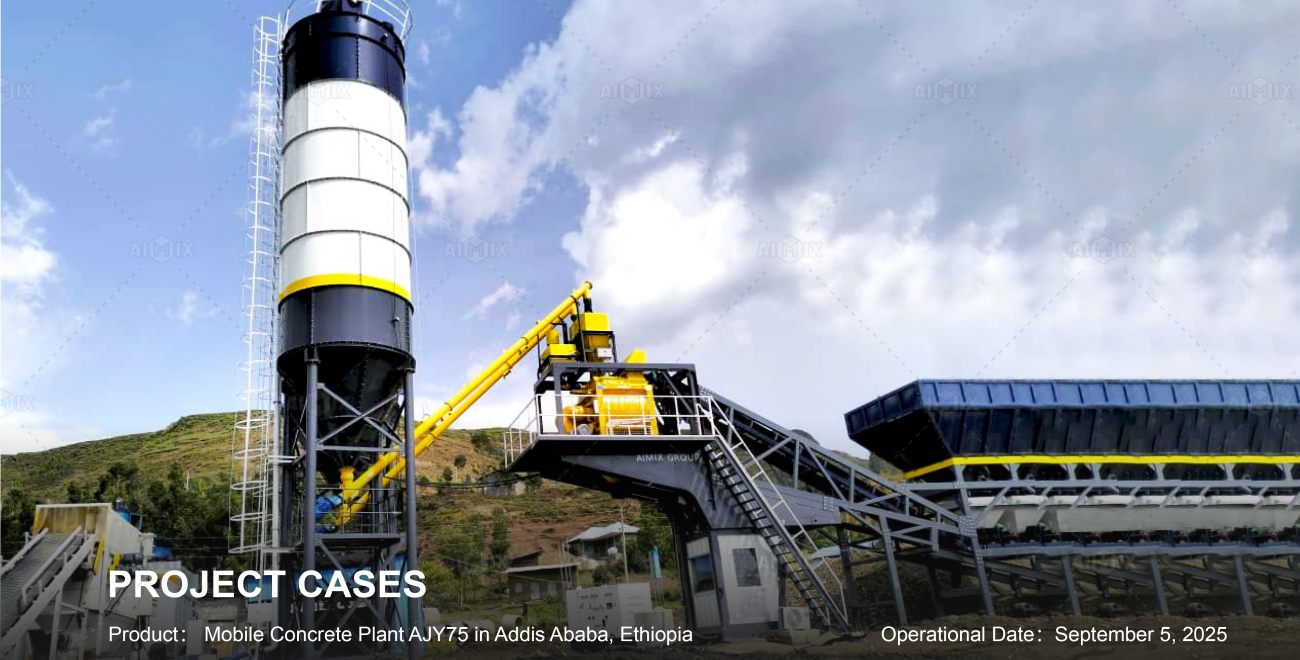
Location: Ethiopia | Delivery: 2025
Customer Needs: The client required a mobile ready mix concrete plant that complied with strict government standards, was flexible, cost-effective, and could be relocated easily to support multiple project sites while ensuring high-quality concrete production.
Our Solution: Supplied the AJY-75 mobile RMC plant equipped with a JS1500 mixer, featuring:
- Fast setup and modular design for easy relocation across job sites
- Automated batching system for precise mix control and compliance with regulations
- Reliable, high-quality concrete production to meet government project standards
- Compact, cost-efficient operation with minimal downtime
Results & Client Feedback:
“The mobile plant met all our standards and was easy to operate. Aimix’s rapid and professional support ensured smooth project execution.”
AJSY-35 Small RMC Plant for Sale in Malaysia Supporting Roadbed Paving
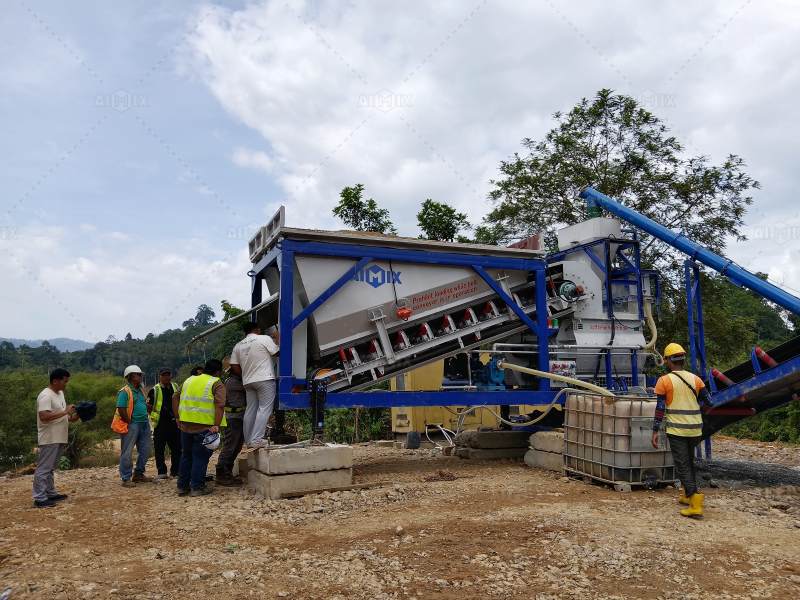
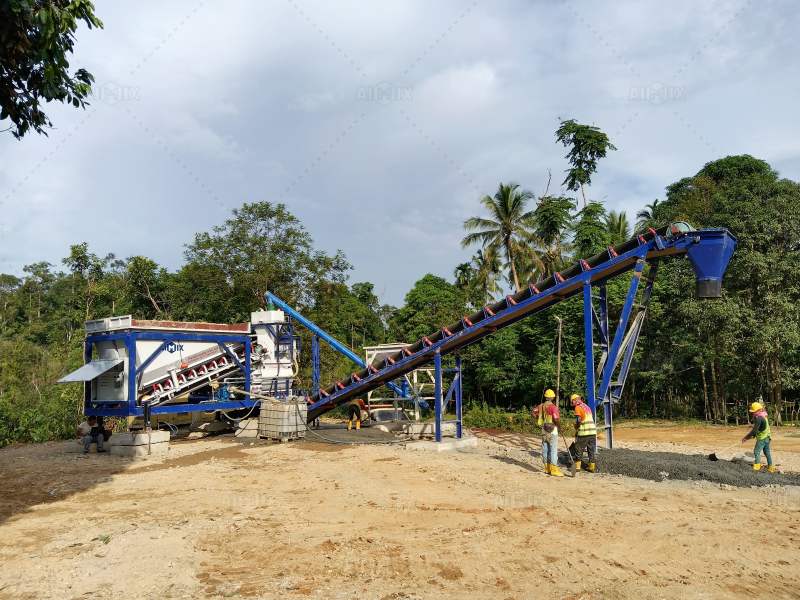
Location: Malaysia | Delivery: 2025
Customer Needs: The Malaysian client required a small batching plant for fast setup, reliable ready-mix concrete quality, and efficient operations under tight project schedules for roadbed paving.
Our Solution: AIMIX supplied the AJSY-35 compact ready mix plant, offering:
- Trailer-mounted design for easy relocation between dispersed work zones
- Fast installation without heavy civil foundations, ready for production in just several days
- Customized configuration to match local material requirements
- On-site support including installation, commissioning, and operator training
Results & Client Feedback:
The plant ensured a stable concrete supply throughout the project, reducing labor and installation costs, and enabling efficient multi-zone operations. The project manager said:
“The plant’s efficiency and quick deployment exceeded our expectations. We plan to purchase additional mini batching plants for future infrastructure projects.”
Cost and ROI Analysis for Ready Mix Batching Plant
Investing in a ready mix concrete plant requires more than comparing upfront prices. A thorough evaluation of plant type, capacity, automation, component quality, site conditions, and optional features helps companies make informed decisions and maximize long-term ROI.
Key Factors Affecting RMC Plant Costs
Plant Type and Production Capacity
- Stationary high-capacity plants (120–240 m³/h): Require larger silos, conveyors, and foundations → higher upfront costs but suitable for large-scale infrastructure.
- Mobile or mini plants (60–90 m³/h): Compact, minimal infrastructure → lower investment, flexible deployment for multiple sites or short-term projects.
Higher capacity can lead to faster ROI if utilization is high.
Automation and Control Systems
- PLCs, touch screens, and IoT monitoring improve precision and reduce labor dependency.
- Increases initial investment but reduces operational inefficiencies by 15–30%.
Component Quality and Durability
- High-quality mixers, conveyors, and weighing systems last longer and require less maintenance.
- Stronger components → higher CapEx, lower lifecycle cost, more reliable production.
Site Preparation and Installation
- Stationary plants: require stable foundations, leveling, and civil works.
- Mobile plants: minimal setup, just power, water, and material storage.
Site conditions can affect total cost by 10–20%, especially in remote or uneven locations.
Optional Features
- Smart feeding, remote control, automatic calibration improve accuracy and reduce waste.
- Increase upfront cost but enhance long-term ROI and efficiency.
Cost Components and Typical Proportions
| Cost Component | Approximate Proportion of Total Investment | Notes |
|---|---|---|
| Capital Expenditure (CapEx) | 50–60% | Plant equipment, mixers, silos, conveyors, control systems |
| Site Preparation & Installation | 10–15% | Foundations, leveling, power supply, civil works |
| Operating Expenditure (OpEx) | 25–35% | Labor, electricity, fuel, routine maintenance, spare parts |
| Indirect / Contingency Costs | 5–10% | Downtime, training, regulatory compliance, unforeseen expenses |
Higher automation shifts more cost into CapEx, but reduces OpEx over time—creating a more efficient and predictable cost structure.
Return on Investment (ROI) Considerations
Evaluating ROI is essential when assessing the true value of a ready mix concrete mixing plant.
Efficiency Gains
- Centralized batching reduces labor requirements by 30–50%
- Accurate weighing reduces raw material waste by 10–20%
- Automated systems ensure consistent production quality
These improvements directly increase operational efficiency and reduce cost per cubic meter.
Operational Savings
- Predictive maintenance can reduce unexpected failures by up to 40%
- Automation can lower maintenance costs by 15–25%
- Reduced downtime improves overall plant utilization
Higher uptime means more production cycles and faster revenue generation.
Illustrative ROI Scenario
Consider a medium-capacity mobile RMC plant producing approximately 560 m³/day (8 working hours):
- Labor efficiency: Centralized batching reduces staffing needs by 30%.
- Material savings: Accurate weighing and batching reduce raw material waste by 10%.
- Maintenance management: Predictive maintenance minimizes unexpected downtime, improving utilization.
Combined, these factors can significantly shorten the payback period, often enabling ROI within 1–3 years, depending on utilization and project demand.
While the initial cost of a ready mix concrete plant may be high, the real value comes from efficiency, durability, automation, and high utilization. A well-planned RMC plant is not just an expense—it is a strategic investment that drives long-term business growth.
RMC Plants vs. Onsite Mixing
The choice between ready mix plants and onsite mixing affects efficiency, quality, and workflow. The table below outlines the key differences to guide your decision.
 |
 |
 |
|---|
| RMC Plant | Type | Onsite Mixing |
|---|---|---|
| Centralized batching reduces labor needs No need for on-site equipment rental Precise ordering minimizes waste Optimized logistics reduces fuel and transport costs |
Cost Efficiency | Requires more operators and supervision Equipment rental increases cost Over-ordering leads to waste and disposal fees |
| Automated batching ensures accuracy Controlled environment improves consistency Standardized testing ensures quality |
Quality Control | Depends on operator skill Manual adjustments reduce consistency Higher risk of rework |
| High output once supply chain is established Continuous production for large projects |
Setup & Turnaround | Quick setup for small jobs Smaller batches and slower output |
| Ideal for large-scale and urban projects Suitable for tight schedules |
Use Cases | Best for small or remote jobs Suitable for low-volume needs |
| Stable mix design and repeatability Limited real-time flexibility |
Flexibility | Highly flexible for small or custom mixes |
| Optimized batching minimizes leftovers | Material Waste | Higher risk of unused concrete |
| Requires delivery coordination Transport distance affects performance |
Logistics Impact | No transport delay Ideal for remote locations |
Searching for “ready mix concrete plant near me” or “RMC supplier near me” can help identify nearby supply options, reduce transport time, and improve overall project efficiency.
Key Technologies in Our Ready Mix Concrete Mixing Plants
Aimix ready mix concrete mixing plants incorporate advanced technologies that enhance operational efficiency, improve concrete quality, and reduce long-term costs. These innovations allow companies to achieve more reliable production while minimizing downtime and material waste.
Integrated Control System for Efficient Operation
Our RMC concrete plants are equipped with integrated control systems that provide one-touch start and stop functionality along with dual operation modes, including both PLC touch screens and physical buttons.
- This system reduces startup preparation time by approximately 30% and decreases operator errors by nearly 50%, ensuring smoother workflow and continuous production.
- By allowing both manual and automated control, it reduces reliance on highly skilled operators while maintaining consistent concrete quality.
- The integrated control system also supports rapid batch adjustments, which is particularly useful for projects with changing mix requirements.
IoT Remote Monitoring and Predictive Maintenance
IoT-enabled RMC plants enable real-time monitoring of critical equipment parameters such as motor temperature, vibration, and current.
- The system can automatically detect abnormal conditions and generate predictive maintenance alerts based on running hours and component wear, reducing unexpected downtime by approximately 40%.
- Maintenance costs can be lowered by about 25%, while equipment lifespan is extended by roughly 15%, providing significant long-term savings.
- Customers benefit from improved operational reliability and the ability to plan maintenance schedules proactively, minimizing disruptions to project timelines.
Precision Feeding System for Continuous Production
Precision feeding systems allow remote control and automatic calibration of material feed rates and proportions, ensuring consistent and uninterrupted concrete production.
- These systems improve production continuity by approximately 20% and reduce raw material waste by around 10%, resulting in more efficient use of resources.
- Material pre-warning alerts help operators respond quickly to low stock levels, preventing production delays.
- By combining automation with intelligent control, precision feeding systems support both high-volume projects and complex mix designs, enhancing overall productivity.
Summary Table of Key Technologies
| Technology | Description | Performance / Data | User Benefit |
|---|---|---|---|
| Integrated Control System | One-touch start/stop, PLC + physical button options | ↓30% startup time, ↓50% errors | Smooth operation, reduced operator dependency |
| IoT Remote Monitoring & Predictive Maintenance | Real-time monitoring, predictive alerts based on usage | ↓40% failure, ↓25% maintenance cost, ↑15% lifespan | Fewer breakdowns, proactive maintenance, increased reliability |
| Precision Feeding System | Remote feed control, auto-calibration, material pre-warning | ↑20% continuity, ↓10% raw material waste | Continuous production, higher efficiency, reduced waste |
Essential Guide to Installing, Operating & Maintaining Ready Mix Plants
Proper installation, efficient operation, and routine maintenance are key to ensuring your ready mix plant delivers consistent quality, reduces downtime, and maximizes equipment lifespan. Following these practical guidelines helps users avoid common mistakes, maintain safety, and achieve higher productivity.
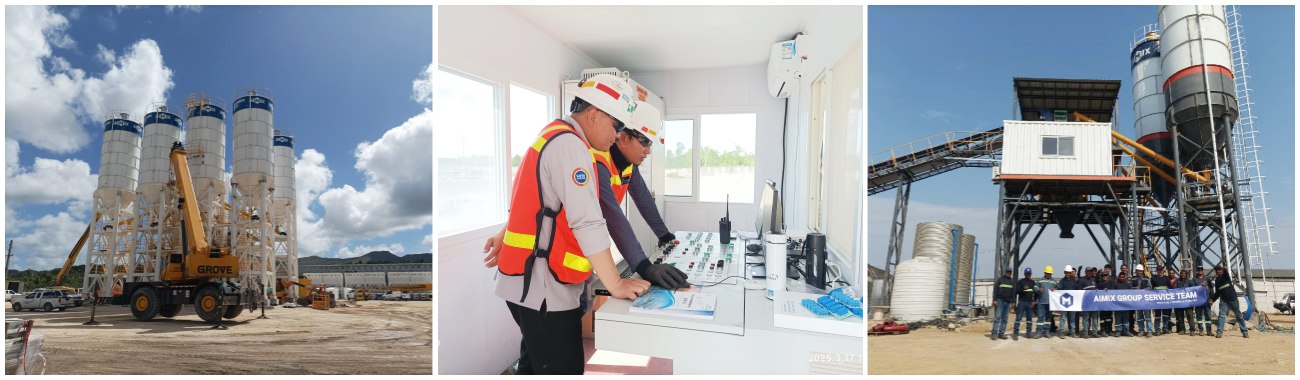
Preparing the Site for Safe and Efficient Installation
- The site should be level, compacted, and strong enough to support all plant equipment, including silos, mixers, and conveyors, ensuring stable operation.
- Allocate adequate space for raw material storage, truck access, and smooth loading/unloading operations to prevent workflow interruptions.
- Ensure reliable power and water supply and proper drainage to avoid operational delays caused by water accumulation or equipment overload.
- Implement safety measures, including barriers, signage, and emergency exits, to comply with ready mix concrete plant safety standards and protect personnel during installation.
Daily Operational Best Practices for Consistent Concrete Quality
- Train operators on both automated PLC systems and manual controls to reduce errors and maintain uniform concrete mixes.
- Continuously monitor critical equipment parameters such as mixer speed, aggregate feed rate, and water dosing to ensure accurate batching.
- Conduct routine inspections of conveyors, mixers, and silos to prevent blockages, mechanical failures, and unexpected downtime.
- Maintain clear communication between operators and drivers to ensure safe and efficient loading, dispatching, and project scheduling.
Maintenance and Troubleshooting to Maximize Reliability
- Clean mixers, hoppers, and conveyors daily to prevent material buildup that can compromise concrete consistency and equipment efficiency.
- Lubricate moving parts regularly and inspect wear components such as mixer blades, belts, and bearings according to rmc plant manufacturer guidelines to prevent premature failure.
- Track operating hours and component wear to implement predictive maintenance, reducing unexpected breakdowns and production interruptions.
- Keep a log of operational issues and corrective actions to identify recurring problems and improve plant reliability over time.
- Train staff on basic troubleshooting for sensors, motors, and calibration adjustments to minimize downtime and maintain continuous production.
Market Trends and Future Development of RMC Plants
The ready mix concrete batching plant industry is growing steadily, driven by global infrastructure development, urbanization, and technological innovation. The market is estimated at USD 681 million in 2026 and projected to reach USD 874 million by 2035 (CAGR ~2.8%). (Insights from Industry Research)
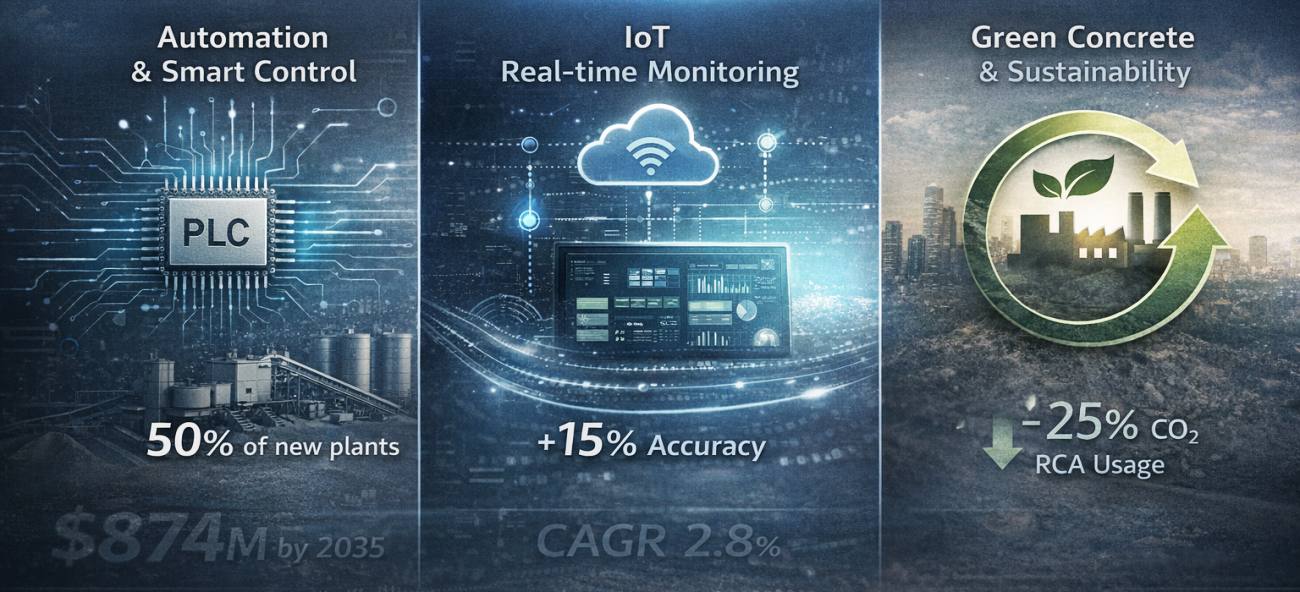
Automation and Smart Control SystemsAutomation is becoming a dominant trend — more than 50 % of new batching plants are now equipped with automatic control systems, up from lower levels in past decades. Advanced PLC and smart control solutions improve batching precision, reduce labor reliance, and enable predictive maintenance, leading to higher uptime and operational efficiency.
IoT and Digital MonitoringIoT sensors and digital dashboards enable real‑time monitoring of mix parameters, equipment status, and material flows. These systems can improve production accuracy by roughly 15–20 % and allow remote adjustments or alerts, which is increasingly valuable for high‑volume and multi‑site operations.
Green and Sustainable ConcreteSustainability is a growing priority in RMC production. Recycled concrete aggregate (RCA) usage has risen toward 15 % of mixes in some markets, up from earlier baselines, helping cut raw material use. Supplementary cementitious materials like slag or fly ash can reduce CO₂ emissions by 25–30 % per ton of concrete compared with ordinary mixes. Dust‑control systems and optimized batching further reduce waste and energy consumption.(Insights from Worldmetrics)
Ready to optimize your concrete production? Contact us today to explore the ideal ready mix concrete batching plant for your project. Our team is committed to delivering solutions that boost efficiency, ensure consistent quality, and support your project success. Let us help you achieve reliable, high-performance concrete with minimal hassle.
