


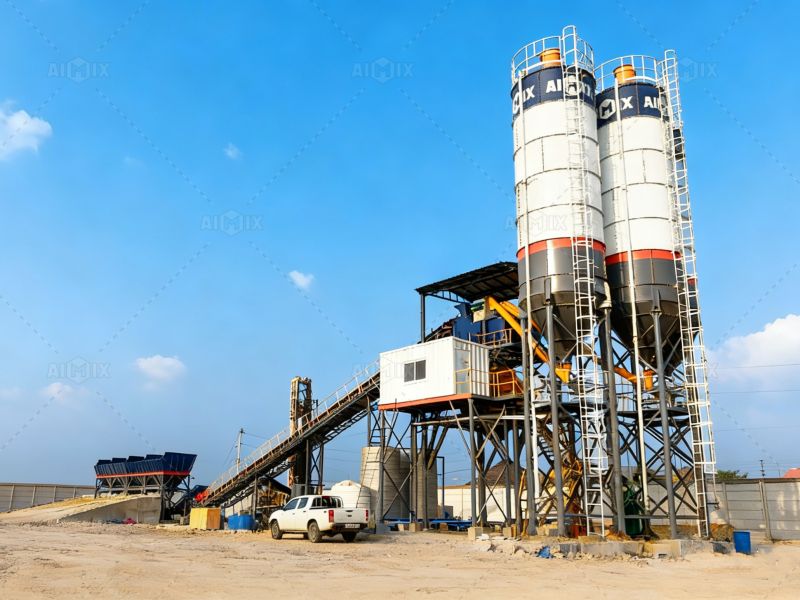
Stationary concrete batching plant is the key to solving concrete supply challenges in large-scale construction projects. From high-rise buildings to highways, it delivers consistent, high-volume output while reducing delays and waste. In this guide, we’ll show you how to choose, operate, and optimize your plant for maximum efficiency, cost savings, and project success—ideal for contractors, companies, and investors seeking reliable concrete solutions.
Stationary Concrete Batching Plants: Hopper-type vs Belt-type
At Aimix, we offer a full range of stationary concrete batching plants tailored to your project’s unique needs. Depending on how aggregates are conveyed, these plants fall into two main types: Hopper-type and Belt-type. Each has its own strengths—whether in layout design, operational efficiency, or suitability for different project sizes. Choosing the right type can help you optimize production, save time, and get the most out of your investment.
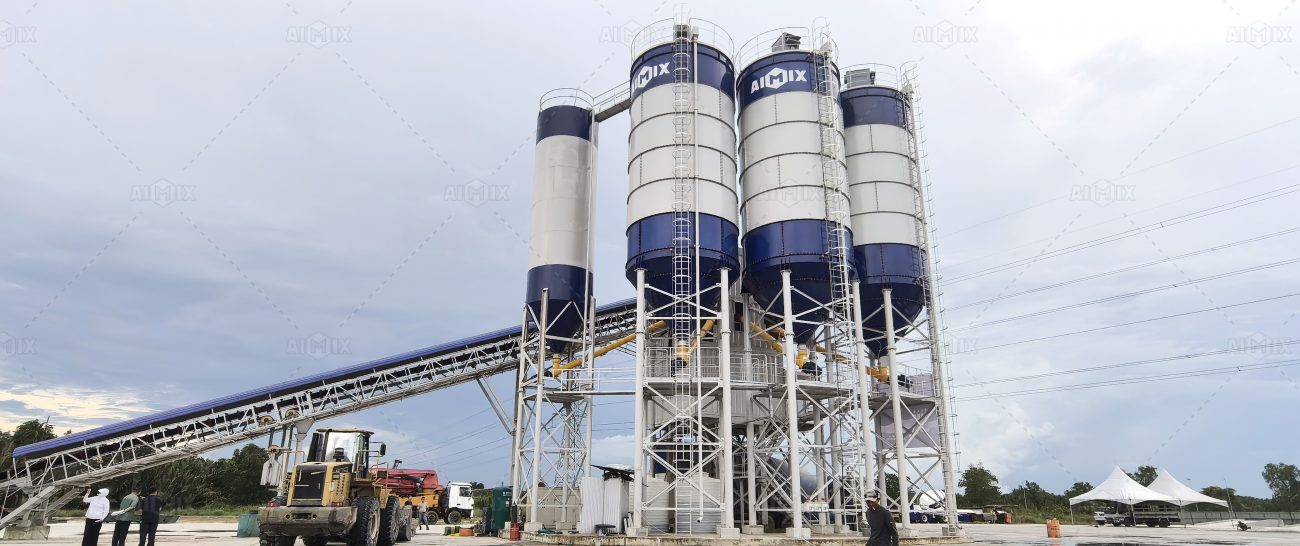
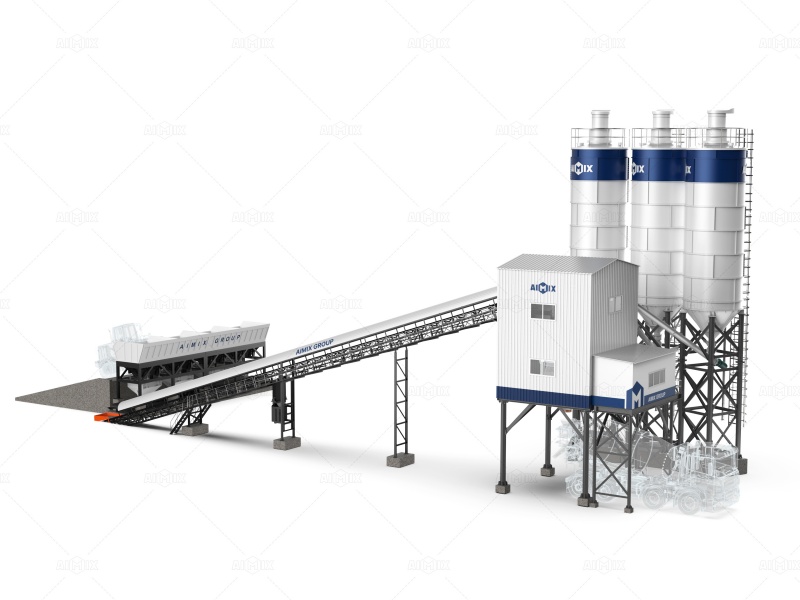
High-Output Belt Type Stationary Concrete Plant (AJ60 to AJ270)
For medium to large-scale projects requiring high productivity and continuous material flow, Aimix’s belt-type stationary concrete plants, including models AJ-60, AJ-90, AJ-120, AJ-180 and more, deliver faster feeding, stable performance, and enhanced efficiency for uninterrupted concrete production.

Key Features & Advantages:
Efficient Silo Design
- By reducing the time required for aggregate feeding, the mixing cycle per batch is shortened, improving the overall efficiency and actual production capacity of the batching plant.
- The waiting silo combines the design advantages of both the batching plant and the mixing tower, saving time for sand and aggregates to enter the mixer and reducing the amount of steel structure needed.
Stable and Efficient Conveying System
- Aggregates are fed via belt conveyors, providing smooth operation and high conveying efficiency.
- The equipment can operate continuously, reducing maintenance time and costs.
- Example: A belt conveyor with a width of 800 mm can transport 450–650 t/h of sand and aggregate, while a 1000 mm belt can reach up to 1000 t/h.
Accurate Weighing System
- The aggregate weighing system ensures precise batching, improving the quality of finished concrete.
- It meets the requirements for producing high-grade concrete and continuous large-scale construction projects, with batching accuracy up to ±2%.
Enclosed Main Building and Environmental Protection
- An enclosed main building ensures stable production under adverse weather conditions and prevents rain and other factors from affecting concrete quality.
- It also provides a visually appealing appearance while reducing dust and noise, aligning with environmental protection standards.
To help you choose the most suitable stationary concrete batching plant for your project, the table below compares the key specifications, performance, and operational requirements of our popular models (AJ90, AJ120, and AJ180).

Get A Quote
Get A Quote
Get A Quote
| Dimension | AJ-90 | AJ-120 | AJ-180 |
|---|---|---|---|
| Theoretical Production Capacity | 90 m³/h | 120 m³/h | 180 m³/h |
| Suitable Applications | Medium to large projects, long-term fixed operations (e.g., road & bridge engineering, industrial parks) (1–3 years or longer, average concrete demand relatively small) | Large projects, long-term fixed operations (e.g., road & bridge engineering, high-rise building clusters) (1–3 years or longer, average concrete demand moderate) | Extra-large projects, large-scale production (e.g., cross-sea bridges, new urban development), commercial concrete supply (1–5 years or longer, large volumes) |
| Footprint | Large (600–800 m²), requires dedicated hardened site, simple aggregate yard, partial lab required | Large (700–900 m²), requires dedicated hardened site, simple aggregate yard, lab required | Extra-large (800–1000 m²), requires dedicated hardened site, aggregate yard and lab required |
| Installation & Relocation | 20–30 days, full cast-in-place foundation, fixed (or foundation-free installation) | 25–40 days, full cast-in-place foundation, fixed (or foundation-free installation) | 30–45 days, complex foundation work, permanently fixed (or foundation-free installation) |
| Core Configuration | Twin-shaft mixer (1.5 m³), 2–4 cement silos (100–150T), 4-bin batching machine, separate weighing | Twin-shaft mixer (2.0 m³), 2–4 cement silos (150–200T), 4-bin batching machine, separate weighing | Twin-shaft mixer (3 m³), 2–4 cement silos (150–300T), 4-bin batching machine, separate weighing |
| Power & Energy Consumption | Total power 170–200 KW, energy-efficient | Total power 200–250 KW, energy-efficient | Total power 250–320 KW, with significant energy efficiency advantages at scale |
| Recommended Maximum Concrete Grade | C60 | C60 | C60 |
| Production Flexibility | Medium–low (focus on batch production) | Medium–high (focus on batch production; multiple cement silos allow frequent mix changes) | High (mainly large-volume single-grade production; multiple cement silos allow frequent mix changes) |
| Environmental Protection & Automation Level | Standard environmental protection (pulse dust collector + soundproof cover), intelligent control | High-efficiency environmental protection (pulse dust collector + insulated enclosure), intelligent control | Advanced environmental protection (fully enclosed aggregate yard + desulfurization dust removal), IoT + intelligent scheduling |
| Required Operators | 6–8 (1 central control + 2 batching + 2 maintenance + 1–2 dispatch) | 6–8 (1 central control + 2 batching + 2 maintenance + 1–2 dispatch) | 12–15 (2 central control + 3 batching + 3 maintenance + 2 dispatch + 2–3 environmental/back-office staff) |
| Matched Mixer Trucks | 8–10 trucks (12–16 m³ each, improves transport efficiency) | 10–15 trucks (12–16 m³ each, improves transport efficiency) | 15–20 trucks (12–18 m³ each, with intelligent dispatch system) |
| Loader Size & Quantity | 50 loaders / 1 unit | 50 loaders / 1 unit | 50 loaders / 1 unit |
| Coverage Radius | 20–30 km (suitable for large project coverage) | 20–30 km (suitable for large project coverage) | 30–50 km (supports cross-regional supply; requires mixer truck insulation and admixture support) |
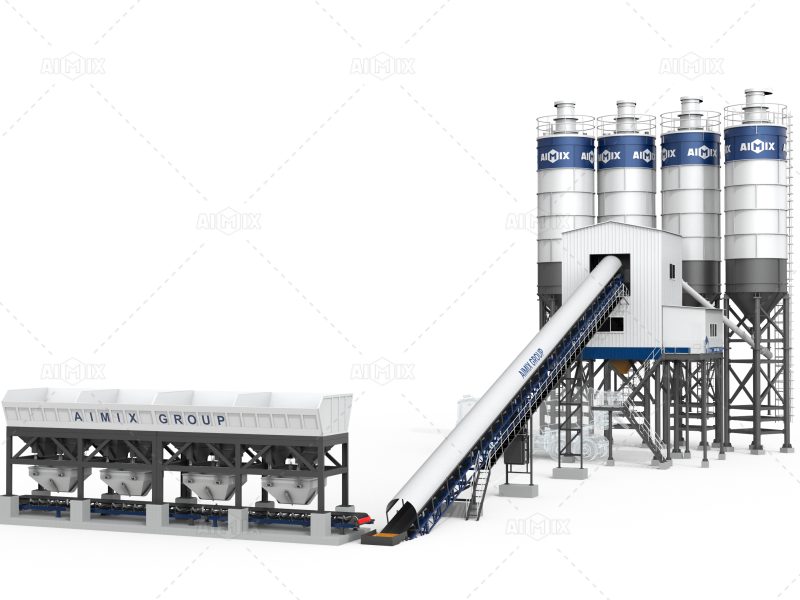
Space-Saving Hopper Type Stationary Batching Plant (AJ-25 to AJ-75)
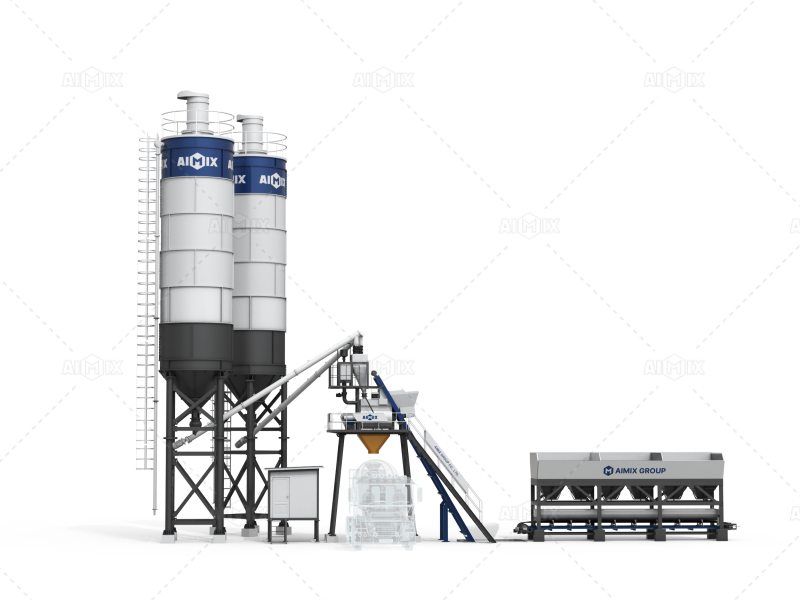
Our hopper-type stationary batching plants are ideal for projects with limited space and moderate concrete demand. With a compact layout and lower investment cost, Aimix models AJ-25, AJ-35, AJ-50, and AJ-75 offer easy installation and reliable output for residential, commercial, and municipal construction projects.
Get A Quote

Get A Quote
Key Features & Advantages:
Enhanced Durability and StrengthThe track wheels are manufactured using a forging process, providing high strength and excellent wear resistance. Compared to cast wheels, forged wheels are about 30% stronger, which significantly reduces maintenance costs and ensures long-term reliable operation.
Small FootprintWith a 7.5-meter feed height and a 60° bucket angle, the hopper system reduces horizontal conveying distance by 18–30 meters compared to conventional belt plants.
For example, a 50 m³/h hopper-type plant requires only 6.2 meters for batching, while a 60 m³/h belt plant needs 37.2 meters, saving roughly 30 meters of site space.
Suitable for Small-Scale ProjectsThe feeding mechanism and plant design are optimized for moderate concrete demand, making hopper-type batching plants perfect for small construction sites, road maintenance projects, or self-use applications, while keeping investment and operational costs manageable.
Specifications of Stationary Batching Plants
| Type | Belt Type | |||||
|---|---|---|---|---|---|---|
| Model | AJ60 | AJ90 | AJ120 | AJ180 | AJ240 | AJ270 |
| Theoretical productivity (m³/h) | 60 | 90 | 120 | 180 | 240 | 270 |
| Mixer discharge volume (L) | 1000 | 1500 | 2000 | 3000 | 4000 | 4500 |
| Mixer feeding volume (L) | 1500 | 2250 | 3000 | 4500 | 6000 | 6750 |
| Mixer power (kw) | 18.5×2 | 30×2 | 37×2 | 55×2 | 75×2 | 75×2 |
| Discharge height (m) | 4.1 | 4.1 | 4.2 | 4.2 | 4.2 | 4.2 |
| Aggregate bin configuration (number × single bin volume, m³) | 4×7 | 4×15 | 4×20 | 4×25 | 4×30 | 4×30 |
| Cycle time (s) | 60 | 60 | 60 | 60 | 60 | 60 |
| Maximum aggregate particle size (mm) | 80/100 | 80/100 | 80/100 | 80/100 | 80/100 | 80/100 |
| Cement silo (optional) | 2×100 | 3×100 | 4×100 | 4×100 | 4×100 | 4×100 |
| Aggregate weighing system | ±2% | ±2% | ±2% | ±2% | ±2% | ±2% |
| Powder weighing system | ±1% | ±1% | ±1% | ±1% | ±1% | ±1% |
| Water weighing system | ±1% | ±1% | ±1% | ±1% | ±1% | ±1% |
| Additive weighing system | ±1% | ±1% | ±1% | ±1% | ±1% | ±1% |
| Installed power (kw) | ≈110 | ≈160 | ≈220 | ≈290 | ≈340 | ≈340 |
| Control mode | Fully automated computer (PC) control | |||||
| Power supply | 220V/415V/440V/380V, 50Hz/60Hz, three-phase | |||||
| Types | Hopper type | |||
|---|---|---|---|---|
| Model | AJ-25 | AJ-35 | AJ-50 | AJ-75 |
| Theoretical Productivity (m³/h) | 25 | 35 | 50 | 75 |
| Mixer Model (Mixer Output L) | JS500 | JS750 | JS1000 | JS1500 |
| Mixer Power (kW) | 18.5 | 30 | 2×18.5 | 2×30 |
| Mixing Cycle Period (s) | 72 | 72 | 72 | 72 |
| Max.Aggregate Size (mm) | Φ60 | Φ60 | Φ60 | Φ80 |
| Standard Aggregate Bin Capacity (m³) | 3×3 | 3×5 | 3×8 | 3×12 |
| Kind of Aggregate | 2/3 | 2/3/4 | 3/4 | 3/4 |
| Max. Discharging Height (m) | 3.8 | 4.1 | 4.1 | 4.1 |
| Overall Weight (ton) | ≈15 | ≈18 | ≈23 | ≈30 |
| Installation Power (kW) | ≈65 | ≈75 | ≈100 | ≈140 |
| Power Supply | 380V/220V/415/440V, 50/60HZ, 3Phase | |||
Smart Automation Features for High-Efficiency and Continuous Production
Our stationary concrete batching plant comes equipped with smart automation features and flexible customization options designed around your production needs. With one-click intelligent control, IoT-based predictive maintenance, and a precision feeding system, you can reduce operating costs, improve batching accuracy, and keep production running smoothly. Every system works together to help you adapt quickly as your output requirements change—without adding operational complexity.
Integrated Control System: One-Click Start with Dual Operation Modes
At the heart of stationary batching plants is an intelligent integrated control system, enabling one-click start/stop operations and supporting dual operation modes—touchscreen PLC interface and physical button panel.
- Startup time reduced by over 30%, allowing faster production readiness.
- Operational error rate lowered by 50%, improving safety and consistency.
Dual control interfaces accommodate different operator preferences, reducing reliance on specialized labor and improving response time in both manual and automated workflows.
IOT-Based Remote Control and Predictive Maintenance System
Aimix incorporates IoT remote monitoring technology, transforming traditional batching plants into smart, data-driven production centers.
- Real-Time Monitoring: Track motor temperature, vibration, current, and workload via a dynamic live dashboard. System automatically detects anomalies and generates diagnostic reports for faster issue resolution.
- Predictive Maintenance: Maintenance schedules are automatically suggested based on real-time wear data, operational hours, and usage patterns.
- Result: Breakdown rates reduced by 40%; Maintenance costs cut by 25%; Service life extended by over 15%.
This technology ensures maximum uptime and lowers long-term maintenance costs, delivering a smarter and safer production process.
Precision Feeding System with Remote Control & Auto Calibration
Raw material control is critical to batching quality and efficiency. Our precision aggregate feeding system ensures stable material delivery and minimal waste.
- Production continuity improves by 20% thanks to adaptive feeding speed and accuracy.
- Raw material waste is reduced by 10% through calibrated delivery systems.
- Remote adjustment via mobile device allows operators to tweak ratios and speeds on the fly.
- Material level alerts and auto-refill prevent stoppages due to material shortages, enabling smoother operations.
This advanced system empowers plant operators with flexibility and granular control over every load of concrete produced.
Application Scenarios and Customized Solutions for Stationary Concrete Plants
Our stationary concrete plants are built to adapt to the varied needs of today’s construction projects. By tailoring system configurations, production capacities, and control strategies, we ensure your plant delivers reliable, efficient concrete solutions—no matter the project type or scale.

Building Construction Projects
Typical Applications: Residential buildings, commercial complexes, industrial facilities
Core Requirements:
- Stable production of normal-strength concrete (C20–C40)
- High production efficiency
- Effective cost control
Recommended Solutions:
- Configurations suitable for small- to medium-scale stationary batching plants
- Support for frequent batching and continuous small-volume production
- Optimized system layouts to meet flexible construction schedules

Transportation Infrastructure Projects
Typical Applications: Highways, railways, bridges, tunnels
Core Requirements:
- High-strength concrete (C50 and above)
- Enhanced durability, including impermeability (P6–P8) and frost resistance (F100–F200)
- Continuous and high-capacity production
Recommended Solutions:
- High-precision material proportioning systems
- Twin-shaft mixers combined with online monitoring systems
- Large-capacity stationary plants supporting outputs above 100 m³/h
Hydraulic and Marine Engineering
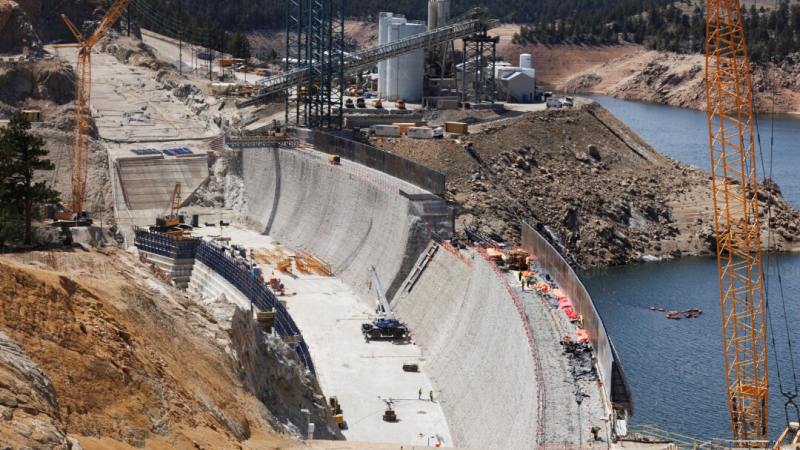
Typical Applications: Reservoirs, dams, ports, waterways
Core Requirements:
- Strong resistance to erosion and corrosion
- Stable performance in outdoor and harsh environments
Recommended Solutions:
- Dedicated admixture dosing systems to control concrete durability
- Dustproof, waterproof, and weather-resistant equipment designs
- Reliable operation under long-term outdoor working conditions

Precast Concrete Production
Typical Applications: Prefabricated building components, municipal precast elements, tunnel segments
Core Requirements:
- High-precision concrete production
- Consistent quality for standardized components
Recommended Solutions:
- Automated weighing systems with accuracy up to ±1%
- Seamless integration with precast production lines
- Optional BIM (Building Information Modeling) system connectivity for data sharing and coordinated production management
Municipal and Special Engineering Projects
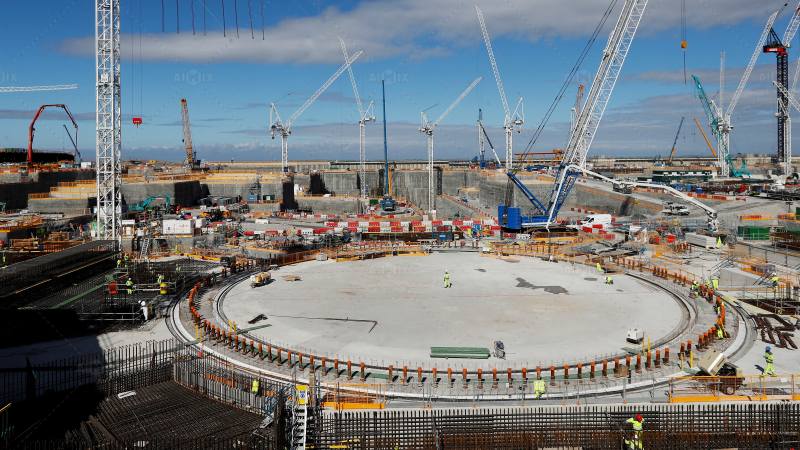
Typical Applications: Metro systems, nuclear power plants, other complex infrastructure
Core Requirements:
- Special concrete properties such as low heat of hydration and radiation resistance
- High reliability and strict quality control
Recommended Solutions:
- Customized concrete production systems tailored to special performance requirements
- Intelligent scheduling systems linked to construction progress
- Dynamic adjustment of production plans to ensure safety and efficiency
Stationary Concrete Batch Plant Project Cases in Operation
Aimix offers tailored stationary concrete batch plant solutions designed to meet the unique demands of diverse projects worldwide. As a trusted strategic partner of Fortune Global 500 companies, we ensure high-quality, reliable, and efficient batching plants. Our customizable systems deliver consistent performance, helping clients optimize productivity and achieve project success across industries and regions.
AJ-90 Stationary Concrete Batch Plant for Sale Empowering Power Plant Project in Indonesia

Environmental & Operational Requirements
The power plant project required precise batching, high system reliability, and stable operation to avoid production interruptions and material loss.
Plant Model & Configuration
The AJ-90 stationary batching plant features an integrated automatic control system, precise aggregate feeding, and a SICOMA twin-shaft mixer for efficient and consistent concrete production.
Automation & Control Highlights
- Centralized control system
- Accurate material dosing
- Reduced human error in batching operations
Operational Results
- 30% faster startup
- 50% fewer operational errors
- 20% improvement in production continuity
- 10% reduction in material waste
AJ-180 Stationary Batching Plant for Commercial Concrete Production in Malaysia

Why Stationary Plant Was Chosen
The customer selected a stationary batching plant to support long-term, high-volume commercial concrete production and ensure stable supply during peak construction seasons.
Plant Model & Capacity
AJ-180 stationary concrete batching plant equipped with a 3 m³ SICOMA twin-shaft mixer.
Production Stability
The large-capacity mixer and optimized batching system enable continuous, high-output concrete production with consistent quality.
Cost & Efficiency Gains
High automation and efficient batching cycles help reduce labor dependency and improve overall operational efficiency.
Customer Feedback
“This plant fully meets our production needs during peak seasons. We are happy to recommend Aimix to other concrete producers.”
AJ-90 Stationary Concrete Plant for Road Construction and Local Concrete Supply in Ecuador

Why Stationary Plant Was Chosen
The customer selected a stationary concrete plant to self-produce concrete for a road construction project and also to enter the local concrete supply market, reducing dependency on external suppliers.
Plant Model & Capacity
The AJ-90 stationary batch plant is equipped with Siemens motors and a high-precision automatic control system for reliable and efficient concrete production.
Installation & Operational Support
Despite delivery delays and local logistical challenges, AIMIX technical staff guided the installation, working closely with the client to ensure smooth setup and efficient operation.
Customer Feedback
“We had zero experience with batching plants, but AIMIX made it really easy. Now we can produce concrete for our project and sell locally without any hassle. The team was patient, and the plant works great!”
How to Choose the Right Stationary Concrete Mixing Plant for Your Project
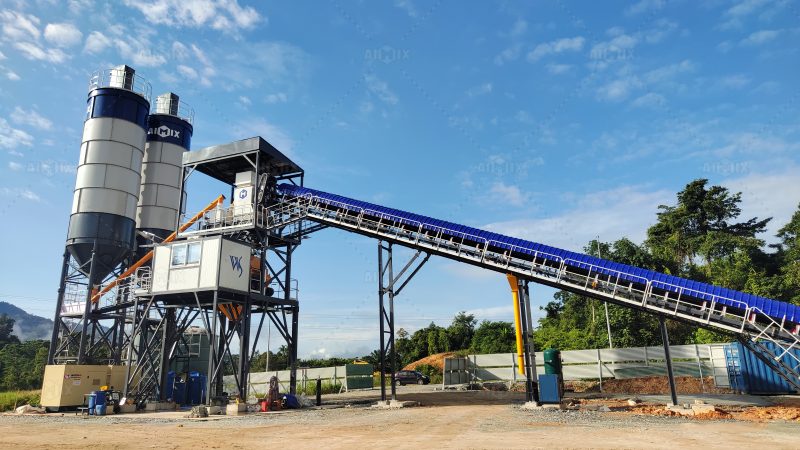

Choosing the wrong stationary concrete mixing plant can cause delays and extra costs—but don’t worry! Let’s walk through the key steps to help you select the ideal plant that perfectly fits your project needs.
Step 1: Define Key Project Requirements
- Required Capacity (m³/h): Think about your peak concrete demand and how long pours will take. Matching plant capacity to your project ensures smooth workflow without unnecessary delays or downtime.
- Site Conditions & Layout: Take a moment to assess your site. Is there enough stable land for the plant, stockpiles, and truck movement? Consider zoning restrictions, nearby residential areas, and access to utilities. Planning ahead here can save headaches later.
- Concrete Mix Types: What kinds of mixes will you need? Standard mixes (C20–C40), high-strength concrete (C50+), or specialized formulas like fiber-reinforced or pervious concrete? Knowing this helps you choose a plant with the right mixer type and dosing system to meet your specifications.
- Automation Level: Would you like full automation? Features like touch-screen controls, automatic moisture compensation, and self-diagnostics can make operations smoother and more consistent—though they may impact upfront investment. Choosing the right level of automation is about balancing convenience, efficiency, and cost.
Step 2: Understand Key Specifications
- Mixer Type & Batch Capacity: Think about the type of mixer you need. Twin-shaft mixers are widely used for their speed and consistency. Also, consider the batch size—how many batches per hour will you need to keep your project on schedule?
- Aggregate Bins: How many types of aggregates will you use? More bins mean greater flexibility for complex mix designs and different aggregate sizes. This can save time and allow you to produce exactly the mixes your project demands.
- Cement Silo Capacity: How much cement will you need to store on-site, and how often will deliveries arrive? Multiple silos can accommodate different cement types, helping you maintain continuous production without delays.
- Control System Features: A reliable control system is key to smooth operations. Look for trusted PLC brands like Siemens or Schneider, with features such as data logging and reporting. These capabilities help you monitor production, maintain quality, and troubleshoot issues quickly.
Step 3: Make Your Decision
- Now it’s time to choose the plant that best fits your project. Start by aligning the batching plant type and configuration with your actual project demands—consider capacity, mix complexity, and site conditions.
- Remember, the cheapest option isn’t always the best. Prioritize reliability, operational efficiency, and consistent mix quality. A slightly higher upfront investment in a dependable plant can save time, reduce maintenance headaches, and ensure smooth production throughout your project.
Stationary Concrete Batching Plant Price: Cost Breakdown and Investment Insight
Once you’ve determined your project requirements and the type of stationary concrete mixing plant you need, the next step is understanding how costs are structured. This helps you budget effectively and evaluate the potential return on investment (ROI).
Typical Cost Breakdown
A stationary concrete batching plant investment usually includes:
- Plant Equipment (50–60%) – Mixer, batching system, silos, and steel structure.
- Installation & Commissioning (10–15%) – On-site assembly, testing, and startup support.
- Foundation & Site Preparation (10–15%) – Civil works, ground leveling, and structural support.
- Control System & Automation (10–15%) – PLC systems, sensors, and automation features.
- Auxiliary Systems (5–10%) – Dust collection, conveyors, and environmental protection equipment.
Total Cost of Ownership (TCO)
Don’t stop at the purchase price. Consider:
- Operating Costs – Labor, energy, and routine wear parts like mixing blades and conveyor belts.
- Maintenance & Downtime – Reliable equipment and support reduce production interruptions.
- Shipping & Utilities – Transport, power, water connections, and site preparation.
Investment Insight
Starting Your Stationary Concrete Plant: Essential Steps for Success
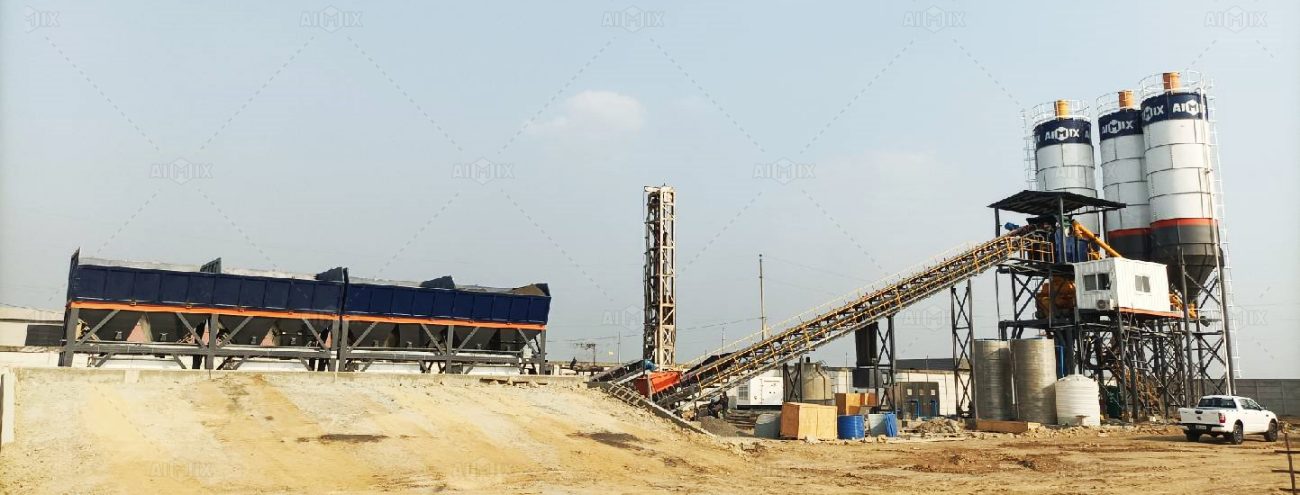
As rapid urbanization continues to increase demand for high-quality concrete, starting a stationary concrete plant can be a highly rewarding investment. However, long-term success depends on more than just equipment—it requires clear planning, smart decision-making, and efficient daily operations. This practical guide walks you through the essential steps to launch, operate, and scale your plant with confidence.
Market Research & Business Planning
Research local concrete demand, competitor offerings, and construction project needs. Develop a concrete batching plant business plan outlining target production capacity, key markets, financial projections, and marketing strategies. A clear plan ensures sustainable growth and investor confidence.
Securing Financing & Strategic Location Selection
Calculate total capital for land, equipment, and infrastructure. Explore loans, grants, or investors to secure funding. Choose a strategic site near construction hubs and transport routes to reduce logistics costs, ensuring smooth material supply and compliance with zoning and environmental regulations.
Permits, Licenses & Quality Equipment Investment
Secure all necessary permits for environmental compliance, workplace safety, and manufacturing regulations. Invest in a reliable stationary concrete batching plant—small to medium projects suit models like AJ-25 to AJ-75, while large-scale projects benefit from AJ-120 or AJ-240. Include mixers, conveyors, and automated controls for precise and efficient concrete production.
Building a Skilled Team & Reliable Supplier Network
Hire experienced operators and maintenance staff to ensure smooth operations. Build a competent sales team to acquire and retain clients. Partner with dependable suppliers of cement, aggregates, sand, and additives to maintain consistent material quality and avoid production delays.
Efficient Distribution, Logistics & Branding
Develop a robust delivery system using an in-house fleet or trusted logistics partners. Build your brand with a professional website, active social media, and competitive pricing. Networking and excellent customer service help attract and retain long-term clients in a competitive market.
Quality Control & Continuous Improvement
Implement strict quality control using automation for real-time monitoring and consistent concrete production. Inspect and maintain equipment regularly to prevent downtime. Continuously refine processes, plan for capacity expansion, and adopt new technologies to stay competitive.
End-to-End Support Services for Your Concrete Plant
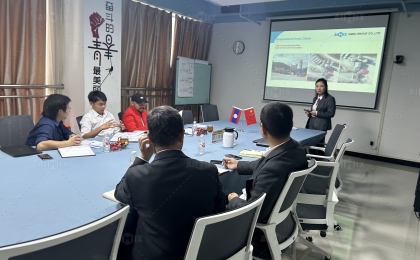
Aimix supports you at every stage of your stationary concrete batching plant’s lifecycle—from initial planning and installation to daily operation and long-term performance. Our end-to-end services cover pre-sales consultation, on-site support during delivery and installation, and responsive after-sales service, helping you reduce risk, keep your plant running reliably, and get lasting value from your investment.
Pre-Sales Support
- Professional Consultation & Project Planning: Helps clients optimize investment budgets, reduce risks, and shorten project timelines.
- Dedicated Service Team: Analyzes, confirms, and refines solutions to ensure the plant configuration fully matches project requirements.
- Investment Profitability Models: Provides financial analysis to enable informed, low-risk business decisions.

During-Sales Support
- Seamless Coordination & Information Sharing: Reduces installation time and costs while preventing project delays.
- Quality Control Measures: Includes no-load testing and inspection reports to ensure reliable performance and extend equipment lifespan.
- Specialized Transportation Services: Custom packaging, reinforcement, and protective measures ensure safe and timely delivery.

After-Sales Support
- Comprehensive Training: Reduces operational difficulties, prevents operator errors, and minimizes maintenance costs.
- Onsite Guidance & Remote Support: Ensures smooth plant operation and successful project delivery.
- 24-Hour Troubleshooting: Quickly resolves technical issues to minimize downtime.
- Regular Follow-Up Visits: Monitors plant performance, maintains efficiency, extends equipment lifespan, and helps prevent safety incidents.
FAQs about Stationary Batching Plants
What is the difference between stationary and mobile concrete batching plants?
How long does it take to install a stationary concrete plant?
Can stationary plants handle multiple concrete types?
How is concrete quality maintained in stationary plants?
What is the typical lifespan of a stationary batching plant?
Can the plant be upgraded or expanded later?
Achieve reliable, high-volume concrete supply with a plant designed to match your project needs. Optimize workflow, minimize waste, and maximize ROI. Reach out today to explore the ideal stationary batching plant and take your project efficiency to the next level.
