
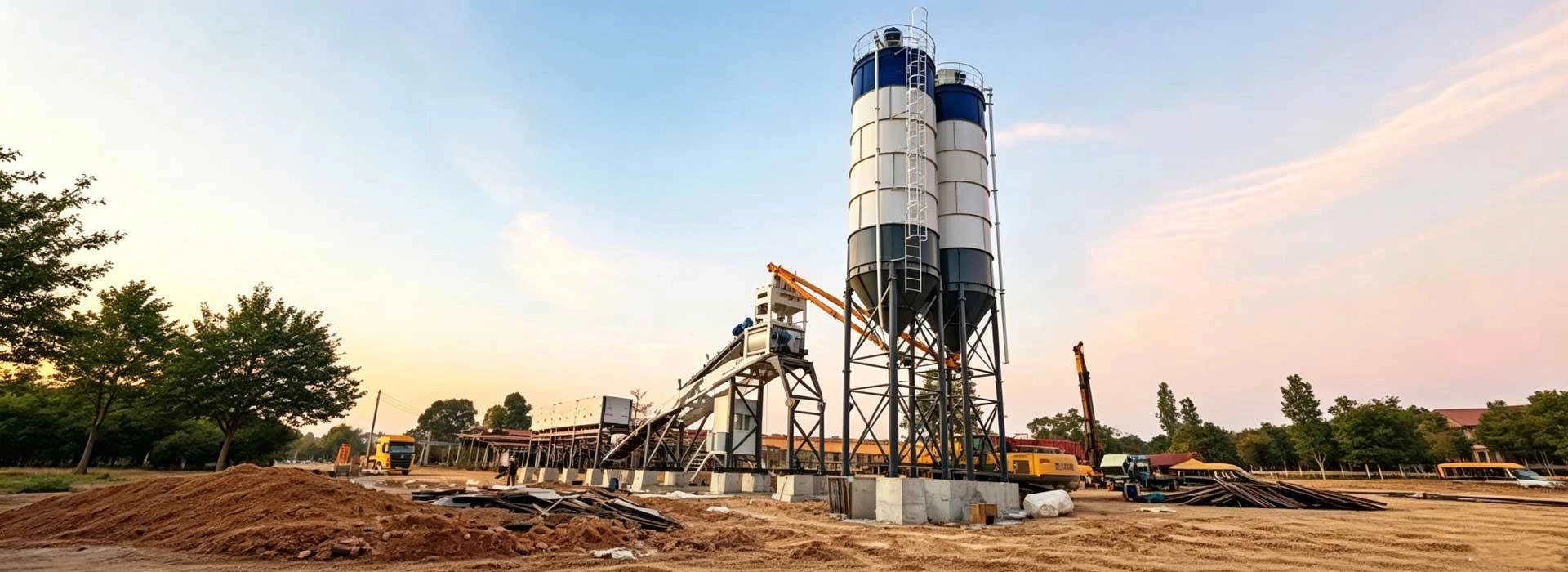

What Is a Concrete Batching Plant? A concrete batching plant (also known as batch plant, concrete mixing plant) is an industrial facility that precisely weighs, proportions and mixes raw materials including aggregates (sand, gravel, crushed stone), cement, water and chemical admixtures, to produce consistent ready to use concrete in controlled batches.
It replaces inconsistent manual mixing and supports large volume, repeatable concrete production for construction projects.
It is widely deployed across commercial ready mix sites, road and bridge works, and precast component manufacturing. Proper plant selection helps construction teams boost work efficiency, cut material waste and operating expenses. Learning about plant categories, real world use cases and selection criteria supports stable operation and better long-term investment returns for project owners.
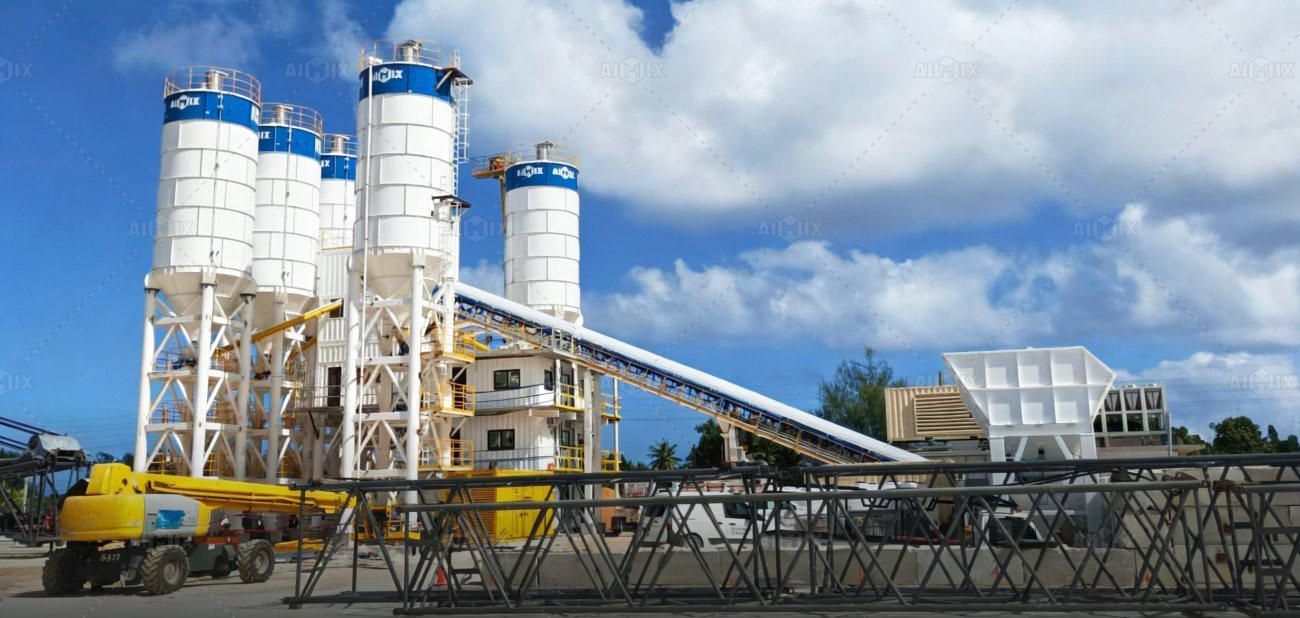
What Are The Main Types of Concrete Batching Plant
Concrete batching plants are mainly divided into stationary and mobile categories according to mobility.
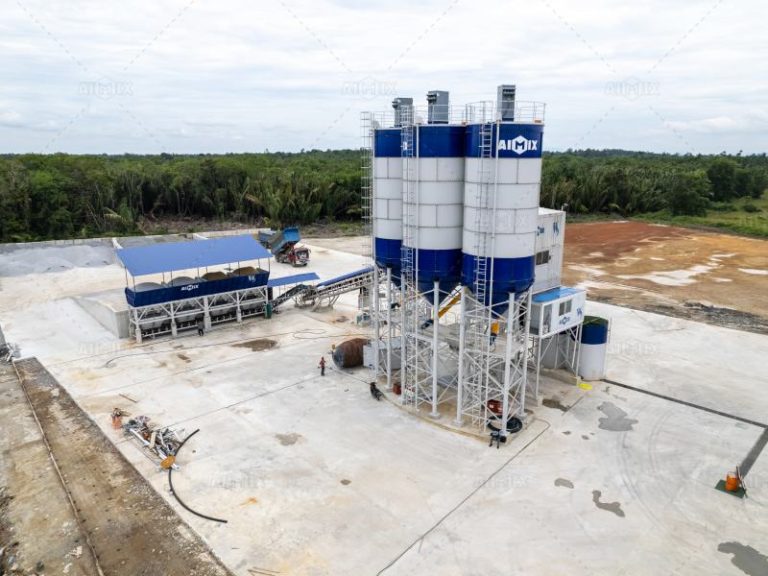
Stationary range covers AJQ‑series modular quick‑installation, hopper‑type and belt‑type configurations for long‑term fixed‑site production.
Mobile batching plants include AJP‑series integrated‑pumping, AJSY‑compact, AJY‑medium‑output and AJZY‑drum‑type for temporary and multi‑site construction projects.
- AJQ‑series modular quick‑installation plant: Pre‑integrated modular stationary unit, short site assembly cycle for projects demanding fast commissioning(45‑135 m³/h).
- AJ‑series stationary hopper‑type plant: Compact footprint, lower investment, suitable for small‑to‑medium long‑term projects (25‑75 m³/h).
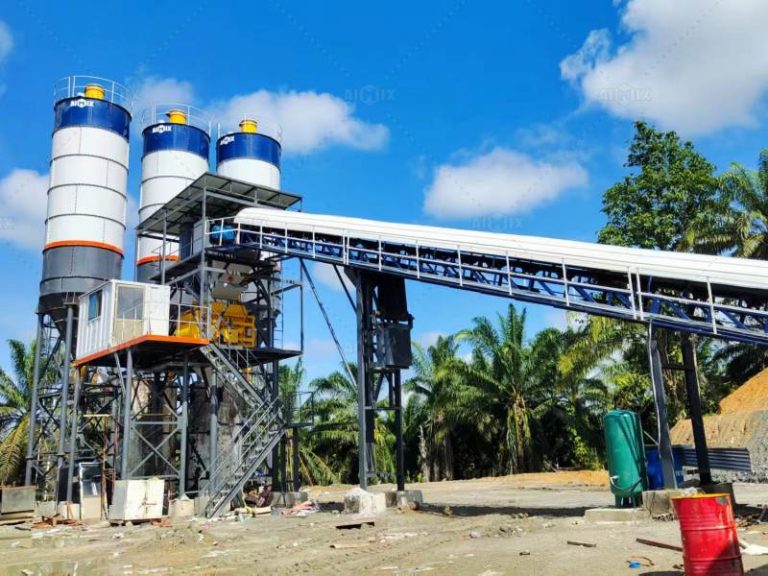
- AJ‑series stationary belt‑type plant: Continuous high‑output feeding, for large‑scale infrastructure and commercial ready‑mix production (60‑240 m³/h).
- AJP‑series integrated pumping mobile plant: Combine batching, mixing and concrete pumping in one unit for space‑limited remote job‑sites.
- AJSY‑series compact mobile plant: Small footprint, fast setup, for short‑term small‑scale construction.
- AJY‑series mobile plant: Twin‑shaft mixer, medium‑large output, for road & bridge multi‑site projects.
- AJZY‑series drum‑type mobile plant: Gravity drum mixing, ideal for rural housing and low‑volume projects.
Stationary Concrete Batching Plant – For Long‑Term Fixed Production Projects
AIMIX stationary concrete batching plant is designed for long‑term fixed production projects, offering AJQ‑series modular quick‑installation, hopper‑type and belt‑type configurations to satisfy different project schedule and output demands.
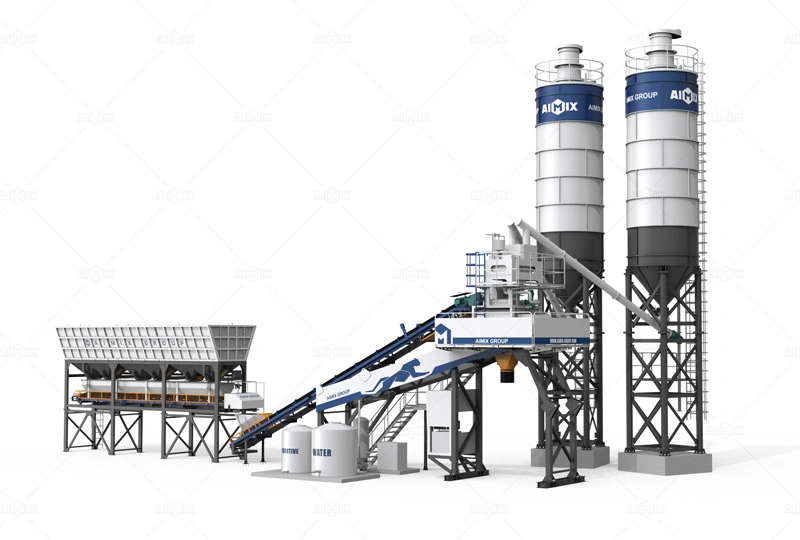
AJQ-Series Modular Quick-installation Stationary Plant
- Models:AJQ-50, AJQ-70, AJQ-100, AJQ-150
- Pre-integrated Modular Structure: Major functional units are pre-assembled in factory, minimizing on-site assembly work and foundatio-related construction work.
- Short Commissioning Cycle: Reduces site deployment time for projects which require stationary-grade performance but limited site construction window.
- Transport-Optimized Layout: Folding integrated structure cuts container quantity for oversea shipping.
- Stable Production Output: Actual output ranges 45-135 m³/h, equipped with high-precision weighing and automatic compensation control system to keep batching accuracy within ±1%.
- Best-fit scenarios: Infrastructure projects requiring stationary-level performance while expecting fast on-site setup.
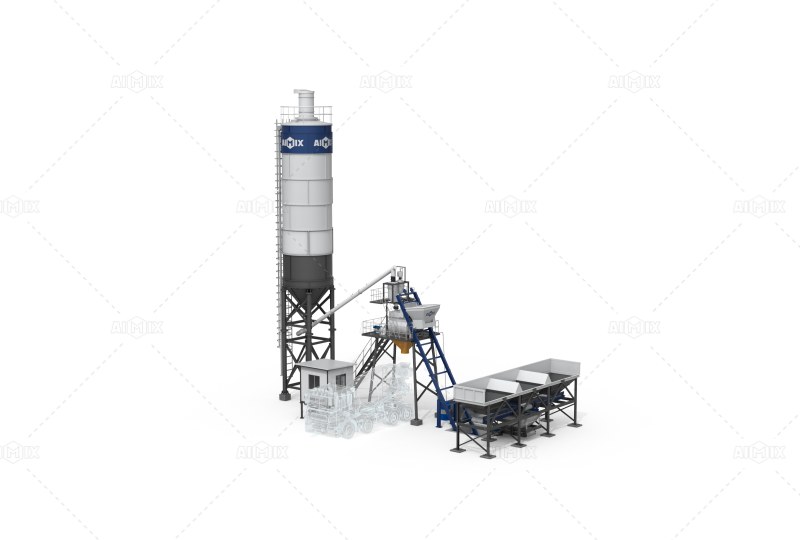
Hopper-Type Batching Plant
- Models:AJ-25, AJ-35, AJ-50, AJ-75
- Compact Design with Space Efficiency: Hopper-type batching plants use a skip hoist system to lift aggregates into the mixer, creating a compact layout with a smaller installation footprint. In most configurations, the overall plant length can be reduced by around 30% compared with belt-type systems, making it suitable for sites with limited space.
- Lower Installation Cost and Faster Setup: Due to its simpler structure and reduced steel framework requirements, hopper-type plants generally require less civil work. Installation is often faster, with a shorter setup period compared to belt-type configurations, helping reduce initial project preparation time.
- Stable Solution for Medium Capacity Projects: Hopper-type plants are commonly used in production ranges of around 25–75 m³/h, where space efficiency and stable daily output are more important than continuous large-scale production.
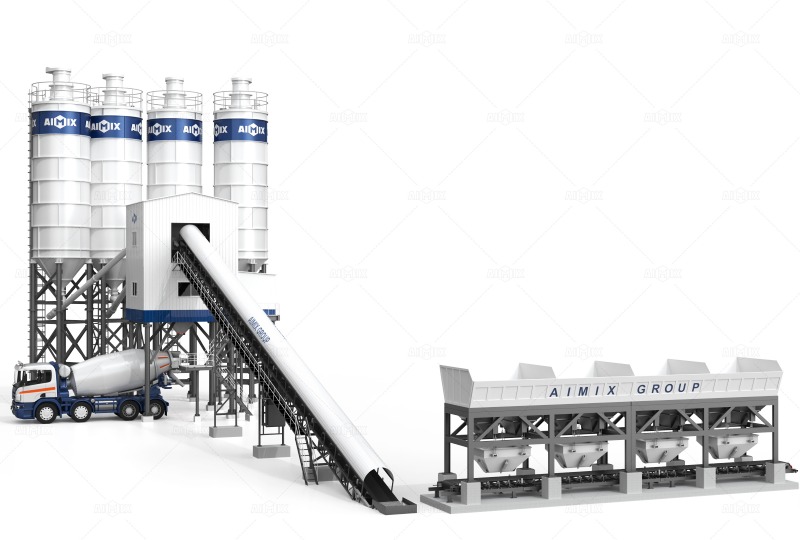
Belt-Type Concrete Batching Plant
- Models:AJ-60, AJ-90, AJ-120, AJ-180, AJ-240
- Continuous Aggregate Feeding for Higher Efficiency: The belt conveyor system enables continuous feeding of aggregates into the mixer, supporting smoother production flow. In typical configurations, belt systems can support higher continuous output (often 60–240 m³/h or more) compared to skip hoist systems.
- Suitable for Large-Scale and Long-Term Projects: Belt-type batching plants are widely used in infrastructure and commercial supply projects where long-term, high-volume production is required. They are more suitable for operations that run continuously over extended working hours.
- Stable Batching Performance and Consistent Quality: With continuous feeding and precise weighing control, belt-type plants help maintain batching accuracy typically within ±2%, ensuring consistent concrete quality during long production cycles.
Quick Comparison:
| Aspect | AJQ-Series Modular Stationary Plant | Hopper-Type Batching Plant | Belt-Type Batching Plant |
|---|---|---|---|
| Models | AJQ-50, AJQ-70, AJQ-100, AJQ-150 | AJ-25, AJ-35, AJ-50, AJ-75 | AJ-60, AJ-90, AJ-120, AJ-180, AJ-240 |
| Feeding System | Integrated pre-wired modular feeding unit | Skip hoist lifts aggregates to mixer | Conveyor belt provides continuous feeding |
| Capacity Range | 45-135 m³/h | 25-75 m³/h | 60-240+ m³/h |
| Site Work Requirement | Greatly reduced on-site assembly and foundation workload | Requires complete on-site civil & steel assembly | Requires complete on-site civil & steel assembly |
| Installation Time | Shorter commissioning cycle | Relatively fast setup | Longer installation period |
| Best Application | Projects needing stable production with shorter site setup time | Small to medium projects with limited space | Large infrastructure, commercial ready-mix plants |
| Production Stability | Stationary-level long-run production stability | Stable for standard daily output | Better for long-term continuous operation |
Mobile Concrete Batch Plant – For Fast Setup & Flexible Use
Our mobile concrete batch plant is designed for quick installation and easy relocation between job sites. Main models include AJP-series, AJSY-series, AJY-series, AJZY-series, offering flexible options for different temporary and multi-site construction project demands.
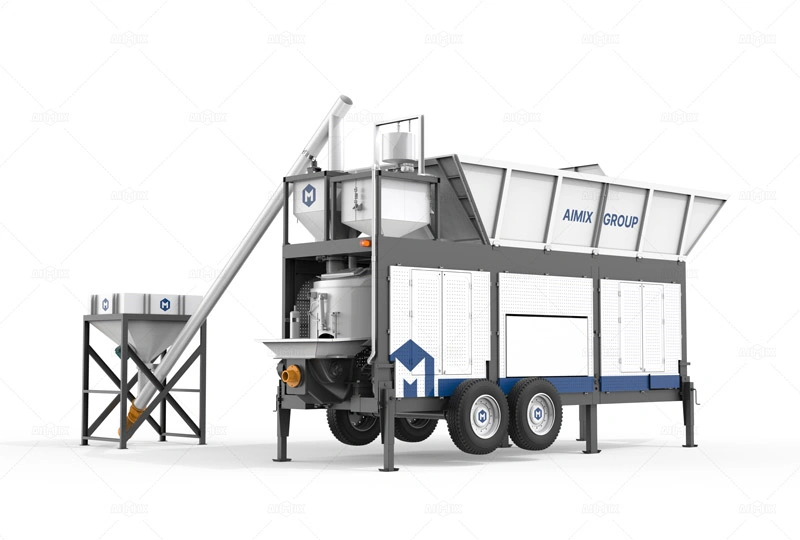
AJP-Series Integrated Pumping Mobile Plant
- Popular Model:AJP-40
- Core Design: Integrates batching, mixing and concrete pumping into one compact mobile unit.
- Productivity: Around 40 m³/h.
- Key Advantage: Eliminates separate mixer trucks and concrete pumping equipment on-site.
- Site Requirement: Suitable for sites with limited space and difficult vehicle access.
- Applications: Remote narrow construction sites, small-scale projects where additional transport machinery is difficult to arrange.
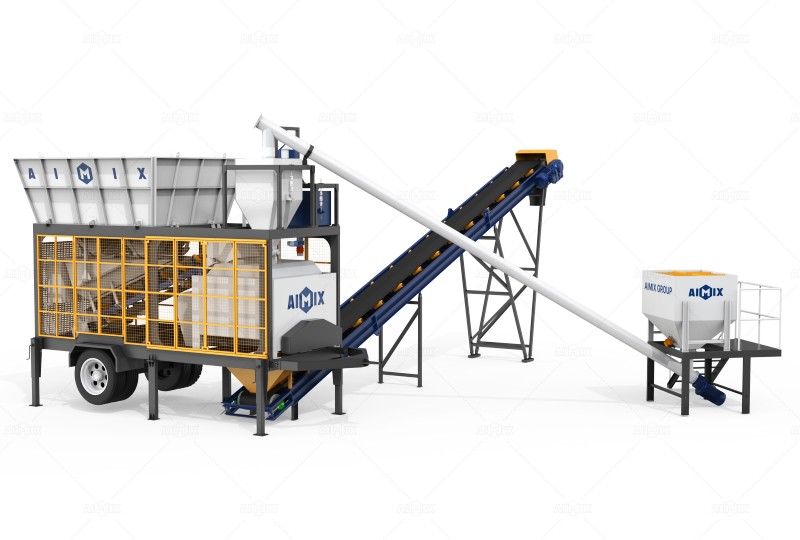
AJSY Series Compact Batching Plant
- Popular Model:AJSY-40
- Productivity: 20-60 m³/h
- Mixer: Twin shaft mixer
- Mixing Principle: Uses blades for forced mixing
- Suitable Materials: Dry-hard concrete, high-strength concrete, and special materials requiring high uniformity.
- Site Area Requirement: Small (150-200 m²), can use unhardened or simply hardened ground.
- Applications: The AJSY compact batching plant is ideal for small projects, temporary sites (e.g., rural roads, small buildings), short‑term construction (1-6 months).
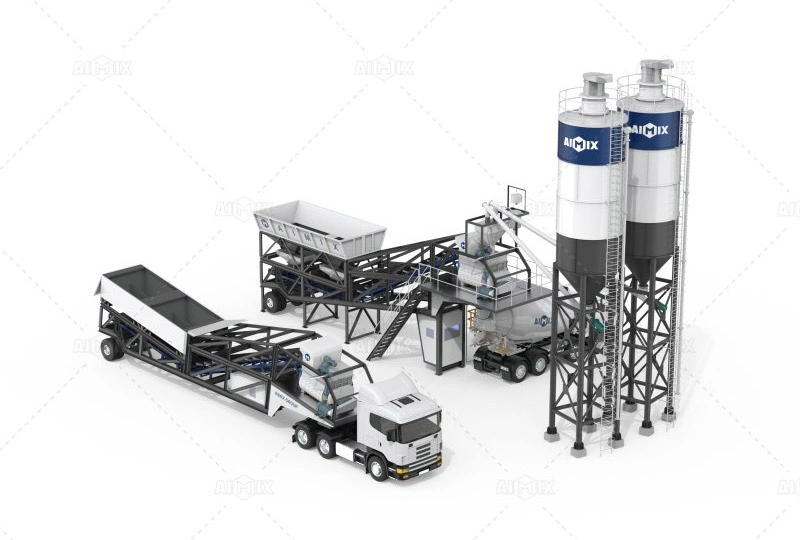
AJY Series Mobile Batching Plant for Sale
- Popular Models: AJY-60, AJY-90
- Mixer Type: Twin-shaft mixer
Key Features:
- Compact modular structure for fast installation and easy relocation
- Quick commissioning after relocation for multi-site construction projects
- Stable batching system ensures consistent concrete quality
Site Area Requirement: 300–500 m², no hardened ground or concrete foundation needed; only simple leveling (slope ≤3°) is required for installation.
Installation Type: Mobile chassis design for fast transport and redeployment.
Applications: Suitable for temporary and multi-site construction projects such as roadworks, bridges, rural construction, small buildings, and maintenance projects.
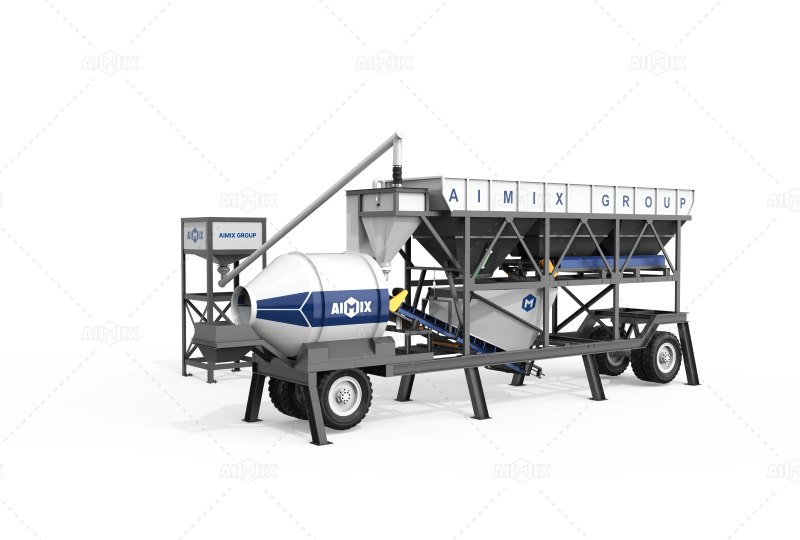
AJZY Drum Type Mobile Concrete Plant
- Popular Models: AJZY-40, AJZY-60
- Productivity: 40-60 m³/h
- Mixer: JZM750-JZM1500
- Mixing Principle: Uses drum rotation and gravity
- Suitable Materials: Plastic concrete, semi-dry concrete and lightweight concrete.
- Site Area Requirement: Small (100-300 m²), deployable in rural yards, fields, and tight‑site borders.
- Applications: The drum type plants are ideal for rural home building, village road construction, and minor water-works requiring low-volume production.
Quick Comparison:
| Item | AJP‑Series | AJSY Series | AJY Series | AJZY Series |
|---|---|---|---|---|
| Popular Models | AJP‑40 | AJSY‑40 | AJY‑60, AJY‑90 | AJZY‑40, AJZY‑60 |
| Productivity | ≈40 m³/h | 20‑60 m³/h | 60–90 m³/h | 40–60 m³/h |
| Core Design | Batching + mixing + pumping integrated unit | Compact modular batching plant | High‑output mobile batching plant | Drum‑type gravity mixing plant |
| Mixer Type | Twin‑shaft mixer + integrated pumping unit | Twin‑shaft mixer | Twin‑shaft mixer | Drum mixer (JZM series) |
| Best For | Remote narrow sites, projects without separate mixer‑truck / pump | Small projects and frequent relocation | Roads, bridges, multi‑site projects | Rural housing & low‑volume works |
| Footprint | Compact single‑chassis layout | About 200㎡ | 300–500㎡ | 100‑300㎡ |
Batching Plant Specifications
| Parameters | AJQ50 | AJQ70 | AJQ100 | AJQ150 |
|---|---|---|---|---|
| Theoretical Production Rate (m³/h) | 50 | 70 | 100 | 150 |
| Mixer Discharge Capacity (L) | 1000 | 1250 | 2000 | 2500 |
| Mixer Feed Capacity (L) | 1500 | 1800 | 3000 | 3750 |
| Mixer Power (kW) | 2×18.5 | 22×2 | 2×37 | 2×45 |
| Discharge Height (m) | 4.1 | 4.1 | 4.2 | 4.2 |
| Aggregate Bin Configuration (Number × Capacity per Bin, m³) | 3×10 | 3×12 | 4×15 | 4×15 |
| Cycle Time (s) | 70 | 70 | 70 | 70 |
| Maximum Aggregate Particle Size (mm) | 80/100 | 80/100 | 80/100 | 80/100 |
| Cement Silo (Optional) | 1×100 | 2×100 | 3×100 | 4×100 |
| Aggregate Weighing System | ±2% | ±2% | ±2% | ±2% |
| Powder Weighing System | ±1% | ±1% | ±1% | ±1% |
| Water Weighing System | ±1% | ±1% | ±1% | ±1% |
| Admixture Weighing System | ±1% | ±1% | ±1% | ±1% |
| Installed Power (kW) | ≈80 | ≈120 | ≈170 | ≈270 |
| Control Mode | Fully automated computer (PC) control | Fully automated computer (PC) control | Fully automated computer (PC) control | Fully automated computer (PC) control |
| Power Supply | 220/415/440/380V, 50Hz/60Hz, three-phase | 220/415/440/380V, 50Hz/60Hz, three-phase | 220/415/440/380V, 50Hz/60Hz, three-phase | 220/415/440/380V, 50Hz/60Hz, three-phase |
| Types | Hopper type | |||
|---|---|---|---|---|
| Model | AJ-25 | AJ-35 | AJ-50 | AJ-75 |
| Theoretical Productivity (m³/h) | 25 | 35 | 50 | 75 |
| Mixer Model (Mixer Output L) | JS500 | JS750 | JS1000 | JS1500 |
| Mixer Power (kW) | 18.5 | 30 | 2×18.5 | 2×30 |
| Mixing Cycle Period (s) | 72 | 72 | 72 | 72 |
| Max.Aggregate Size (mm) | Φ60 | Φ60 | Φ60 | Φ80 |
| Standard Aggregate Bin Capacity (m³) | 3×3 | 3×5 | 3×8 | 3×12 |
| Kind of Aggregate | 2/3 | 2/3/4 | 3/4 | 3/4 |
| Max. Discharging Height (m) | 3.8 | 4.1 | 4.1 | 4.1 |
| Overall Weight (ton) | ≈15 | ≈18 | ≈23 | ≈30 |
| Installation Power (kW) | ≈65 | ≈75 | ≈100 | ≈140 |
| Power Supply | 380V/220V/415/440V, 50/60HZ, 3Phase | |||
| Type | Belt Type | |||||
|---|---|---|---|---|---|---|
| Model | AJ60 | AJ90 | AJ120 | AJ180 | AJ240 | AJ270 |
| Theoretical productivity (m³/h) | 60 | 90 | 120 | 180 | 240 | 270 |
| Mixer discharge volume (L) | 1000 | 1500 | 2000 | 3000 | 4000 | 4500 |
| Mixer feeding volume (L) | 1500 | 2250 | 3000 | 4500 | 6000 | 6750 |
| Mixer power (kw) | 18.5×2 | 30×2 | 37×2 | 55×2 | 75×2 | 75×2 |
| Discharge height (m) | 4.1 | 4.1 | 4.2 | 4.2 | 4.2 | 4.2 |
| Aggregate bin configuration (number × single bin volume, m³) | 4×7 | 4×15 | 4×20 | 4×25 | 4×30 | 4×30 |
| Cycle time (s) | 60 | 60 | 60 | 60 | 60 | 60 |
| Maximum aggregate particle size (mm) | 80/100 | 80/100 | 80/100 | 80/100 | 80/100 | 80/100 |
| Cement silo (optional) | 2×100 | 3×100 | 4×100 | 4×100 | 4×100 | 4×100 |
| Aggregate weighing system | ±2% | ±2% | ±2% | ±2% | ±2% | ±2% |
| Powder weighing system | ±1% | ±1% | ±1% | ±1% | ±1% | ±1% |
| Water weighing system | ±1% | ±1% | ±1% | ±1% | ±1% | ±1% |
| Additive weighing system | ±1% | ±1% | ±1% | ±1% | ±1% | ±1% |
| Installed power (kw) | ≈110 | ≈160 | ≈220 | ≈290 | ≈340 | ≈340 |
| Control mode | Fully automated computer (PC) control | |||||
| Power supply | 220V/415V/440V/380V, 50Hz/60Hz, three-phase | |||||
| Model | AJSY20 | AJSY40 | AJSY60 |
|---|---|---|---|
| Theoretical productivity (m³/h) | 20 | 40 | 60 |
| Mixer discharge volume (L) | 500 | 1000 | 1500 |
| Mixer feeding volume (L) | 750 | 1500 | 2250 |
| Mixer power (kw) | 18.5 | 18.5×2 | 30×2 |
| Discharge height (m) | 4.1 | 4.1 | 4.1 |
| Aggregate bin configuration (number × single bin volume, m³) | 2×4.5 | 2×4.5 | 2×4.5 |
| Cycle time (s) | 60 | 60 | 60 |
| Maximum aggregate particle size (mm) | 60/80 | 60/80 | 60/80 |
| Cement silo (optional) | 1×100 | 1×100 | 1×100 |
| Aggregate weighing system | ±2% | ±2% | ±2% |
| Powder weighing system | ±1% | ±1% | ±1% |
| Water weighing system | ±1% | ±1% | ±1% |
| Additive weighing system | ±1% | ±1% | ±1% |
| Installed power (kw) | ≈50 | ≈70 | ≈100 |
| Control mode | Buttons + Touch Screen + Remote Control | ||
| Power supply | 220V/415V/440V/380V, 50Hz/60Hz, three-phase | ||
| Model | AJY-60 | AJY-90 |
|---|---|---|
| Theoretical production efficiency (m3 /h) | 60 | 90 |
| Mixer discharge capacity (liter) | 1000 | 1500 |
| Mixer feeding capacity (liter) | 1600 | 2400 |
| Mixer motor power (kw) | 18.5×2 | 30×2 |
| Discharge height (m) | 4.1 | 4.1 |
| Aggregate storage capacity (m3) | 8×3 | 12×3 |
| Working cycle period (sec) | 60 | 60 |
| Maximum aggregate particle size (mm) | 80/100 | 80/100 |
| Cement silo (tons) (optional) | 100×1 | 100×2 |
| Aggregate weighing system precision | ±2% | ±2% |
| Accuracy of powder weighing system | ±1% | ±1% |
| Precision of water weighing system | ±1% | ±1% |
| Accuracy of additive weighing system | ±1% | ±1% |
| Installation power (kw) | ≈100 | ≈140 |
| Traction method | semi-trailer | semi-trailer |
| Control mode | computer control | computer control |
| Power supply | 220V/415V/440V/380V, 50Hz/60Hz, three-phase | |
| Parameter | Model | Unit | AJZY-40 | AJZY-60 |
|---|---|---|---|---|
| Theoretical production efficiency | Cubic meters per hour | 30-40 | 50-60 | |
| Drum mixer | -Kilowatts | JZM1000 | JZM1500 | |
| Motor power | kW | 7.5×2 | 11×2 | |
| Mixing time | second | 40 | 40 | |
| Discharge height | meters | 1.3 | 1.3 | |
| Batching machines | Dosing machine | -cubic meters | PLD1200 | PLD1600 |
| Hopper capacity | Cubic meters | 5×2/3 | 8×2/3 | |
| Motor power | kilowatt | 4×2 | 4×3 | |
| Sensor | kilogram | 2000×3 | 2000×3 | |
| Cylinder | - | 100×250 | 100×250 | |
| Belt size | millimeters | 10400×500×2; 4200×500×1 | 10400×500×2; 4200×500×1 |
|
| 9000×600×1 | 9000×600×1 | |||
| Feeding height | millimeter | 3200 | 3200 | |
| Cement weighing system | Weighing precision | - | ±1% | ±1% |
| Water weighing system | Weighing accuracy | - | ±1% | ±1% |
| Pump power | Kilowatts | 3 | 3 | |
| Additive weighing system | Weighing accuracy | - | ±1% | ±1% |
| Additive pump power | Kilowatts | 1.1 | 1.1 | |
| Chassis | (Equipment) Size | millimeter | 8410×2000×780 | 11100×2000×780 |
| Tire size | millimeter | 1000 | 1000 | |
| Control systems | Electronic components | - | ZHENG TAI | ZHENG TAI |
| Control system | - | PLY1000 Semi-automatic control system | PLY1000 Semi-automatic control system |
| Parameter | AJP40 | ||
|---|---|---|---|
| Mixing System | Mixing Type / Mixing Mode | / | Vertical Shaft Planetary Type |
| Max. Theoretical Concrete Mixing Output | m3/h | 40 | |
| Mixer Charging Capacity / Mixer Inlet Capacity | m³ | 2 | |
| Mixer Discharging Capacity / Mixer Outlet Capacity | m³ | 1.2 | |
| Mixing Drum Diameter | mm | 1900 | |
| Main Mixing Shaft Speed | r/min | 12~30 | |
| Pumping System | Main Cylinder Bore × Stroke | mm | φ100/1200 |
| Concrete Cylinder Bore × Stroke | mm | φ180×1200 | |
| Max. Theoretical Concrete Pumping Output (Low/High Pressure) | m3/h | 40 | |
| Max. Concrete Pumping Pressure (Low/High Pressure) | MPa | 10 | |
| Max. Conveying Distance (Vertical/Horizontal) | m | 50/130 | |
| Hopper Capacity × Feeding Height | L×mm | 450×1600 | |
| Discharge Port Diameter (Inner Diameter) | mm | φ115 | |
| Max. Allowable Aggregate Size | mm | 40 | |
| Concrete Delivery Pipe Inner Diameter | mm | 125 | |
| Weighing System | Aggregate Bin Feeding Height | m | 4.4 |
| Aggregate Bin Configuration (Quantity × Single Bin Capacity) | m³ | 2x8.5 | |
| Aggregate Weighing Accuracy | / | ±2% | |
| Water Weighing Accuracy | / | ±1% | |
| Additive Weighing Accuracy | / | ±1% | |
| Cement Weighing Accuracy | / | ±1% | |
| Electrical Control System | Low Pressure | V | 24 |
| High Pressure | V/HZ | 380/50 | |
| Control Mode | / | Touch Screen + Push Buttons + Wireless Remote Control | |
Concrete Batching Plant Project Cases Worldwide
The 2nd AJQ70 Fast-setup concrete batching plant installed in Laos
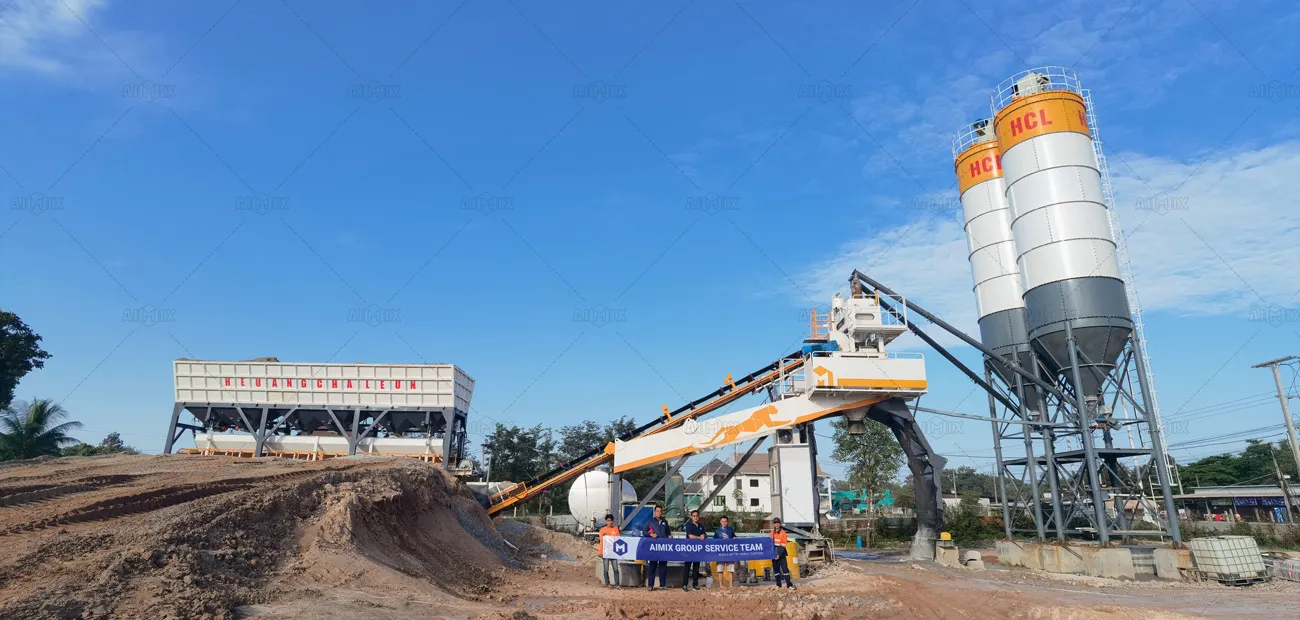
- Delivery time: February 2026
- Application: Laos Infrastructure Project
Project Requirement
A medium-capacity concrete batching solution was required to support an infrastructure project in Laos under complex mountainous transportation conditions.
The project faced challenges including inconvenient mountain material transportation, high temperature, rainy season erosion, and steady concrete demand for structural construction.
Engineering Solution
Aimix AJQ70 stationary concrete batching plant was selected to guarantee stable medium-scale concrete production.
Key configuration included:
- Twin-shaft compulsory mixer to guarantee homogeneous concrete quality.
- PLC automatic control system for accurate material batching.
- Designed for continuous 70 m³/h production capacity.
On-Site Performance
The batching plant kept stable operation under mountain construction conditions, supporting continuous concrete supply for infrastructure construction works.
It maintained stable batching precision and dependable running performance even under heavy rainy season risks and difficult mountain logistics pressure.
Project Result
Achieved stable medium-capacity concrete production for the key infrastructure project under tough mountainous environment in Laos.
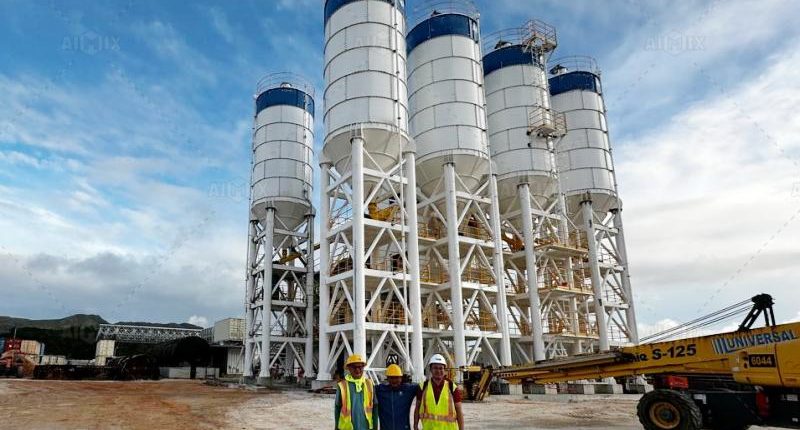
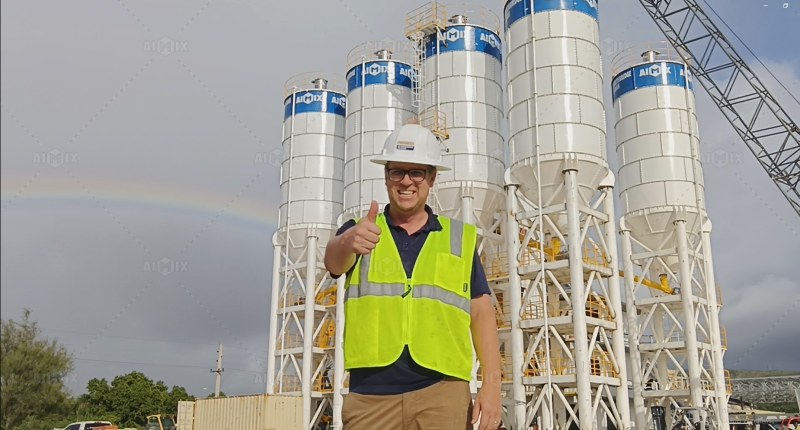
AJ-180 Stationary Concrete Batching Plant in Guam
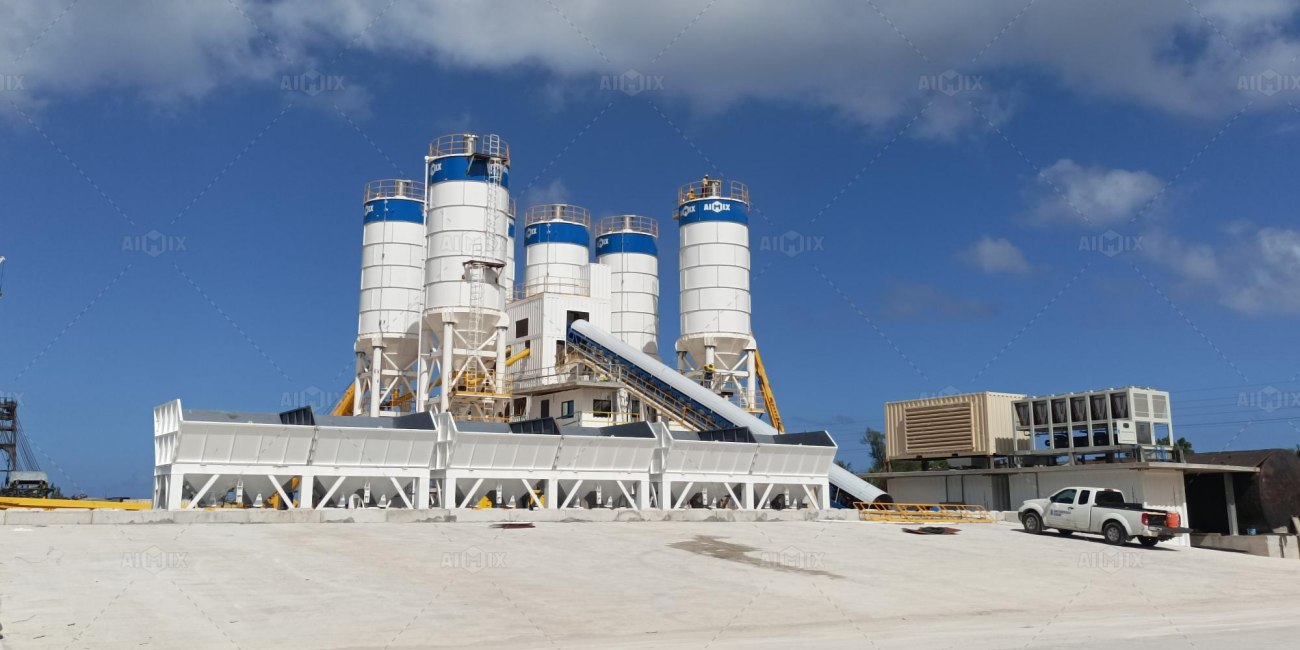
- Delivery time: February 2026
- Application: U.S. Government Infrastructure Projects
Project Requirement
A high-capacity concrete batching solution was required to support a U.S.-standard infrastructure project in Guam under complex island logistics conditions.
The project faced challenges including long-distance material transport, high humidity, coastal corrosion, and continuous concrete demand for structural works.
Engineering Solution
Aimix AJ-180 stationary concrete batching plant was selected to ensure stable large-scale production.
Key configuration included:
- Twin-shaft compulsory mixer for uniform concrete quality.
- PLC automatic control system for precise batching.
- Designed for continuous 180 m³/h production capacity.
On-Site Performance
The batching plant maintained stable operation under island construction conditions, supporting uninterrupted concrete supply for large infrastructure works.
It delivered consistent batching accuracy and reliable performance even under typhoon-season risks and long-distance logistics pressure.
Project Result
Achieved stable high-capacity production for a critical infrastructure project in a harsh island environment.
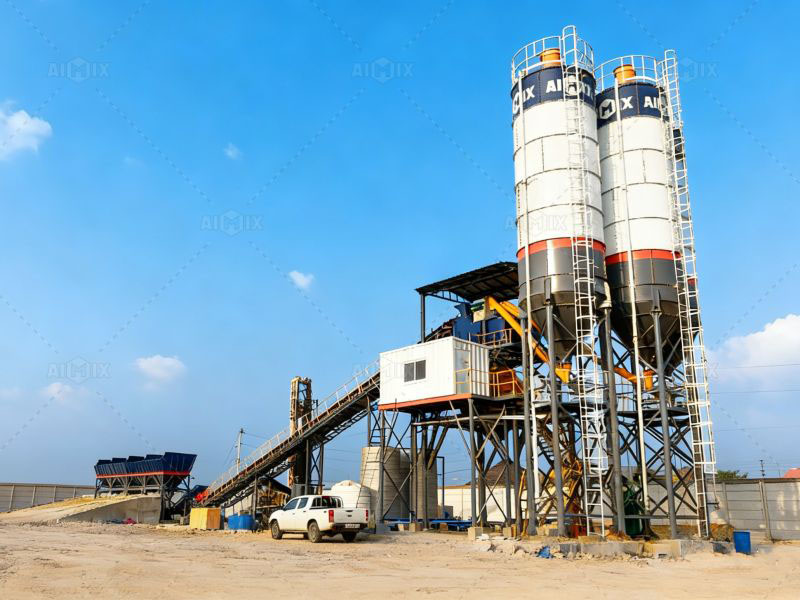
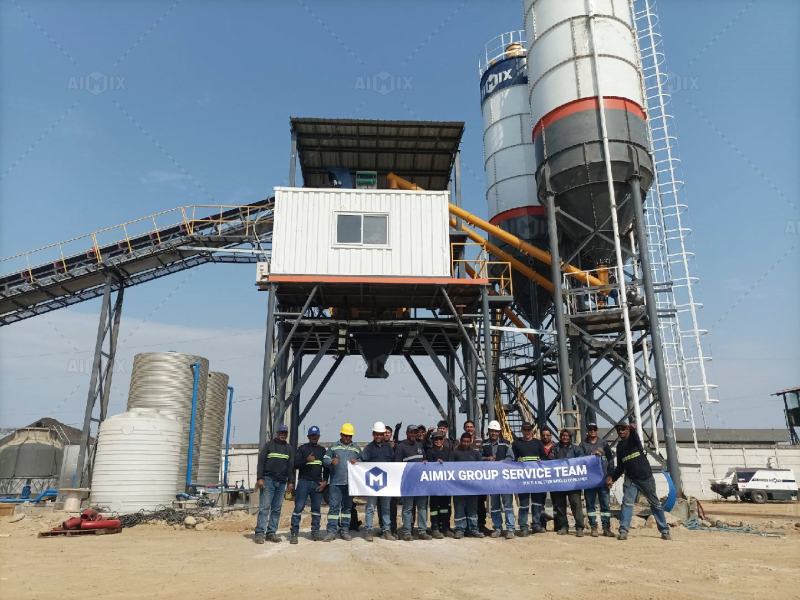
AJ-90 Ready Mix Concrete Batching Plant for Sale in Ecuador
- Delivery time: December 2025
- Application: Road Construction & Commercial Ready-Mix Supply
Project Requirement
A client in Ecuador required a ready-mix concrete batching plant to support road construction projects while also entering the local commercial concrete supply market.
The goal was to achieve independent concrete production, reducing reliance on external suppliers and ensuring stable supply for both internal projects and external sales.
Key requirements included stable output, simple operation, and consistent daily production performance.
Engineering Solution
The AJ-90 concrete batching plant machine was deployed to meet dual production needs for construction and commercial supply.
The system featured:
- Automated batching control system.
- Stable core mixing components.
- Designed for continuous and reliable production output.
This ensured consistent concrete quality under daily operating conditions.
On-Site Performance
The plant successfully supported both road construction activities and commercial ready-mix supply operations.
It allowed the client to balance internal project demand with external market orders while maintaining stable production efficiency.
Client Feedback
The client, with no prior experience in concrete batching operations, reported that the plant was easy to operate and stable in daily use, supporting continuous production for both construction and commercial applications.
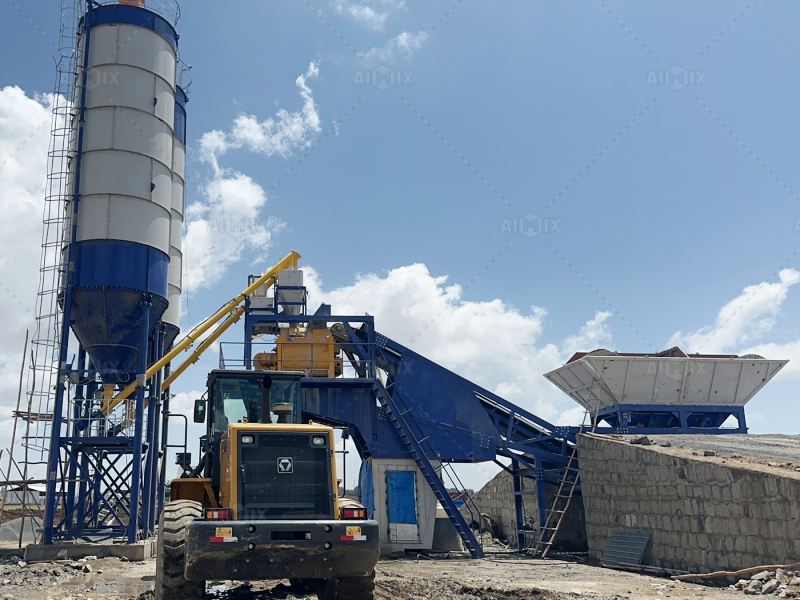
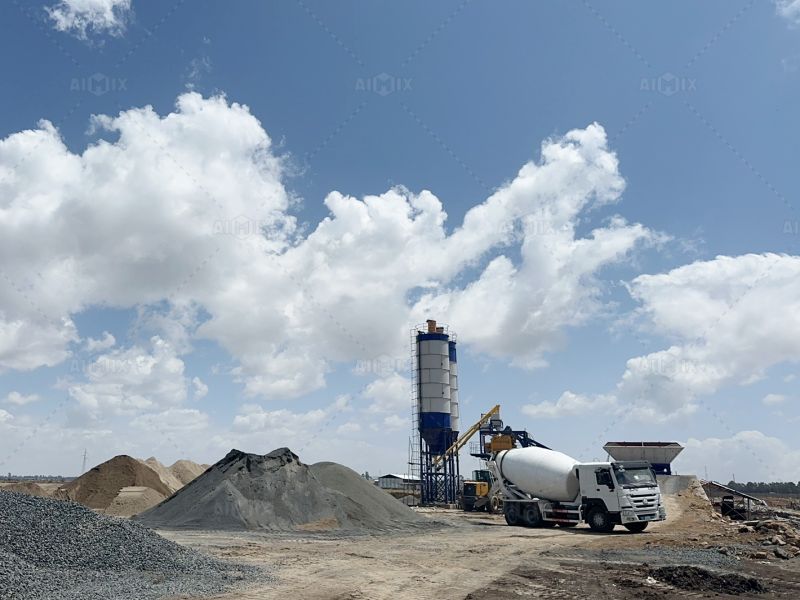
AJY-60 Portable Concrete Batch Plant for Ethiopian Client
- Delivery time: October 2025
- Application: Multi-site Housing Construction Projects
Project Requirement
A housing construction project in Ethiopia was distributed across multiple building zones, with different construction stages running simultaneously.
A stationary batching plant would have required long-distance material transport or multiple installations, leading to higher cost and lower efficiency.
Engineering Solution
The AJY-60 portable batching plant with twin-shaft mixer was selected for its flexible and relocatable design.
Key advantages included:
- Trailer-mounted modular structure for easy relocation.
- Fast setup between different construction zones.
- On-site concrete production close to active working areas.
On-Site Performance
The portable batch plant was moved according to construction progress, ensuring continuous concrete supply for different housing zones.
This significantly reduced material transport distance and improved overall construction efficiency.
Project Result
Improved equipment utilization and enabled efficient multi-site housing construction with a single mobile batching plant.
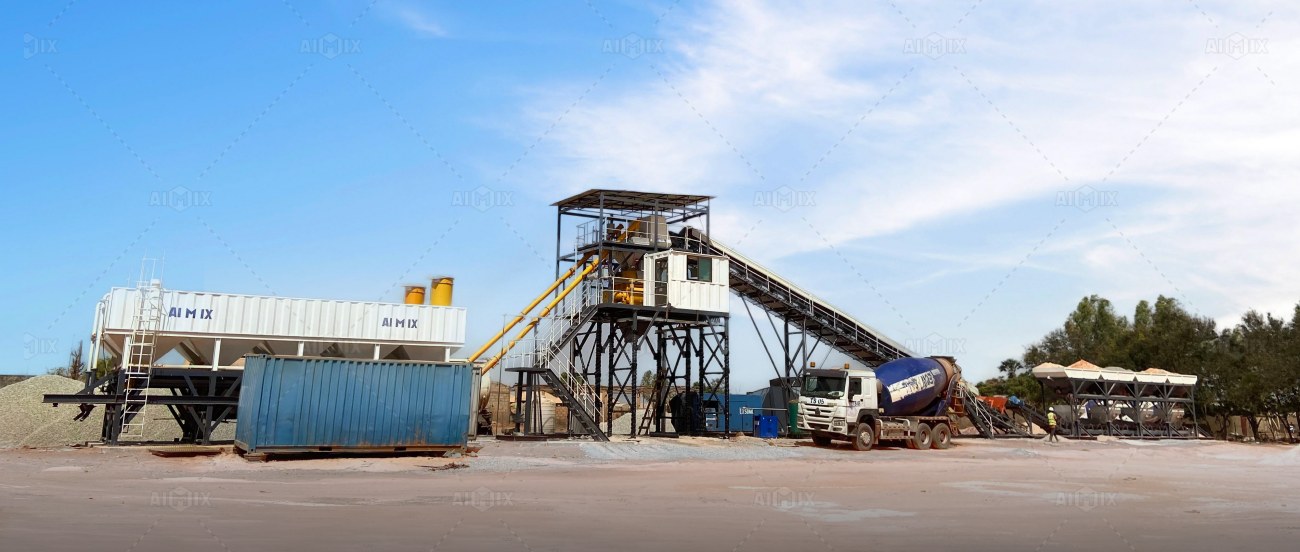
AJM60 Foundation-Free Concrete Plant Installed in Burkina Faso
- Delivery time: April 2026
- Application: Small-to-Medium Construction / Startup Project
Project Requirement
A first-time investor needed a simple and reliable concrete production solution in Burkina Faso to reduce reliance on external suppliers and start independent production.
Key challenges included lack of experience, uncertain setup process, and need for fast commissioning.
Engineering Solution
The AJM60 foundation-free batching plant was selected for its easy deployment and flexible operation.
- No foundation construction required.
- Modular design for fast installation.
- Suitable for multi-site and startup projects.
AIMIX also provided full technical consultation during planning and selection.
On-Site Support & Result
Our engineers supported installation, commissioning, and operator training to ensure smooth startup.
The plant achieved stable operation quickly, enabling the client to move from equipment buyer to independent concrete producer and reduce overall project cost and supply risk.
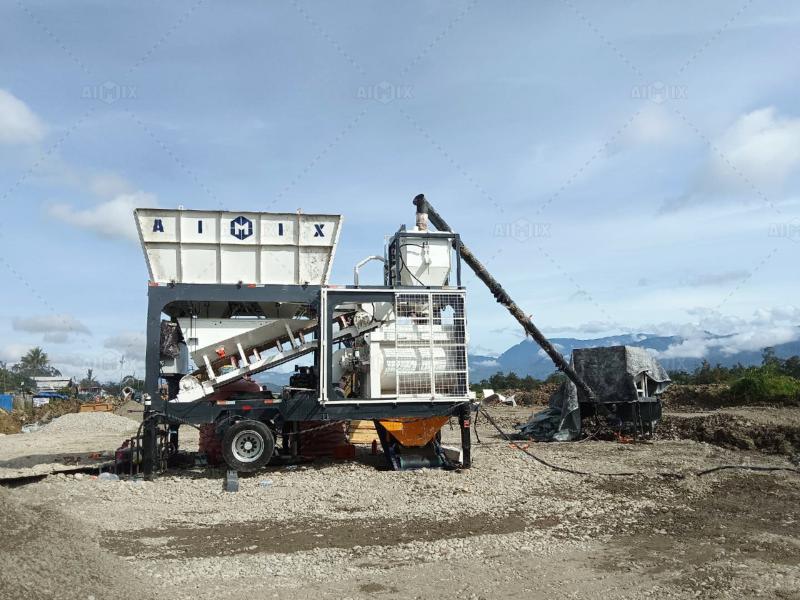
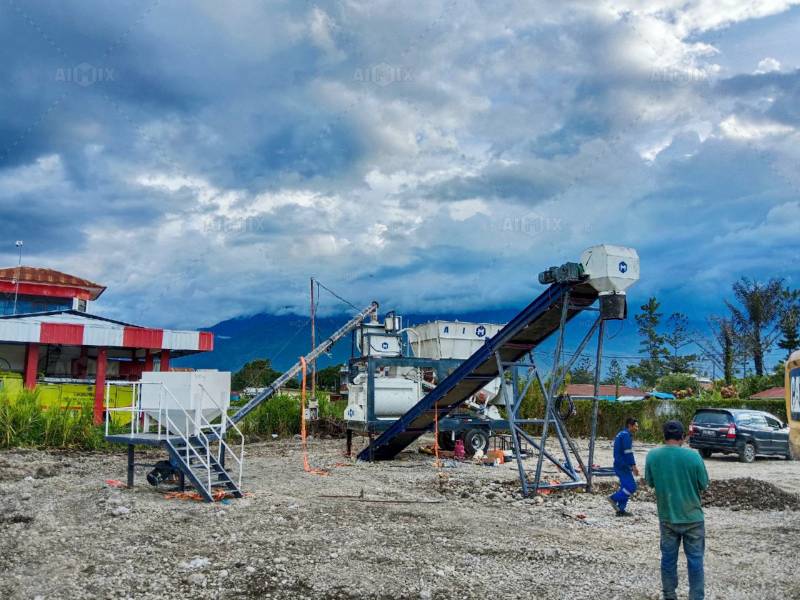
AJSY-40 Compact Concrete Batching Plant Operating in Papua Indonesia
- Delivery time: March 2026
- Application: Airport Access Road Construction / Remote Infrastructure
Project Requirement
An airport access road project in Wamena, Papua required a compact concrete batching solution for a remote mountainous site with no local ready-mix supply.
Due to difficult terrain and air transport limitations, fresh concrete could not be delivered from external suppliers, making on-site production essential.
Engineering Solution
The AJSY-40 compact batching plant was selected for its integrated and transport-friendly design.
Key features included:
- Compact structure for remote delivery and fast installation.
- Stable operation under dusty and unstable power conditions.
- On-site technical support for setup and operator training.
On-Site Performance
The compact plant enabled continuous on-site concrete production for airport road construction, ensuring stable supply in a previously logistics-limited area.
It significantly reduced dependence on external transportation and improved construction continuity.
Project Result
Delivered reliable concrete supply in a remote highland airport road project, ensuring stable construction progress.
What Are The Main Applications / Uses of Concrete Batching Plant
Concrete batching plants are deployed for a wide spectrum of construction‑related projects. Different scenarios impose distinct requirements on concrete quality, hourly output, footprint and relocation capability, which determines the suitable plant type for each job.
- Highway and road construction
- Bridge and tunnel construction
- Commercial ready‑mix concrete production
- Residential & commercial building construction
- Mining, hydropower and remote‑area infrastructure
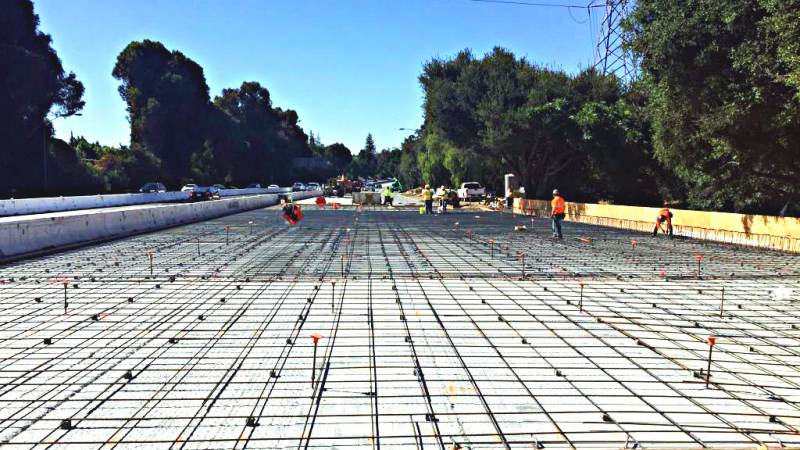
Highway and Road Construction
Road and highway projects often require continuous concrete supply along long construction sections. As paving operations move forward, transportation distance and delivery timing become critical factors.
To maintain a stable supply and reduce transport delays, contractors and project teams often use mobile or portable batching plants that can be positioned closer to the active work area.
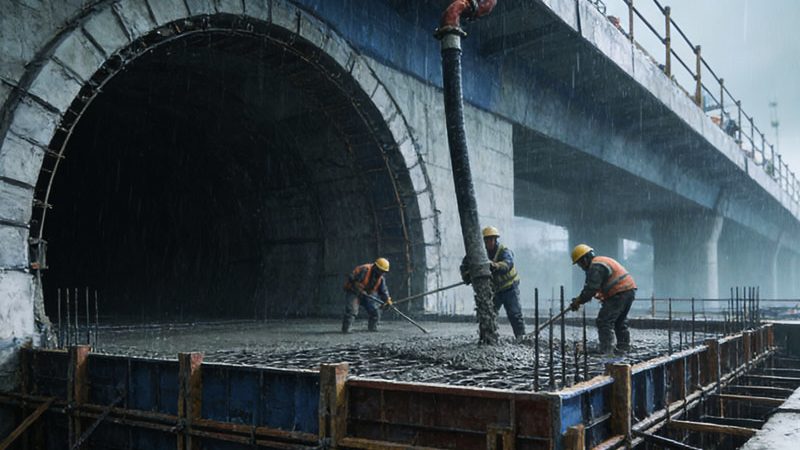
Bridge and Tunnel Construction
Bridge foundations, piers, and tunnel linings require high-strength structural concrete with consistent quality.
Because these projects have strict requirements for batching accuracy and mix consistency, wet mix batching plants with automated weighing and control systems are commonly used to ensure reliable concrete performance throughout the project.
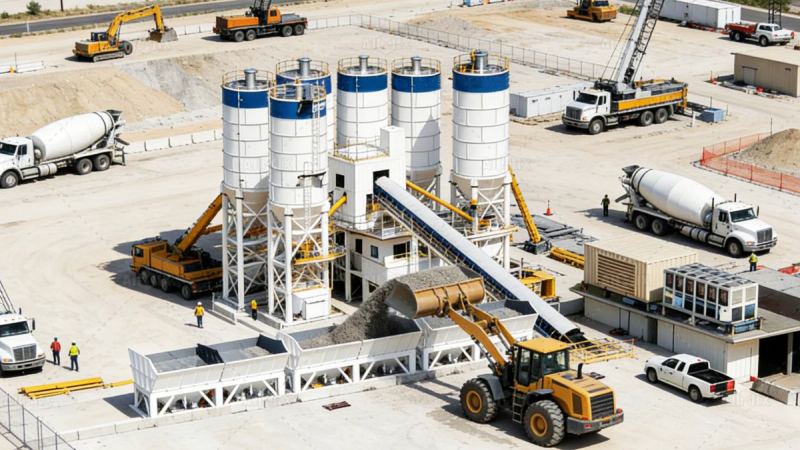
Commercial Ready-Mix Concrete Production
Ready-mix concrete producers supply concrete to multiple construction sites every day. In this application, efficient dispatching and timely delivery are often more important than simply increasing production capacity.
Large stationary concrete batch plants are typically installed near cities or industrial zones to support stable production and efficient truck loading operations.
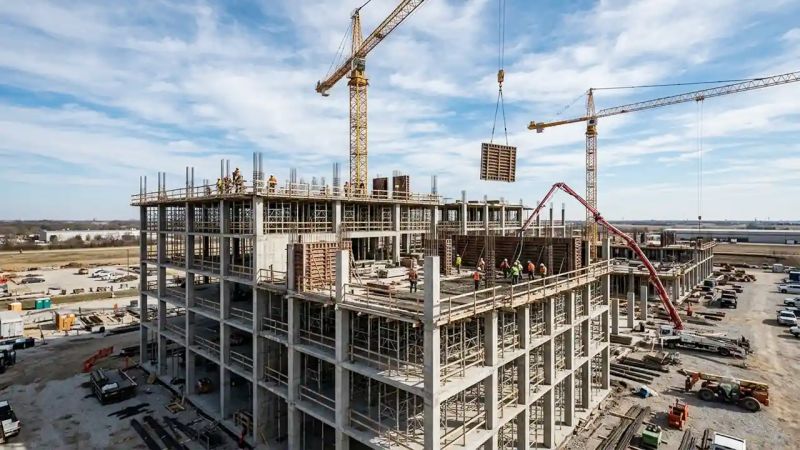
Residential and Building Construction
Residential, commercial, and high-rise building projects often face limited working space and tight construction schedules.
Compact batching plants are frequently selected because they require less installation space, can be deployed quickly, and are well suited to urban construction environments where site access may be restricted.
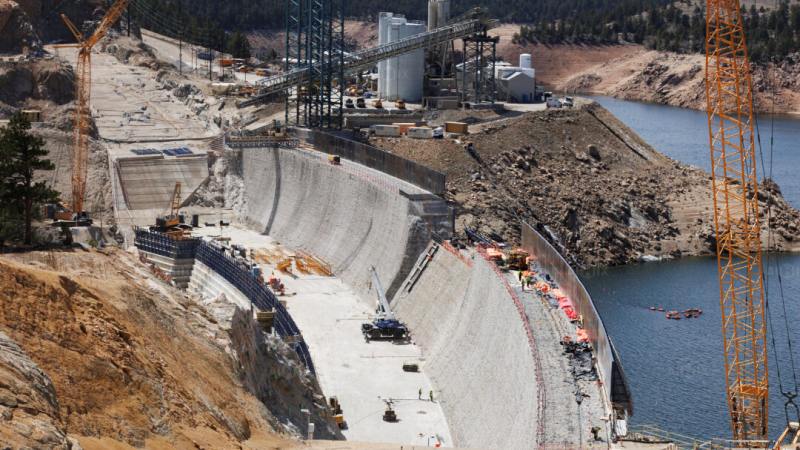
Mining and Remote Infrastructure Projects
Mining operations, hydropower projects, and remote infrastructure developments are often located far from commercial concrete suppliers.
Producing concrete directly on site helps reduce transportation costs and ensures a reliable supply of concrete in areas with limited infrastructure. Mobile and foundation-free batching plants are commonly used because they can be installed quickly and relocated as project requirements change.
How to Choose the Right Concrete Batching Plant
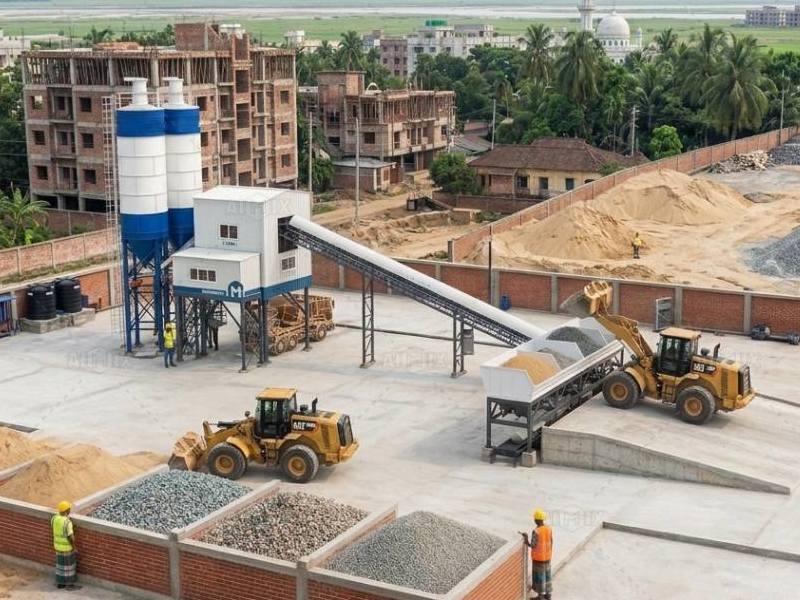
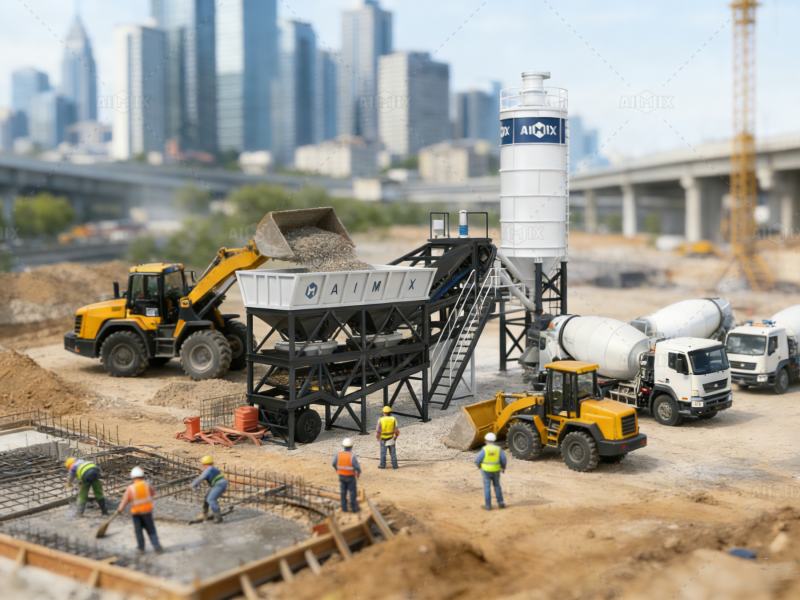
Choosing a concrete batching plant is not just about comparing technical specifications or looking at output numbers. In real construction projects, the right choice depends on how the batching plant will actually be used on site every day—how much concrete you need, how the project is organized, and how smoothly materials can move during production.
Start with How Much Concrete You Really Need
The first step in selecting a batching plant is understanding your real daily concrete demand. This has a direct impact on plant capacity, investment level, and long-term operating efficiency.
In real construction projects, a batching and mixing plant rarely operates at 100% theoretical capacity. Production is always affected by truck positioning, loading cycles, material feeding, and cleaning time. Because of these practical constraints, actual output is typically around 65% to 85% of rated capacity.
Required Capacity Estimation:
To size the plant correctly, use the following practical engineering method: Required Capacity = Daily Concrete Demand ÷ Working Hours × 1.2
Where:
- Daily Concrete Demand = total concrete needed per day (m³)
- Working Hours = effective production time per day (usually 6–10 hours)
- 1.2 = safety buffer to cover real-site inefficiencies (about 20%)
This buffer ensures the concrete plant can handle normal fluctuations in real construction conditions, avoiding production delays during peak pouring periods.
As a simple reference:
- If your demand is relatively small, below 40 m³/h, a compact batching plant is usually enough.
- If your demand is between 40 and 90 m³/h, most general infrastructure projects fall into this range and a standard mobile or stationary plant will be suitable.
- If your demand is above 90 m³/h, especially for large infrastructure or commercial supply, a high-capacity stationary concrete plant becomes more practical.
One important factor to consider is utilization. If a batching plant is used far below its capacity, the investment is not being fully utilized and the overall efficiency will be low. If it is constantly running at or near full capacity, it may struggle to keep up with peak demand, which can lead to delays in concrete supply during construction.
Think About Whether the Project Stays in One Place
After understanding capacity, the next question is very practical: does your project stay in one location, or does it move as construction progresses?
- For long-term fixed projects, such as commercial ready-mix supply or large infrastructure built in one area, a stationary batching plant is usually more suitable. It is more stable, supports higher production volume, and is designed for continuous operation over a long period.
- For projects like highways, railways, or linear construction work where the job site keeps moving forward, a mobile batching plant is often more practical. It can be relocated with less effort and helps reduce downtime between different sections of the project.
In many real cases, if relocation takes too much time compared to total project duration, a stationary solution often ends up being more cost-efficient overall.
Pay Attention to How Materials Will Actually Move on Site
Even with the correct plant capacity, site layout can significantly affect production efficiency.
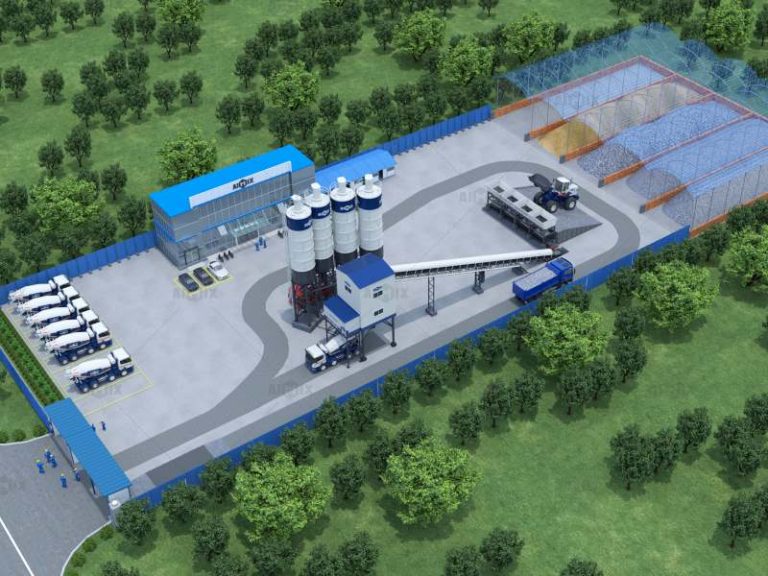
- The first thing to consider is how aggregates, loaders, and concrete trucks will move within the site. Poor traffic planning can easily slow down daily operations.
- The second factor is space condition. Compact sites usually work better with skip hoist systems, while larger sites are more suitable for belt conveyor systems with continuous feeding.
- Finally, vehicle interaction should be minimized. If loaders and trucks frequently interfere with each other, it can create unnecessary waiting time and reduce overall productivity.
In many projects, site layout limitations affect performance more than equipment capacity.
Choose the Mixing and Feeding System Based on Project Type
Different types of construction require different levels of concrete quality and production rhythm.
- For most general infrastructure projects such as roads, bridges, and foundations, twin-shaft mixers are commonly used because they provide stable and uniform mixing results.
- For precast production or applications that require more precise consistency, planetary mixers are often a better fit.
Feeding systems also affect production efficiency. Skip hoist systems are more compact and cost-effective, but the production cycle is relatively slower. Belt conveyor systems require more space but are better suited for continuous and high-volume production, especially when demand exceeds 60 m³/h.
Make Sure Operation and Maintenance Fit Real Conditions
Another important factor that is often overlooked is how the equipment will be operated and maintained in real working environments.
- If the project is small or intermittent, a basic control system is usually enough. For daily continuous production, a PLC automatic system is more stable and easier to manage. For larger or overseas projects where remote supervision is needed, IoT-based monitoring systems can help track performance and detect issues early.
- Maintenance is also a practical concern. It is important to check whether key wear parts can be replaced quickly on site, whether electrical components are well protected from dust and moisture, and whether spare parts can be sourced without long delays.
In real projects, equipment downtime often has a bigger financial impact than the initial price difference.
Selecting a concrete batching plant is ultimately about matching the equipment to real on-site working conditions to ensure stable, efficient, and reliable production throughout the project lifecycle.
How To Start A Concrete Batching Plant Business?
Starting a concrete batching plant is a practical business project. To succeed, you need to clearly plan your market, site, equipment, and daily operation step by step instead of buying equipment directly.
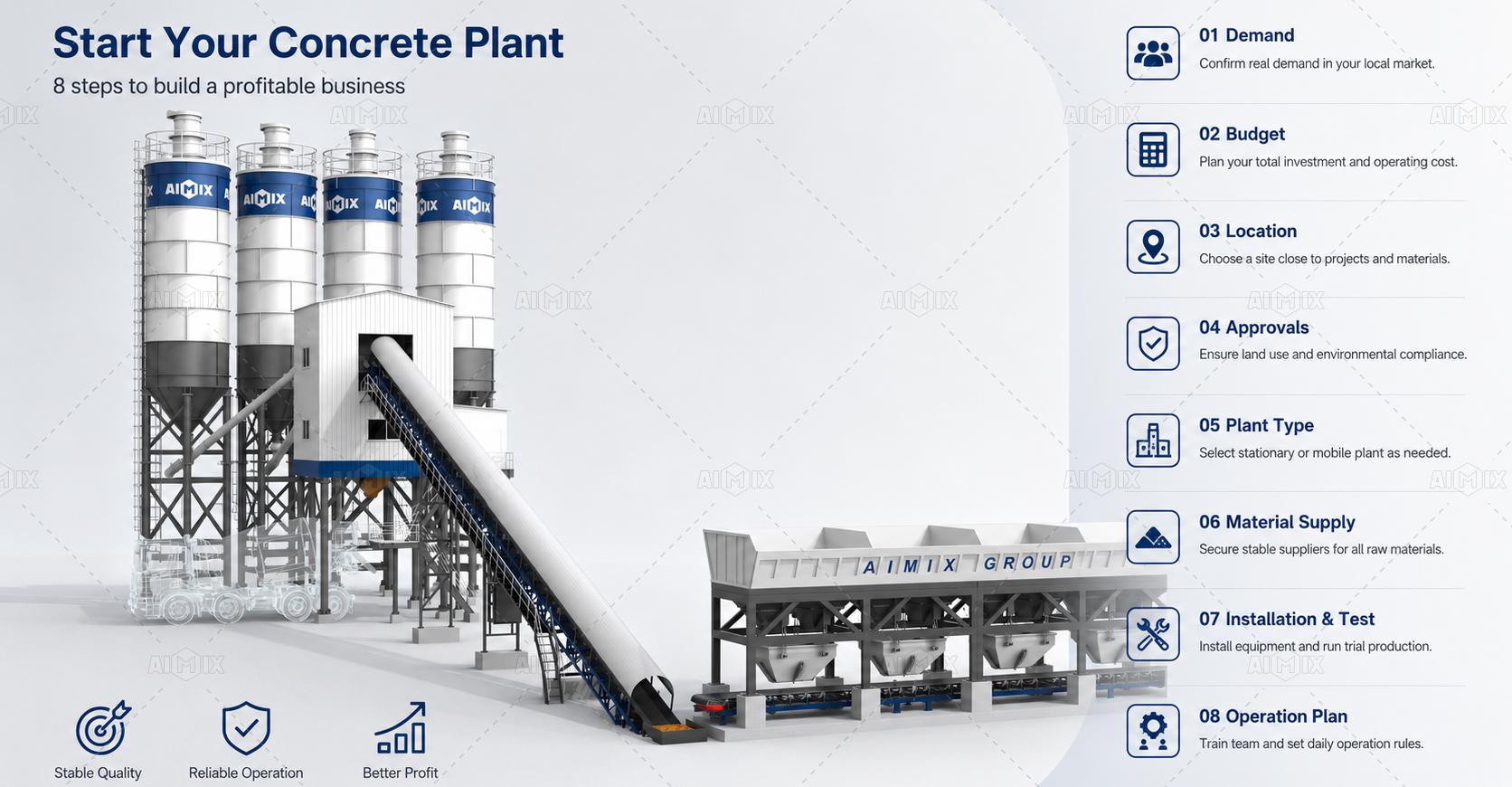
Check If There Is Real Demand
Before investing, confirm who will buy your concrete—road projects, building contractors, or ready-mix customers.
If there is no stable demand nearby, even a good plant will not run well.
Decide Your Budget Range
Calculate how much you can invest, including equipment, land, installation, and daily operation cost.
A clear budget helps you avoid choosing a plant that is too large or too small.
Choose A Good Location
Select a site close to construction projects and raw material suppliers like sand and cement.
Short transport distance directly reduces your concrete cost per cubic meter.
Check Local Approval Requirements
Before installation, make sure your site meets local rules for land use, environment, and construction operation.
In many regions, approval for dust and noise control is required.
Select The Right Plant Type
Choose between stationary or mobile plant based on how long and where your project will run.
Wrong plant type is one of the most common reasons for low profit.
Prepare Material Supply
Find stable suppliers for cement, sand, stone, and additives before production starts.
Without stable materials, your plant cannot keep running even if it is installed.
Install And Test The Equipment
After installation, run trial production to check mixing quality, weighing accuracy, and system stability.
This step helps prevent problems during real construction work.
Set Up Daily Operation Plan
Train workers, set simple operation rules, and create basic maintenance routines.
Good daily management directly improves plant lifespan and reduces breakdowns.
Starting a concrete batching plant is not difficult, but it requires the right planning. If you are not sure about capacity, site layout, or equipment selection, our engineers can help you design a suitable solution based on your project.
Concrete Batching Plant Cost & ROI Analysis
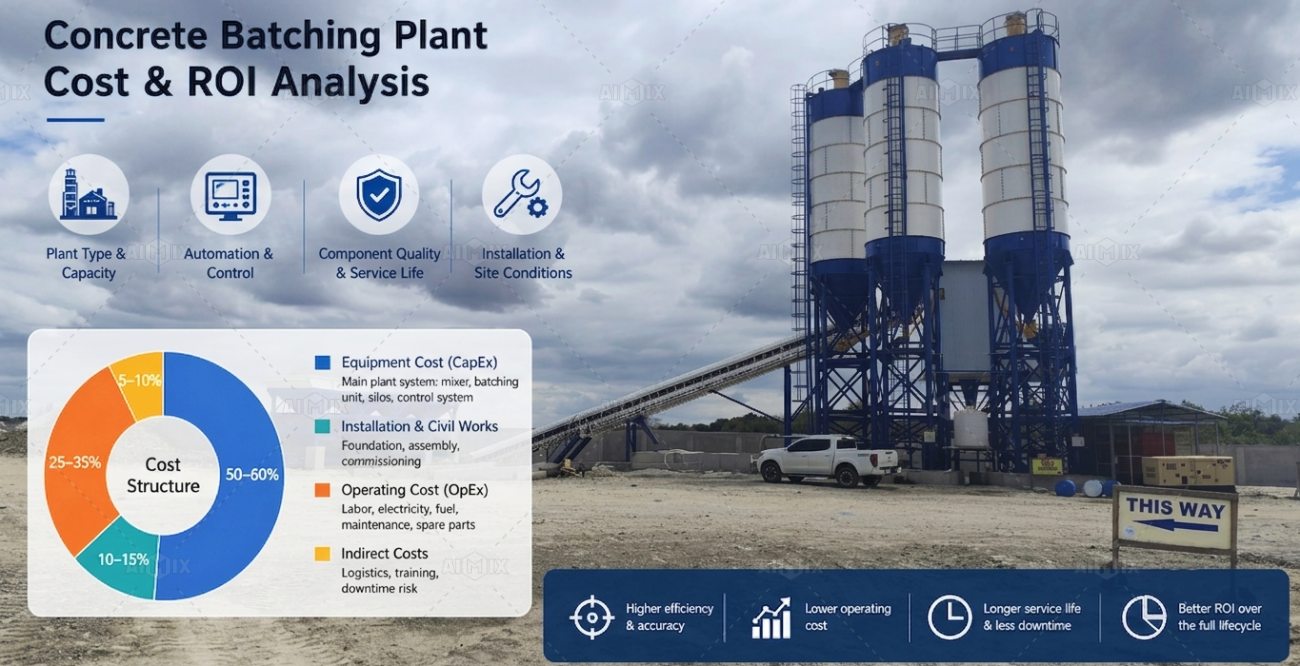
The cost of a concrete batching plant varies depending on capacity, configuration, and project requirements. In most cases, investment includes both initial equipment cost (CapEx) and long-term operating cost (OpEx), which together determine the real return on investment (ROI).
Key Factors Affecting Concrete Plant Cost
Plant Type and Production Capacity
Concrete batching plants are typically divided into stationary and mobile types, with different investment levels and application scenarios.
- Stationary batching plants (60–240 m³/h) require cement silos, steel structures, and civil foundations. They involve higher initial investment but are suitable for long-term, large-scale production.
- Mobile or compact plants (25–90 m³/h) have integrated structures and minimal foundation requirements, making them suitable for temporary projects or multi-site operations.
In practice, higher capacity increases upfront cost but reduces unit production cost when the plant operates at stable utilization.
Automation and Control System
Modern batching plants are equipped with PLC control systems, digital interfaces, and optional remote monitoring systems.
Key benefits include: improved batching accuracy and consistency, reduced labor requirement by 20–40%, lower human error in material dosing and more stable production cycles.
Advanced systems such as IoT-based monitoring can further help operators track production data and equipment status in real time, improving overall efficiency and reducing unexpected downtime.
Component Quality and Service Life
Core components such as mixers, batching systems, conveyors, and cement silos directly affect maintenance cost and equipment lifespan.
High-quality configurations provide: longer operational life, lower maintenance frequency, more stable continuous production and reduced risk of unplanned shutdowns
Although initial cost is higher, lifecycle cost is significantly lower.
Installation and Site Conditions
Installation cost depends on plant type and project location:
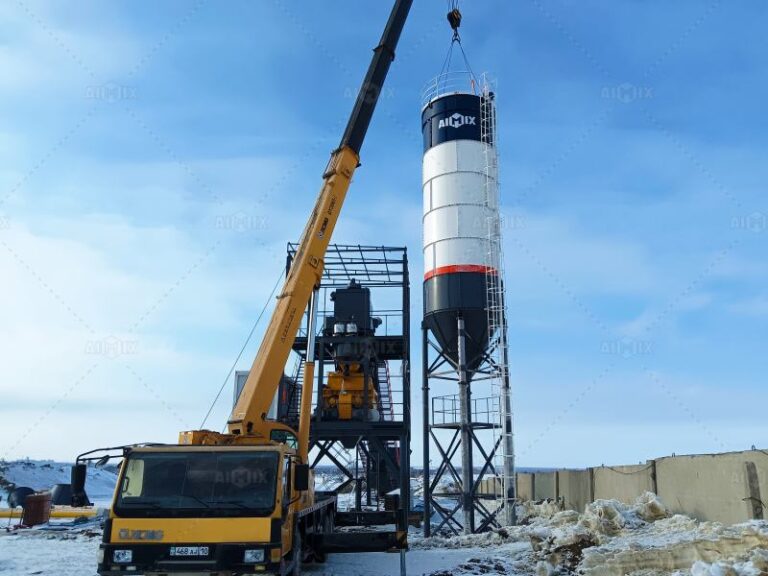
- Stationary plants require foundation construction, steel assembly, and electrical setup.
- Mobile plants require minimal site preparation and faster installation.
Remote or complex terrain conditions may increase total installation cost by 10–20%, depending on logistics and civil works requirements.
Concrete Batching Plant Cost Structure
| Cost Component | Share | Description |
|---|---|---|
| Equipment Cost (CapEx) | 50–60% | Main plant system: mixer, batching unit, silos, control system |
| Installation & Civil Works | 10–15% | Foundation, assembly, commissioning |
| Operating Cost (OpEx) | 25–35% | Labor, electricity, fuel, maintenance, spare parts |
| Indirect Costs | 5–10% | Logistics, training, downtime risk |
ROI Analysis for Concrete Batching Plant
Return on investment depends mainly on production efficiency, utilization rate, and local market conditions rather than equipment price alone.
Realistic ROI Calculation Example (90 m³/h Plant)
In real construction conditions, actual output is usually lower than theoretical capacity due to truck loading time, site movement, and routine maintenance.
Operating Assumptions:
- Plant capacity: 90 m³/h
- Real operational efficiency: 70–80% (industry average ~75%)
- Working hours: 8 hours/day
Actual daily output: 90 × 75% × 8 = 540 m³/day
Financial Assumptions:
- Average selling price: $80/m³
- Production cost: $55/m³
Profit per cubic meter: $25
Daily Profit: 540 × $25 = $13,500/day
Investment Range:
Typical 90 m³/h batching plant investment: $120,000 – $180,000
Payback Period:
- Under normal market conditions and stable utilization rates, the typical payback period for a concrete batching plant is: 12–24 months.
- In well-managed projects with stable demand and high utilization, ROI may be achieved faster: 10–18 months.
In most cases, long-term profitability depends more on plant utilization and operational efficiency than on initial purchase price.
What Are The Main Components (Core Systems) of Concrete Batching Plant
| Component / Core System | Main Function |
|---|---|
| Aggregate batching & storage bins | Store sand, gravel and crushed‑stone aggregates; feed raw aggregate materials |
| Cement / powder silo | Store cement, fly‑ash and other cementitious powder materials |
| Weighing system | Accurately measure aggregates, cement, water and admixtures per mix‑design |
| Conveying system | Transport aggregates, powder, water and admixtures into mixer unit |
| Mixing system (mixer) | Fully blend all raw materials to produce finished fresh concrete |
| Control system | Automate batching, mixing sequence and production data management |
| Dust removal system | Reduce dust pollution during cement feeding and batching operations |
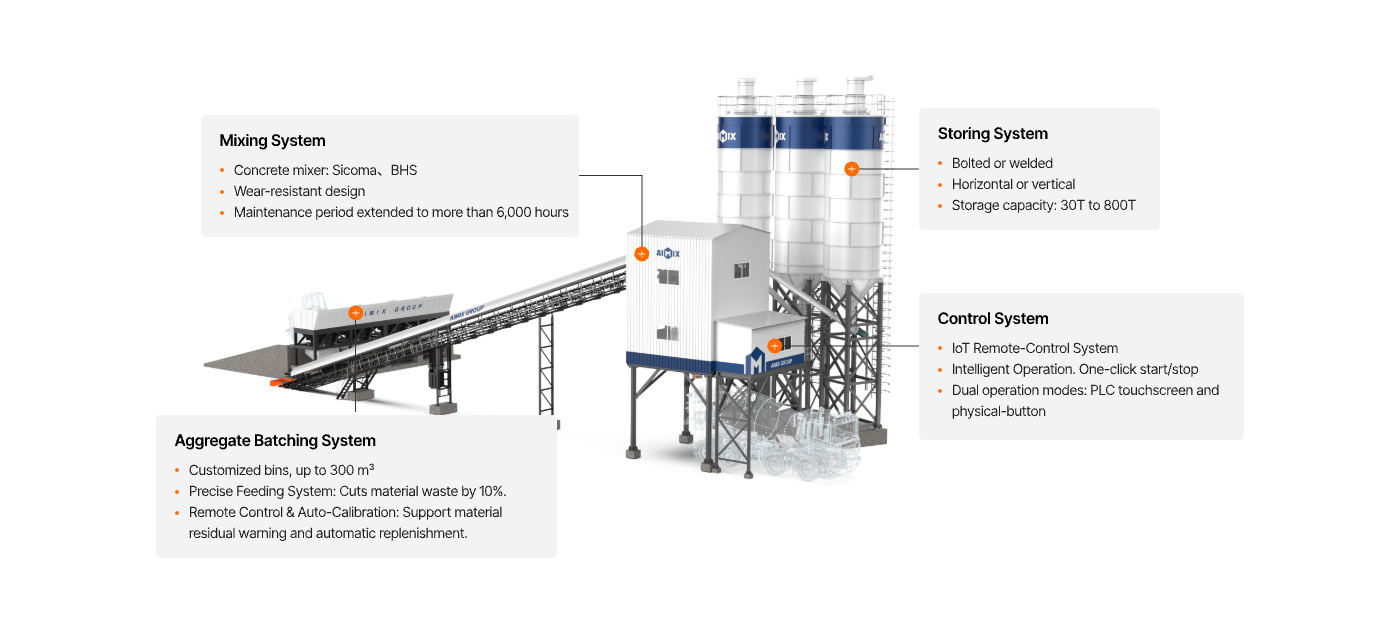
Mixing SystemThis is the core part of the batching plant where all materials are mixed together to form concrete. Most plants use a compulsory twin‑shaft mixer for fast and uniform mixing. For special applications, planetary mixers or drum mixers can also be selected depending on project requirements.
Material Storage SystemThis system stores all raw materials before batching. Aggregates such as sand and stone are usually stored in open yards. Cement and fly ash are stored in sealed silos to prevent moisture. Liquid admixtures are kept in separate containers for controlled use.
Weighing SystemThis system ensures accurate proportioning of all materials. It includes separate weighing units for aggregates, cement, water, and additives. All materials are measured automatically according to preset formulas to ensure consistent concrete quality.
Batching SystemThe batching system is responsible for preparing and feeding different types of aggregates into the mixer. Depending on concrete batching plant machine design, it can handle multiple material bins (usually 2 to 4 bins) for sand, stone, and gravel, ensuring stable and continuous production.
Conveying SystemThis system transports materials between different parts of the concrete plant. Aggregates are moved by belt conveyor or skip hoist, cement is delivered by screw conveyor, and water and additives are pumped into the mixer. The system is designed to keep production continuous and efficient.
Control & Dust Removal SystemThe control system operates the entire concrete mixer plant through a centralized microcomputer interface, supporting both automatic and manual modes for easy operation. The dust removal system helps control dust generated during cement feeding and mixing, keeping the working environment cleaner and improving on‑site safety.
How Does a Concrete Batch Plant Work?
A concrete batching mixing plant produces concrete by automatically combining raw materials—aggregates, cement, water, and additives—through a continuous and controlled production process.
In simple terms, the plant works like a precision assembly line for concrete, following four clear sequential steps: Feeding → Weighing → Mixing → Discharging
-
Feeding – Preparing Raw Materials
Aggregates (sand, stone, gravel) are loaded into separate bins via wheel‑loader. Cement and powder materials are stored in moisture‑proof sealed silos. Water and liquid additives are kept in dedicated tanks connected to system pipelines. At this phase, materials are only prepared, without metering.
-
Weighing – Measuring the Exact Formula
All raw materials are automatically measured according to target concrete mix‑design. Aggregates are discharged and weighed separately; cement is conveyed by screw conveyor inside sealed weighing units; water and additives are pumped for precise dosing. The PLC central control system guarantees batch‑accurate formula, as weighing errors will directly affect final concrete strength.
-
Mixing – Turning Materials into Concrete
Fully‑weighed raw materials enter the mixer unit. The mixer runs to blend all components evenly. Cement, aggregates, water and admixtures are thoroughly blended. Mixing duration is automatically controlled for each batch, which defines concrete final strength, uniformity and durability.
-
Discharging – Sending Concrete to Site
When mixing cycle finishes, the mixer discharge gate opens automatically. Fresh finished concrete flows into waiting transit mixer trucks. Trucks keep rotating during transit to maintain workability and prevent concrete separation or early setting before arriving at construction jobsites.
Important Maintenance Tips for Concrete Batching Mixing Plant
Concrete batching mixing plant maintenance is not complex, but it must be routine, structured, and disciplined. Most breakdowns happen not because of design issues, but because small daily tasks were ignored. Below is a practical maintenance guide you can directly apply on site.
Mixing System – Clean Immediately After Production (Daily Must-Do)
The mixer is the most critical wear area. Concrete left inside will harden quickly and damage blades.
Daily operation method:
- After final batch, run cleaning cycle with water + stone aggregate (5–10 minutes).
- Open discharge gate fully to flush remaining concrete.
- Use high-pressure water spray to clean: mixing blades, inner liner plates and discharge outlet.
What to watch:
- If material starts sticking to blades → mixing efficiency is already dropping.
- If discharge is slow → buildup is already forming.
Never leave concrete inside overnight.
Weighing System – Check Accuracy Every 7 Days
Weighing errors directly affect concrete strength.
Weekly inspection steps:
- Run test weighing using known weight (cement or aggregate).
- Compare displayed value vs real value.
- If deviation > ±1%, recalibrate system immediately.
- Clean dust around load cells and mounting points.
Common issue: Dust accumulation under sensors → unstable readings.
If weighing is inaccurate, concrete quality becomes unpredictable.
Cement Silo & Screw Conveyor – Prevent Moisture Blockage (Weekly)
Moisture is the biggest cause of cement blockage.
Maintenance steps:
- Check silo roof sealing every week (no water leakage allowed).
- Tap silo wall lightly → check for cement clumping sound.
- Run screw conveyor empty for 1–2 minutes before production starts.
- If cement flow is slow → check humidity inside silo immediately.
Critical warning:
If cement starts forming “hard blocks”, it must be manually cleared before next use.
Conveyor System – Inspect Wear and Alignment (Every 3–5 Days)
Conveyors run continuously and wear gradually.
Practical inspection method:
- Walk along belt line during operation.
- Check: belt deviation (left/right movement), material spillage points and roller rotation sound.
- Apply lubricant to rollers every 3–5 days.
- Tighten loose belt joints immediately.
A misaligned belt can stop the whole concrete plant within hours.
Electrical Control System – Keep Dry and Stable (Weekly Check)
Electrical failure is often sudden but preventable.
Weekly routine:
- Open control cabinet → check for dust or moisture.
- Tighten loose wiring terminals.
- Test emergency stop button (must respond instantly).
- Ensure cooling fan is working properly.
Important rule:
Never wash area near control cabinet with water.
Dust Collection System – Maintain Airflow Efficiency (Monthly)
Dust system protects both environment and machine life.
Monthly maintenance steps:
- Check filter bags for clogging or damage.
- Shake or pulse-clean filter system (if equipped).
- Remove accumulated dust from pipelines.
- Ensure suction fan runs smoothly without vibration.
If dust collector is blocked → cement feeding and weighing accuracy will drop.
Future Trends in the Concrete Batch Plant Industry
The concrete batching plant industry is expected to maintain steady long-term growth, supported by ongoing infrastructure development and increasing demand for ready-mix concrete. According to market research from Grand View Research and Persistence Market Research, the global market is projected to grow at a CAGR of approximately 3%–5% through 2030–2033.
From an investment perspective, this represents a stable, long-life-cycle industrial sector with predictable demand and relatively low market volatility.
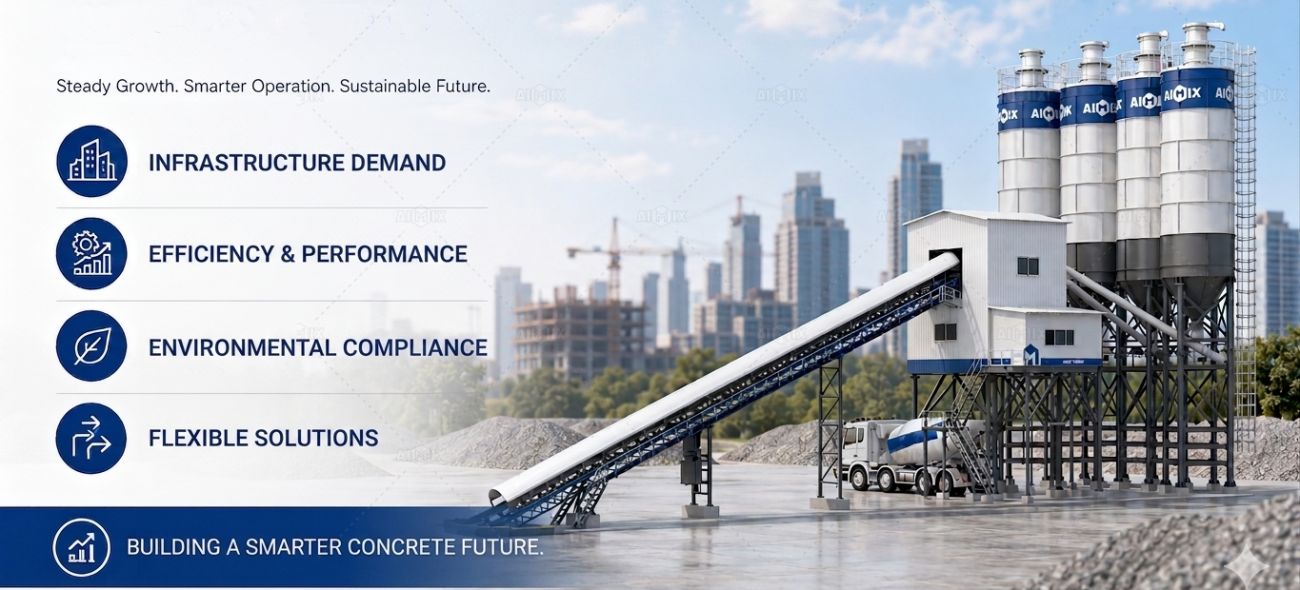
Infrastructure Investment Remains the Core Demand Base
Global investment in highways, railways, bridges, ports, and urban construction continues to be the primary driver of concrete consumption. In both emerging and developed markets, infrastructure development is still treated as a long-term national priority.
Investment insight: This ensures continuous project pipelines, which directly supports stable plant utilization rates and reduces idle equipment risk.
Efficiency and Automation Are Becoming the Baseline Requirement
Construction timelines are becoming tighter, and contractors are under increasing pressure to maintain both speed and consistency in concrete supply. As a result, the industry is shifting toward more automated and standardized production systems to reduce human error and operational delays.
Investment insight: Higher automation helps improve daily output stability and reduces dependency on manual operations, improving long-term operational efficiency.
Environmental Compliance Is Now a Market Entry Condition
Stricter regulations on dust control, noise reduction, and wastewater treatment are being enforced in more construction regions worldwide. For many urban projects, environmental compliance is no longer optional—it is a prerequisite for approval and operation.
Investment insight: Equipment with built-in environmental protection systems can significantly reduce regulatory risk and protect long-term operating continuity.
Flexible Deployment Is Increasing in Importance
Modern construction projects are becoming more distributed, shorter in duration, and more geographically diverse. This shift is increasing demand for batching plants that can be relocated, reinstalled, or adapted to different site conditions with minimal downtime.
Investment insight: Higher deployment flexibility directly improves asset utilization across multiple projects and regions.
Learn More About Concrete Batching Plants
Building an efficient concrete batching plant involves more than choosing the right equipment. From site planning and installation to plant operation, maintenance, and troubleshooting, every stage plays a role in achieving reliable performance and long-term productivity. Explore the following guides for practical knowledge and technical insights to help you get the most from your batching plant.
FAQs about Concrete Batching Plants
What is a concrete batching plant?
What are the main components of concrete batching plant?
What are the main types of concrete batching plant?
How does a concrete batching plant work?
What are the main applications / uses of concrete batching plant?
What is the difference between a stationary and a mobile batching plant?
How much space is required to install a batching plant?
How long does it take to install a concrete batch plant?
What is the main difference between dry mix and wet mix batching plants?
Can a concrete plant produce different grades of concrete?
What is the lifespan of a concrete batching plant?
What is an eco‑friendly concrete batching plant?
What are the main advantages of an eco‑friendly batching plant?
- Lower dust emissions and improved air quality
- Reduced water waste through recycling systems
- Compliance with environmental regulations
- Improved working conditions for operators
- Higher efficiency with modern automation systems