
We will look at concrete batching plants’ main uses in four industries: building construction, commercial concrete, precast concrete production, and hydropower projects.
Aimix’s concrete batching plants play a role in these industries.
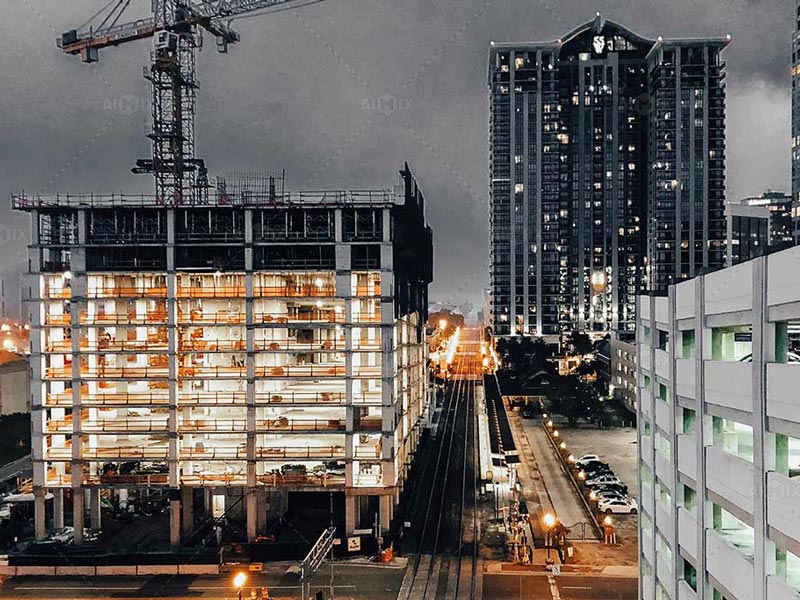
Construction Building
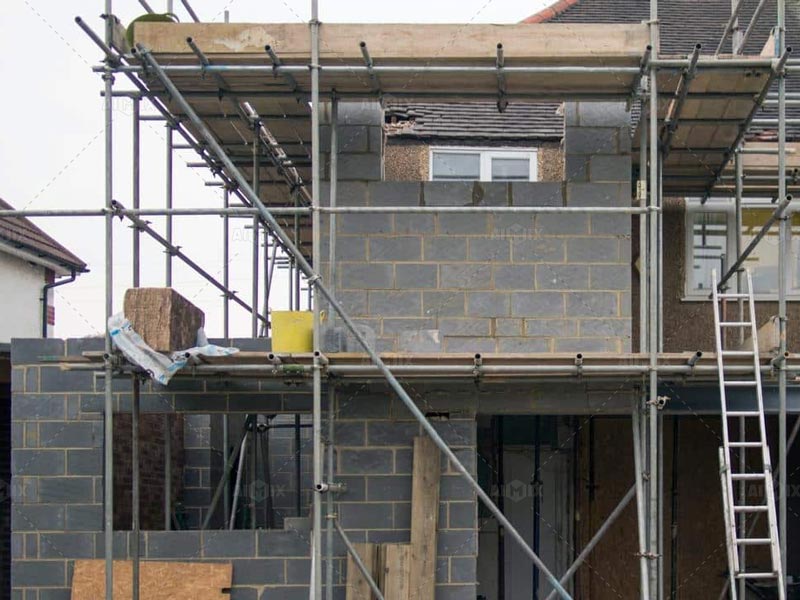
The construction industry is about the whole process of making buildings, from the first design and planning to building and keeping them up. It doesn’t just cover homes but also includes office buildings, factories, roads, and more. It’s a varied area with a lot of specialized work.
- Residential construction: This includes living spaces like apartments, villas, and townhouses.
- Commercial construction: Involves buildings for commercial purposes such as shopping centers, office buildings, and hotels.
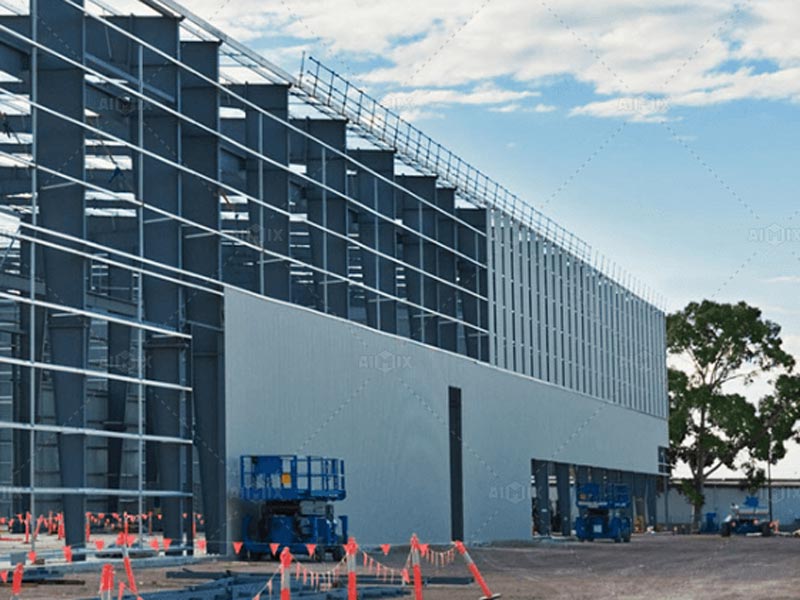
- Industrial construction: Consists of structures for industrial use like manufacturing plants, warehouses, and research facilities.
- Infrastructure construction: Includes the construction of public facilities such as bridges, roads, tunnels, and water management systems.

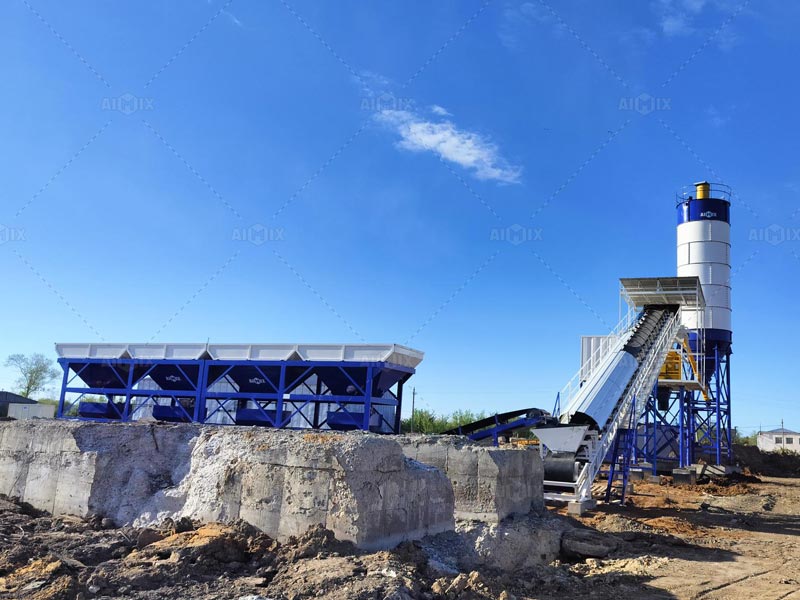
Recommended Models: AJ Stationary Series (e.g., AJ-25, AJ-35, AJ-50, AJ-75)
Modular Design
Aimix concrete batching plants are made to be easily put together and changed based on what each project needs. This is useful for building projects that need different amounts of concrete in different places or at different times.
Wide Adaptability
Aimix concrete batching plants can make not just regular concrete but also special kinds like lightweight or very hard concrete. This means these concrete batching plants can be used for a wide variety of building projects.
High Automation and Intelligence
High Automation and Intelligence: These batching plants come with modern control systems that allow them to work mostly on their own, which cuts down on mistakes and makes making concrete faster and better by using smart management. A fully automatic concrete batching plant helps construction projects save time and avoid errors.
Durable and Reliable
Aimix concrete batching plants are built with top-quality materials and the latest making techniques, making sure they last a long time and work reliably. This is especially important for construction sites that are tough on equipment and need it to run for long periods without stopping.
Commercial Concrete Production
The commercial concrete production industry is a sector that specializes in the production and sales of pre-mixed concrete. Unlike onsite mixed concrete, ready-mixed concrete is pre-mixed in ready mix plant according to strict standards and proportions, ensuring the quality and performance of the concrete.
- By strength grade: Such as C30, C40, etc., with higher numbers indicating greater strength.
- By usage characteristics: Including ordinary concrete, impermeable concrete, wear-resistant concrete, etc.
- By construction method: Such as self-compacting concrete, pumped concrete, etc.
- By functionality: Divided into waterproof concrete, thermal insulation concrete, etc.
- By additive type: Such as fiber concrete, expansive concrete, etc.



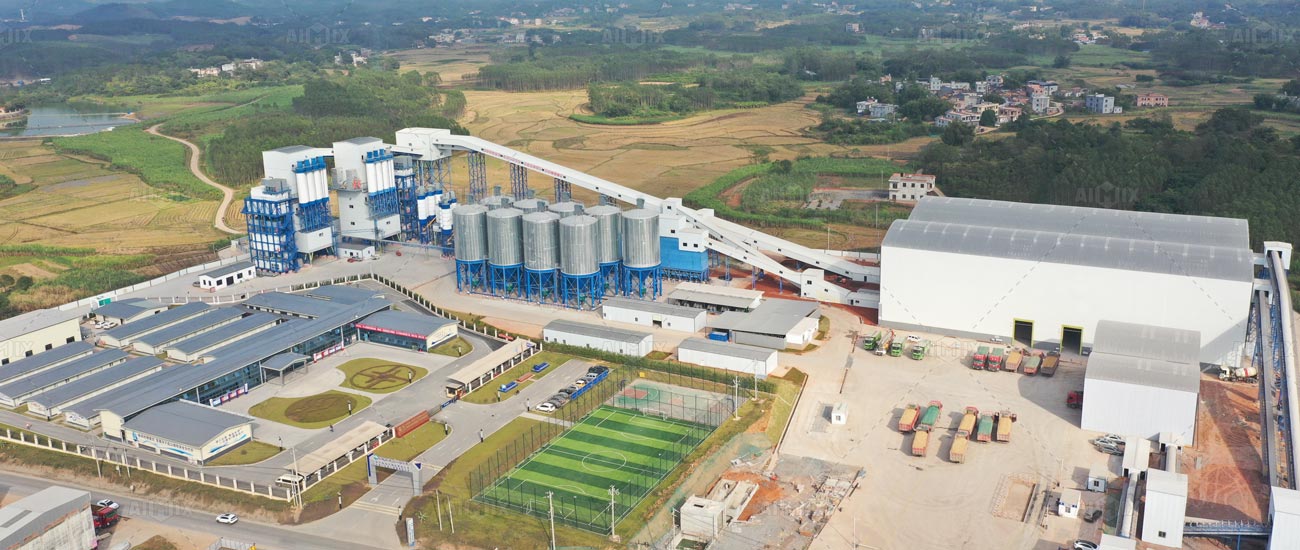
Recommended Models: AJ Stationary Series (e.g., AJ-60, AJ-90, AJ-120, AJ-180)
Adjustable Mix Ratio
Aimix concrete batching plants have a smart computer control system that can carefully change the mix of cement, sand, gravel, and other additions as needed. This makes sure the concrete produced matches different strength needs and special uses.
Efficient Mixing
These plants use high-efficiency mixers that mix materials quickly and evenly. They can handle very flowy concrete as well as special concrete that has a lot of additives.
Diverse Additive Feeding
They can add multiple additives at the same time, like fibers, water reducers, and expansion agents. By precisely controlling how much of each is added, they can meet the unique needs of different types of concrete.
Flexible Production Capacity
With sizes ranging from small to large, these stationary batching plants can match many production levels, whether it’s for smaller projects or large-scale commercial concrete production.
Precast Concrete Production
The precast concrete production industry is a specialized sector engaged in using concrete materials to manufacture various architectural or component products through pre-designed molds. Precast components have better dimensional accuracy and structural performance, while also reducing the complexity of onsite construction and improving work efficiency.
- Architectural structure precast components: Precast walls, floors, beams, columns, and stairs make building faster and more reliable.
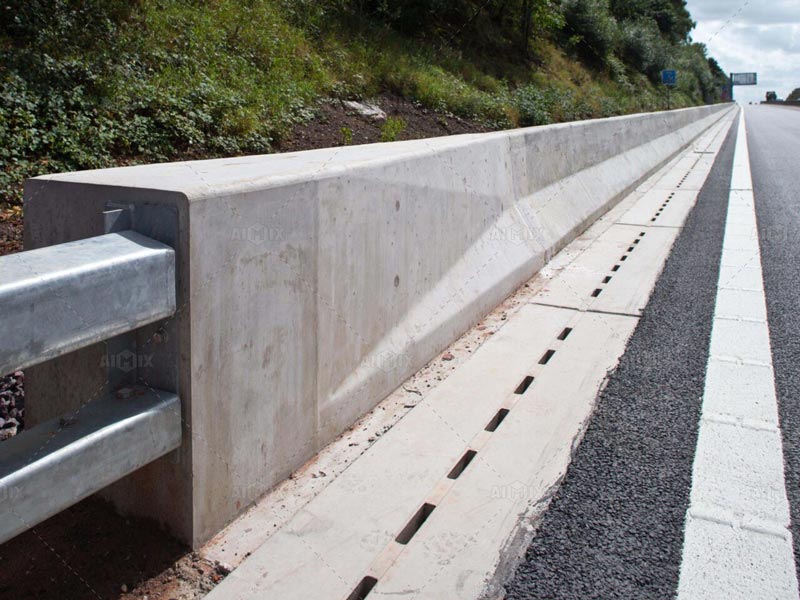
- Transportation engineering precast components: Precast bridge, road, and tunnel parts help build strong and lasting transport routes.
- Hydraulic and environmental protection precast components: Precast pipes, manhole covers, and solutions for rivers and wastewater make water management better and easier.
- Public facility precast components: Precast urban furniture and traffic gear are durable and low-maintenance for public areas.


Recommended Models: AJ Stationary Series (e.g., AJ25, AJ35, AJ50)
Flexibility and Adaptability
Aimix concrete batching plants can change how they mix concrete to make different precast parts. This means you can use the same machine to make various kinds of precast items by just changing the recipe and how it’s made.
Efficiency and Automation
These plants have smart control systems that do the mixing, measuring, and moving of concrete on their own. This makes making concrete faster and more precise while saving money on workers and cutting down on mistakes.
Stable Quality Control
Aimix plants use special techniques to make sure the concrete is always good quality. These small concrete plants mix and measure very carefully so that every batch of concrete is just right and meets high standards.
Economical and Durable Solutions
Aimix plants employ automation, efficient material usage, and robust construction techniques to ensure cost-effective operations and long-lasting performance. Aimix concrete batching plants keep working well for a long time, even when making lots of concrete.
Hydropower
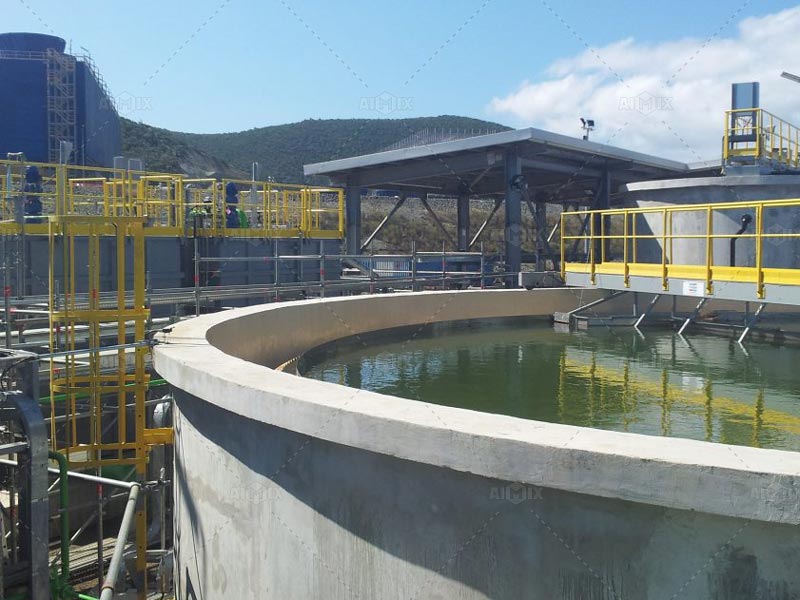
The hydraulic and hydroelectric industry refers to the sector centered around the development, utilization, management, and protection of water resources. It not only involves water supply, discharge, and treatment but also encompasses aspects such as hydropower generation.
- Water Supply: Getting water from places like rivers or lakes, cleaning it so we can drink it or use it in factories, and then sending it to where it’s needed.
- Irrigation and Drainage: Build systems to give water to farms so plants can grow and also create ways to remove extra water from towns and fields to stop flooding.
- Hydropower Generation: This means making electricity by using the power of moving or falling water. We do this at places like dams.
- River Management and Treatment: We clean rivers, build walls to keep water from overflowing, and take steps to keep the land and water healthy and stop the soil from washing away.
- Wastewater Treatment and Reuse: About taking dirty water from homes and factories, cleaning it up, and then using it again for different things.
- Water Resource Protection: This involves activities that help keep our water clean and natural areas like wetlands healthy. It includes checking the cleanliness of water and working to protect and fix natural water environments.


Recommended Model: AJY Mobile Series (e.g., AJY-25, AJY-35, AJY-50)
Mobility and Flexibility
The AJY series belongs to mobile concrete batching plants that can be quickly moved from one location to another, making it highly suitable for widely distributed, variable environment hydraulic and hydroelectric engineering projects.
Instant Concrete Production
For projects such as water supply, irrigation and drainage system construction, and river management, there is a need for large amounts of various grades of concrete on site. The mobile batch plant can produce concrete based on immediate demand, ensuring freshness and quality to meet the precision of construction.
High Efficiency and Low Waste
For hydropower, wastewater treatment, and reuse projects, efficient concrete production can significantly shorten the construction period and reduce material waste through precise control of mix ratios and output.
Adaptable to Complex Environments
Hydraulic and hydroelectric projects are often located in complex terrains and harsh environments (e.g., mountainous areas, riversides). Aimix concrete batching plants are designed with good mobility and stability, enabling stable operation under these conditions.
Multifunctionality
In addition to producing concrete, some advanced models of batching plants also have automated features, such as batching, mixing, conveying, and storage, as well as self-cleaning systems. These functions enable the batching plant to better serve a variety of engineering needs.
Environmentally Friendly
When undertaking sensitive projects like water resource protection and wetland restoration, environmental impact is an important consideration. Aimix concrete batching plants use enclosed management and dust collection systems to reduce their impact on the surrounding environment.
Facing the complex and ever-changing demands of future engineering construction, aimix concrete batching plants will continue to play an extremely critical role. They are not only constantly innovating technically to meet a wider range of application scenarios, but also driving the entire construction industry towards a more green, intelligent, and efficient direction.